A saddle rack is much more than a place to hang your saddle. It plays a direct role in keeping your tack room organized, protecting expensive gear, and making daily riding routines smoother and faster. Riders who store saddles improperly often deal with misshapen panels, scuffed leather, dust buildup, and tack rooms that feel cluttered no matter how much they clean. As saddles become more specialized and more expensive, storage becomes part of long-term saddle care rather than a small detail.
- What Is a Saddle Rack
- Why Modern Saddle Rack Designs Have Become More Important
- The Biggest Benefits of Using a High-Quality Saddle Rack
- Modern Saddle Rack Styles for Today’s Tack Rooms
- Wall-Mounted Saddle Rack: The Minimalist, Space-Saving Standard
- Freestanding Saddle Rack: Flexible and Practical for Changing Spaces
- Multi-Saddle Rack Systems: The Best Solution for Busy Barns
- Swing-Out and Rotating Saddle Rack: The Small-Space Champion
- Saddle Rack Cabinets and Lockers: Premium Storage and Security
- Portable and Collapsible Saddle Racks: The Show and Travel Essential
- Specialty Saddle Racks: Discipline-Specific Designs That Matter
- How to Choose the Best Saddle Rack for Your Setup
- Saddle Care and Storage: Keeping Leather Safe From Mold and Damage
- Common Saddle Rack Storage Mistakes That Shorten Saddle Life
- FAQ: Saddle Rack Questions
- Conclusion: Why a Modern Saddle Rack Is Worth It
Modern equestrians are also demanding more than basic utility. Today’s saddle rack designs combine space-saving engineering with durable materials and add-on storage features like bridle hooks, saddle pad bars, and enclosed cabinets. Whether you’re managing a small home barn or a busy training facility, the right saddle rack can bring structure to your space while protecting an investment that can cost thousands.
What Is a Saddle Rack
A saddle rack is a storage fixture designed to hold a saddle safely when it is not in use. The purpose is not only to keep saddles off the ground but also to support their structure evenly, prevent pressure points, and maintain shape over time. The best saddle racks reduce the risk of warping, leather creasing, and accidental damage caused by clutter or poor placement.
Why Modern Saddle Rack Designs Have Become More Important
Saddles are not built like they used to be. Many modern English saddles have softer panels, tailored tree structures, and ergonomic shapes designed for close contact and performance riding. Western saddles are also highly structured, heavier, and require stable storage to prevent tipping, stretching, or stress on rigging. That means the old narrow metal hook style of rack, which was once common, is no longer ideal in many barns.
At the same time, tack rooms are being designed with organization in mind. The modern approach uses vertical storage, functional zoning, and clean layouts to prevent safety hazards and reduce wasted time searching through gear. When a tack room is organized, barns often operate more efficiently, and equipment lasts longer because it is protected from humidity, dust, and physical wear.
The Biggest Benefits of Using a High-Quality Saddle Rack
A well-designed saddle rack helps preserve saddle shape by distributing weight evenly, which matters especially for English saddles with softer panels. It also prevents scuffs and scratches, keeps saddles cleaner by keeping them off the floor, and reduces the everyday clutter that builds up in tack rooms. Riders also benefit from improved workflow because saddles and accessories are stored in predictable locations, making it easier to tack up quickly and stay organized throughout the week.
Humidity is another factor that makes saddle rack quality important. Leather is sensitive to moisture, and high humidity increases the risk of mold and mildew. Many equine care experts recommend storing tack in an environment where moisture can be controlled, especially in warm, humid months.
Modern Saddle Rack Styles for Today’s Tack Rooms
Modern saddle racks come in several distinct styles, each designed for a different type of space, budget, and riding lifestyle. Some are built for minimalism and aesthetics, while others are designed for high-capacity barns, travel, or premium saddle protection.
Wall-Mounted Saddle Rack: The Minimalist, Space-Saving Standard
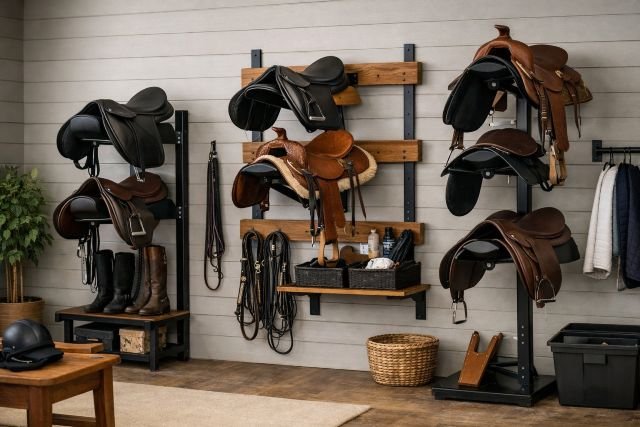
Wall-mounted saddle racks are one of the most popular modern options because they keep the floor clear and use vertical wall space efficiently. They work particularly well in small tack rooms where every inch matters. Many modern wall-mounted racks are designed with wider saddle arms, smoother edges, and fold-down mechanisms. These features are not just cosmetic—they help protect leather and prevent pressure points that can damage saddle panels over time.
In modern tack room design, wall-mounted racks also look cleaner and help the entire room feel organized. When paired with matching bridle racks and saddle pad bars, they create a tidy “tack wall” that makes gear easy to access and easier to maintain.
Freestanding Saddle Rack: Flexible and Practical for Changing Spaces
Freestanding saddle racks are ideal for riders who want flexibility. They are especially useful in shared tack rooms where drilling into walls is discouraged, or in barns where storage needs change often. Modern freestanding designs are more stable than older versions, often including wide bases, padded saddle supports, and modular storage attachments.
These racks are also popular for riders who travel frequently or manage multiple horses, since the rack can be repositioned or moved when needed. A freestanding rack is often the easiest way to upgrade storage without committing to permanent installation.
Multi-Saddle Rack Systems: The Best Solution for Busy Barns
Multi-saddle racks are built for barns that manage multiple horses, trainers with several clients, and facilities that need organized, high-capacity storage. Modern multi-rack systems often use staggered saddle arms so saddles don’t touch, reducing leather rubbing and equipment damage. Many systems also include integrated bridle hooks, saddle pad bars, or even shelf storage for grooming products and boots.
This style of saddle rack is also effective for improving safety in busy barns because it prevents the clutter that builds when saddles and pads pile up. Organized tack rooms reduce wasted time and help protect equipment from unnecessary wear.
Swing-Out and Rotating Saddle Rack: The Small-Space Champion
Swing-out and rotating saddle racks are one of the most “modern” options because they are engineered for small spaces without sacrificing usability. These racks allow saddle arms to swing out for easy access, then fold back to reduce how much space they occupy.
They are particularly useful in narrow tack rooms, tack closets, and horse trailers. Because the rack can move, it also improves airflow around the saddle, which is a subtle benefit when you’re trying to protect leather in humid or dusty environments.
Saddle Rack Cabinets and Lockers: Premium Storage and Security
Enclosed saddle rack cabinets have become increasingly popular in high-end tack rooms and competition barns. These storage systems are designed to protect saddles from dust, barn traffic, and accidental scratches. They also add security, which matters in boarding facilities where tack theft is a concern.
However, cabinets should be used with good airflow and moisture management. Leather stored in enclosed spaces can still develop mold if humidity is not controlled. That’s why many experts recommend dehumidifiers or air conditioning in tack rooms in humid climates.
Portable and Collapsible Saddle Racks: The Show and Travel Essential
Portable saddle racks are designed for riders who compete, travel, or set up temporary stall spaces at events. Modern portable racks often fold flat, weigh less than older steel designs, and include durable finishes to resist scratches. Many also integrate bridle hooks, making them a complete travel storage tool.
This saddle rack style is practical because it keeps gear organized at shows where space is limited and the environment is crowded. Riders who show frequently often pair portable racks with saddle covers to reduce dust exposure and prevent accidental scuffs.
Specialty Saddle Racks: Discipline-Specific Designs That Matter
Not all saddles store the same way. Western saddles are heavier and require stable, heavy-duty support. Dressage saddles benefit from wide and contoured racks that protect longer panels and deeper seats. Endurance saddles often need lightweight, adaptable storage solutions. Side saddles and specialty saddles may require customized rack shapes entirely.
A modern tack room that holds saddles for multiple disciplines often benefits from modular rack systems or adjustable designs that can accommodate different saddle widths and shapes.
How to Choose the Best Saddle Rack for Your Setup
The best saddle rack is the one that fits both your saddle type and your environment. If you store English saddles, the rack should provide wide, contoured support so the saddle does not rest on narrow pressure points. If you store Western saddles, the rack must be strong and stable enough to prevent tipping or damaging the saddle’s rigging.
Your tack room conditions also matter. Humid barns should prioritize airflow and moisture control. University of Florida IFAS Extension specifically recommends storing tack where moisture can be removed from the air using a dehumidifier or air conditioner, particularly during hot and humid months.
Saddle Care and Storage: Keeping Leather Safe From Mold and Damage
Saddle racks help protect saddles physically, but the environment protects them chemically. Leather exposed to humidity can absorb moisture, which increases the risk of mold, mildew, and long-term deterioration. Dust and ammonia exposure from barns can also wear down leather finishes over time.
Many leather care references commonly recommend controlled humidity, often suggesting a mid-range humidity environment to reduce both drying and moisture damage. This is why climate-controlled tack rooms, dehumidifiers, and ventilation are frequently recommended for long-term leather care.
Common Saddle Rack Storage Mistakes That Shorten Saddle Life
One of the most common mistakes is using a rack that is too narrow. Narrow racks create concentrated pressure points that can deform saddle panels, especially on English saddles. Another mistake is storing saddles too close together, which leads to leather rubbing and long-term scuff damage. Many tack rooms also fail to address humidity, which quietly causes mold problems that riders only notice once the smell or visible mildew appears.
Storing tack near sunlight-heavy windows is another hidden mistake, because UV exposure can fade leather and dry it out. Finally, hanging wet tack is a fast path to mold, especially in warm climates where moisture remains trapped in leather fibers.
FAQ: Saddle Rack Questions
What is the best saddle rack for a small tack room?
The best saddle rack for a small tack room is typically a wall-mounted or rotating saddle rack, because it saves floor space while keeping saddles easily accessible.
Can a saddle rack damage a saddle?
Yes, a saddle rack can damage a saddle if it is too narrow, has sharp edges, or does not support the saddle evenly. Wide, contoured, padded racks are safer for long-term storage.
Should saddles be stored in a humid tack room?
Saddles should ideally be stored in a dry environment because humidity increases mold risk. UF IFAS Extension recommends removing moisture from the air with a dehumidifier or air conditioner during hot, humid months.
Are portable saddle racks good for everyday use?
Portable saddle racks are excellent for shows and travel, and they can be used daily as well if they are stable, well-built, and support the saddle properly. However, wall-mounted or cabinet systems often provide better long-term organization.
Conclusion: Why a Modern Saddle Rack Is Worth It
A modern saddle rack is one of the most practical upgrades you can make in any tack room. It helps protect saddle shape, reduces clutter, improves daily efficiency, and keeps valuable gear clean and accessible. The best saddle rack style depends on your space and routine, but most riders benefit immediately from upgraded support design, better placement, and integrated storage features.
For long-term saddle care, remember that storage is about more than the rack itself. Moisture control, airflow, and consistent organization matter just as much. When you combine the right saddle rack with a clean, dry tack room environment, you extend saddle life, protect leather, and create a space that feels modern, functional, and easy to maintain.