Uneven floors are one of the biggest reasons flooring installations fail. Tile cracks, vinyl shows bumps through the surface, and laminate can bounce or separate when the base underneath is not smooth. That’s why self levelling compound has become a go-to solution for both professionals and DIY homeowners. It is designed to flow across a surface and settle into a flat, smooth underlayment that helps your finished floor look better and last longer.
- What Is Self Levelling Compound?
- Quick Definition
- Self Levelling Compound vs Screed vs Patching Compound
- Best Uses of Self Levelling Compound for Smooth Floors
- Where Self Levelling Compound Works Best
- When You Should NOT Use Self Levelling Compound
- How Thick Can You Apply Self Levelling Compound?
- Tools You Need to Apply Self Levelling Compound Correctly
- Surface Preparation: The Real Secret to Success
- How to Apply Self Levelling Compound
- Can You Use Self Levelling Compound on Plywood?
- Common Problems and How to Avoid Them
- How Much Does Self Levelling Compound Cost?
- How to Choose the Right Self Levelling Compound
- Standards That Support Quality and Performance
- FAQ: Self Levelling Compound
- Conclusion: Self Levelling Compound Makes Perfect Floors Possible
Many modern self-leveling underlayments can be poured in thicknesses starting at around one-eighth of an inch, and some products allow builds up to two inches or more depending on the formulation. This makes it highly versatile for correcting dips, patching minor uneven areas, and preparing flooring surfaces for installation.
What Is Self Levelling Compound?
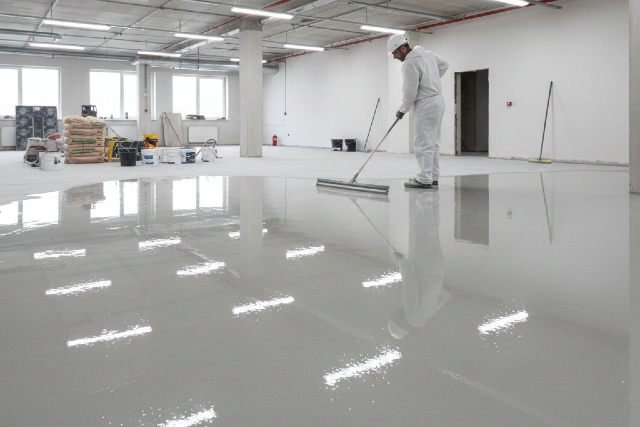
Self levelling compound, sometimes called self-levelling underlayment or SLU, is a cement-based material that becomes flowable when mixed with water. Once poured, it spreads to fill low spots and reduces surface irregularities. Although many products are marketed as “self-leveling,” it is more accurate to describe them as “self-smoothing,” because you still need proper preparation, correct mixing ratios, and finishing tools to achieve a truly flat surface.
Flooring industry guidance explains that self-leveling underlayments have become increasingly important due to stricter requirements for floor flatness and smoothness, especially under vinyl and large-format tile.
Quick Definition
Self levelling compound is a pourable underlayment used to smooth and level uneven floors before installing tile, vinyl, wood, laminate, or carpet.
Self Levelling Compound vs Screed vs Patching Compound
Self levelling compound is not the same as screed or patching material. Screed is typically used for thicker applications and is manually leveled rather than flowing freely. Patching compounds are thick and trowel-applied for small repairs, but they do not flow across the floor to create overall smoothness. Self levelling compound sits between these, providing a faster way to create a flat base across a wider area, especially when flooring needs strict tolerances.
Many self levelling compounds are formulated to work within certain thickness ranges, commonly around one-eighth inch to two inches, while certain high-build options can go thicker.
Best Uses of Self Levelling Compound for Smooth Floors
The most common use of self levelling compound is preparing a subfloor for finished flooring. Tile, vinyl, laminate, and engineered wood all require a smooth surface, and manufacturers often set strict flatness requirements. In tile installations, an uneven substrate can lead to cracking, lippage, and weak bonding. With vinyl flooring, even small bumps or ridges can telegraph through the surface, making the finished floor look uneven and low quality.
Self levelling compound is also frequently used before installing laminate or wood flooring because it reduces bouncing, helps prevent plank movement, and improves overall feel underfoot. On older interior concrete slabs that have dips, worn areas, or shallow spalling, self levelling compound can restore smoothness without having to replace the slab or rebuild the entire base.
Another major application is radiant heating systems. Since self levelling compound flows around heating mats or tubing, it creates a smooth, protective layer that also improves heat distribution. For commercial construction, self leveling underlayments are popular because many systems are designed for fast turnaround and smoother results across large areas.
Where Self Levelling Compound Works Best
Self levelling compound performs best on stable interior subfloors. It bonds well to concrete and cementitious substrates when properly cleaned and primed. Some products can be used over prepared plywood, but wood requires extra care due to movement from temperature and humidity changes. Manufacturer data sheets commonly specify the substrate requirements and confirm whether the product is suitable for interior cementitious surfaces or also rated for other applications.
When You Should NOT Use Self Levelling Compound
Self levelling compound should not be used on unstable surfaces. If a floor flexes when walked on, the compound may crack after curing because it does not perform well under movement. It also should not be used as a fix for major structural leveling problems, such as serious slopes caused by foundation issues. In those cases, structural repair or screeding methods are typically required.
Moisture is another key risk factor. If the slab has high moisture vapor emissions, many leveling compounds may fail or cause adhesive problems for the flooring above. Always verify moisture conditions and choose systems designed for those environments.
Some self-leveling products are rated only for interior applications, while others are designed for interior and exterior use. The wrong product choice can lead to failure when exposed to temperature swings or moisture.
How Thick Can You Apply Self Levelling Compound?
Thickness depends heavily on the product. Many self leveling compounds are designed for builds from about one-eighth inch to two inches. Some high-build formulations can reach about three inches, depending on how they are applied and whether the manufacturer allows aggregate extension.
If you pour too thin, the compound may not flow properly and may not cover the defects. If you pour too thick, you risk cracking, weak cure, or exceeding manufacturer limits. For deeper fills, some manufacturers require layered pours or special reinforcing methods.
Tools You Need to Apply Self Levelling Compound Correctly
A smooth self leveling job is about speed and consistency. Because working time is limited, you must have everything ready before you mix. The most important tools include a heavy-duty drill and mixing paddle for consistent mixing, a clean bucket, a gauge rake to control thickness, and a spiked roller to release trapped air. Spiked shoes are also extremely helpful for moving across wet compound without damaging the surface.
Surface Preparation: The Real Secret to Success
If self levelling compound fails, the reason is usually not the product. It’s almost always the preparation. The floor must be clean, stable, and properly primed. Dust, grease, adhesive residue, and loose debris prevent bonding. Cracks and holes should be repaired so the compound doesn’t flow into voids or leak under walls.
Primer is especially important. Primer improves adhesion, reduces outgassing bubbles, and prevents the substrate from sucking moisture out of the compound too quickly. Some primers are specifically designed to reduce bubbles caused by outgassing from porous concrete and also prevent rapid water loss, which improves performance.
How to Apply Self Levelling Compound
Start by calculating the amount of compound needed based on floor area and the desired thickness. Each product has specific coverage rates per bag, so relying on the manufacturer’s data sheet prevents shortages.
Once the surface is clean and primed, mix the compound exactly to the specified water ratio. Overwatering weakens the mixture and greatly increases crack risk. After mixing, pour the compound immediately and spread it using a gauge rake, controlling thickness as you work. While the compound is still wet, use a spiked roller to release trapped air and reduce surface pinholes.
Allow the compound to cure fully before installing your finished flooring. Cure time depends on thickness, humidity, and temperature, and also varies by product formulation.
Can You Use Self Levelling Compound on Plywood?
Yes, but it requires the most caution. Plywood floors expand and contract, and if the substrate flexes, the compound can crack. The plywood must be rigid, secured properly, and primed with the correct primer recommended by the compound manufacturer. In some cases, reinforcement methods are also required.
Industry guidance from APA emphasizes that floor performance depends on the correct combination of subfloor and underlayment layers for different flooring types.
Common Problems and How to Avoid Them
Cracking is often caused by overwatering, exceeding thickness limits, or pouring over unstable substrates. It can also happen when rapid drying occurs due to hot temperatures or poor curing conditions. Bubbles and pinholes commonly come from outgassing, especially on porous concrete, and are more likely when primer is skipped or mixing is overly aggressive.
Delamination happens when the substrate was dirty, dusty, or incompatible with the primer or compound. Grinding, cleaning, and correct priming prevent most bonding failures.
How Much Does Self Levelling Compound Cost?
The total cost depends on the number of bags required, the thickness you need, and whether primer, tools, and repairs are included. DIY installations are generally affordable for small areas, but large floor leveling projects may cost significantly more due to volume. In commercial settings, pump application is often used because it speeds up application and improves consistency.
How to Choose the Right Self Levelling Compound
Choosing the right compound depends on your substrate, thickness requirements, and flooring type. Some products are designed strictly for interior concrete. Others are designed for wood or mixed substrates, or for high-build applications. Drying time matters too, especially if the project has tight timelines.
You should also consider whether the compound is compatible with your final floor, especially for vinyl and adhesive flooring systems that require very smooth and stable underlayment.
Standards That Support Quality and Performance
Self leveling underlayment products often reference recognized standards that define how performance is tested. ASTM C1708 covers test methods for self-leveling mortars containing hydraulic cements, including relevant testing characteristics. ASTM F2873 provides recommended practice for installation methods and quality control procedures for self-leveling underlayments, which is useful for contractors and large projects.
These standards help ensure the product behaves consistently and meets performance expectations under real-world conditions.
FAQ: Self Levelling Compound
What is self levelling compound used for?
Self levelling compound is used to level and smooth uneven floors before installing tile, vinyl, laminate, wood, or carpet. It improves the finished floor appearance and reduces the risk of future damage.
Can self levelling compound go over plywood?
Yes, but the plywood must be stable, secured, properly primed, and prepared according to the manufacturer’s instructions. Wood movement is one of the biggest reasons leveling jobs fail on plywood.
How thick can self levelling compound be applied?
Many products allow thickness ranges from around one-eighth inch to two inches, while some high-build products can go up to about three inches depending on the formulation.
Do you need primer before self levelling compound?
In most cases, yes. Primer improves bonding, prevents rapid moisture loss, and reduces bubbles caused by outgassing from porous substrates.
How long does self levelling compound take to dry?
Drying time varies by product and thickness, but thicker pours require more time. Rapid-setting products can be ready sooner, while standard compounds may require longer cure times.
Conclusion: Self Levelling Compound Makes Perfect Floors Possible
If you want a clean, durable, and professional-looking floor, self levelling compound is one of the most practical tools available. It makes tile installation smoother, prevents bumps under vinyl, improves laminate stability, and reduces common problems caused by uneven substrates.
The key to success is not just pouring the compound, but preparing the surface properly, priming correctly, mixing to the exact ratio, and allowing the compound enough time to cure. Done right, self levelling compound transforms rough, uneven floors into perfectly smooth surfaces that are ready for flawless finishing.