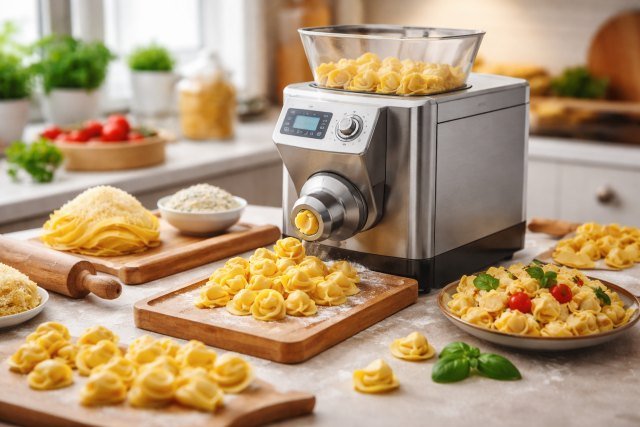
If you’ve ever tried making tortellini by hand, you already know the truth: the flavor payoff is huge, but the process can feel like a tiny origami marathon. That’s exactly why the Tortellinatrice has become such a buzz-worthy tool for home cooks, fresh pasta shops, and restaurant prep stations. It’s designed to take the most time-consuming parts of tortellini — portioning, shaping, sealing, and repeating them perfectly — and make them dramatically faster and more consistent.
- What Is a Tortellinatrice?
- Why the Tortellinatrice Is Suddenly Everywhere
- How a Tortellinatrice Works in Real Kitchens
- Tortellinatrice Benefits You’ll Actually Notice
- Choosing the Right Tortellinatrice
- Using a Tortellinatrice: A Practical Step-by-Step Workflow
- Tortellinatrice Tips for “Wow” Tortellini (Home or Pro)
- Is a Tortellinatrice Worth It for a Small Business?
- Care, Cleaning, and Maintenance
- FAQs About Tortellinatrice Machines
- Conclusion: Is the Tortellinatrice the “Ultimate” Pasta Upgrade?
You’ll learn what a Tortellinatrice is, how it works, which features matter most, and how to get restaurant-level tortellini without spending all afternoon at the kitchen counter.
What Is a Tortellinatrice?
A Tortellinatrice is a specialized tortellini-making machine that automates (or semi-automates) the formation of stuffed pasta shapes — most commonly tortellini, tortelloni, and often related shapes like cappelletti depending on the tooling and setup. In many models, the machine helps coordinate four steps: thinning the dough sheet, dosing the filling, cutting, and folding/sealing into a consistent finished shape.
Featured definition:
A Tortellinatrice is a tortellini machine that helps form stuffed pasta by combining dough-sheet handling, filling portioning, cutting, and folding/sealing for fast, uniform tortellini.
The reason it matters isn’t just speed — it’s uniformity. When each piece is the same size and sealed the same way, cooking is more predictable, plating looks cleaner, and waste drops (less tearing, fewer blowouts, fewer misshapen rejects).
Why the Tortellinatrice Is Suddenly Everywhere
The Tortellinatrice sits at the intersection of two trends: a renewed obsession with fresh pasta and a practical need for efficiency. Pasta remains one of the world’s most consumed staples, and Italy continues to lead globally in per-capita pasta consumption — numbers that highlight why pasta making tools keep evolving for both professionals and ambitious home cooks.
The International Pasta Organisation notes that 16.9 million tons of pasta were produced worldwide in 2022, and its annual report highlights Italy’s exceptionally high per-capita consumption (over 23 kg). That demand creates a natural “tool ecosystem”: more people want better pasta at home, and more small businesses want fresh pasta without adding labor hours.
A Tortellinatrice is also a quality tool, not just a convenience gadget. Consistent sealing reduces the common “filling leak” problem, and consistent sizing prevents undercooked centers and overcooked edges in the same batch.
How a Tortellinatrice Works in Real Kitchens
Most Tortellinatrice designs (especially commercial-style units) follow a similar workflow:
- Dough becomes a sheet (either fed in as a prepared sheet or rolled through integrated rollers).
- Filling is dosed in measured amounts, often via a continuous feed mechanism.
- The machine cuts the sheet around each portion.
- A folding and sealing system shapes the tortellino and closes it.
Manufacturers and pasta-machine distributors describe typical systems as a combination of dough-sheet handling, a filling dosing device, cutting, and a folding/sealing mechanism — often built in food-safe materials such as stainless steel on contact surfaces.
Manual vs. semi-automatic vs. automatic Tortellinatrice
The word Tortellinatrice is most often used in the context of commercial equipment, but the “best fit” depends on your reality:
- Home cook who makes tortellini monthly: you’ll care most about compact size, quick cleaning, and “good enough” speed.
- Restaurant prep station: you’ll care about consistent output, reliable seals, and food-safety-friendly surfaces.
- Fresh pasta shop: you’ll care about throughput, repeatability, and tooling options for different sizes.
If you’re shopping, don’t get hypnotized by maximum pieces-per-hour claims. In practice, your output is limited by how fast you can prep dough sheets, keep filling consistent, and keep the machine clean and fed.
Tortellinatrice Benefits You’ll Actually Notice
Faster production without sacrificing “handmade” quality
A Tortellinatrice doesn’t have to make pasta feel industrial. It can preserve the artisanal taste while removing repetitive labor. The biggest “taste win” is that you’re more likely to make tortellini often — and practice is the real upgrade.
Consistent size = consistent cooking
Uniform tortellini cook more evenly. That means fewer overcooked pieces floating alongside undercooked ones — especially important when you’re cooking a large batch.
Better sealing = fewer blowouts
When tortellini open during boiling, you lose filling, cloud the cooking water, and end up with torn pasta. Machines built specifically for folding/sealing are designed to reduce that failure rate when dough hydration and thickness are dialed in.
Choosing the Right Tortellinatrice
1) What volume do you truly need?
Be honest about your weekly output. A compact unit that you can clean quickly often beats a “faster” machine that becomes a chore to maintain.
2) Dough thickness control matters more than you think
The most common tortellini failures (tearing, leaking, wrinkled seals) trace back to dough thickness. Some commercial units include adjustable calibration/roller systems designed to keep thickness consistent across runs.
3) Filling dosing and consistency
Look for controlled filling delivery — continuous feed or precise portioning — because uneven filling causes half your tortellini to burst and the other half to feel empty.
4) Food-safety design and materials
If you’re using it in a business setting, prioritize easy-to-sanitize contact surfaces. Many machines emphasize stainless steel and food-grade materials where product touches the equipment.
5) Tooling and formats: tortellini vs tortelloni vs cappelletti
Some setups support multiple shapes with different punches or tooling. Distributors often group tortellini and cappelletti machines together because the underlying mechanism is similar, with format changes handled by parts/tooling.
Using a Tortellinatrice: A Practical Step-by-Step Workflow
If you want consistently excellent results, treat it like a system, not a magic button.
Step 1: Mix dough for elasticity, not just softness
Tortellini dough should be elastic enough to stretch thin without tearing, and dry enough to seal without turning gummy. Resting the dough is non-negotiable; it relaxes gluten and makes rolling easier.
Step 2: Roll sheets to a repeatable thickness
Thin enough to fold neatly, thick enough to hold filling. The “right” thickness depends on your machine and desired size, but the goal is repeatability.
Step 3: Keep filling cold, cohesive, and not wet
Loose fillings smear and compromise seals. If your filling is wet (ricotta-heavy or vegetable-heavy), drain it or bind it slightly so it holds shape when dosed.
Step 4: Run a small test batch and adjust
Do 10–20 pieces first and check:
- Does the seam look compressed and clean?
- Are corners tearing?
- Is filling centered?
- Do they hold after a 2–3 minute simmer?
Step 5: Cook gently, not violently
A rolling boil is harder on stuffed pasta. A controlled simmer helps prevent burst seams, especially while you’re dialing in dough and fill.
Tortellinatrice Tips for “Wow” Tortellini (Home or Pro)
The “two-texture” filling trick
For meat fillings, aim for a blend: part finely processed for cohesion, part slightly coarse for bite. This improves mouthfeel and keeps filling from leaking.
Dusting strategy
Too much flour on the sheet can prevent sealing; too little can cause sticking. The sweet spot is a lightly dusted sheet that still feels tacky enough to bond at the seam.
Don’t chase speed until quality is locked
Once seals are perfect and thickness is consistent, then increase feed speed. Doing the reverse creates a mountain of imperfect tortellini.
Is a Tortellinatrice Worth It for a Small Business?
If you run a café, restaurant, catering kitchen, or a small fresh pasta operation, the Tortellinatrice is often less about “cool equipment” and more about labor math.
Even if you don’t calculate strict ROI, these practical wins matter:
- You standardize portions (food cost becomes predictable).
- You reduce training time (less dependence on one expert folder).
- You can schedule tortellini production reliably for service.
Many commercial Tortellinatrice models are explicitly positioned for continuous filling feed, adjustable thickness systems, and repeatable tortellini output — features that align with small production environments trying to scale without sacrificing quality.
Care, Cleaning, and Maintenance
A Tortellinatrice is only “time-saving” if you can clean it fast enough to want to use it regularly.
A few realistic habits that keep things painless:
- Clean dough-contact areas before it dries and hardens.
- Avoid over-flouring the machine; flour buildup can turn into paste.
- If you switch fillings, do a quick sanitation pass to prevent flavor transfer.
If you’re buying for commercial use, prioritize designs that give you easy access to contact parts.
FAQs About Tortellinatrice Machines
What is a Tortellinatrice used for?
A Tortellinatrice is used to form stuffed pasta — most commonly tortellini — by helping with dough-sheet handling, filling portioning, cutting, folding, and sealing for faster, more consistent results.
Can a Tortellinatrice be used at home?
Some smaller or manual/semi-automatic versions can work for serious home cooks, but the term is most commonly associated with commercial equipment. For home use, the best option is the one you’ll actually clean and use often.
Why do tortellini burst when boiling?
The top causes are: dough rolled too thin, filling too wet, weak sealing (often from excess flour on seams), or overly aggressive boiling. A Tortellinatrice can help sealing consistency, but dough and filling prep still matter most.
Does a Tortellinatrice make tortellini taste less “homemade”?
Not inherently. Taste comes from your ingredients and technique — especially dough quality, filling seasoning, and how fresh you cook/serve them. The Tortellinatrice mainly improves speed and uniformity.
Conclusion: Is the Tortellinatrice the “Ultimate” Pasta Upgrade?
If you love tortellini but hate the repetitive folding time, the Tortellinatrice is one of the most satisfying upgrades you can make. It turns a labor-heavy craft into a repeatable process — without taking away the part that actually matters: great dough, great filling, and fresh cooking.
Whether you’re making a special Sunday batch for family or producing trays for service, a Tortellinatrice helps you get to the best part faster: serving perfectly shaped tortellini that cook evenly, hold their filling, and look as good as they taste. And in a world that produces and consumes pasta at massive scale, it’s no surprise that better pasta tools keep evolving right alongside our appetite for it.