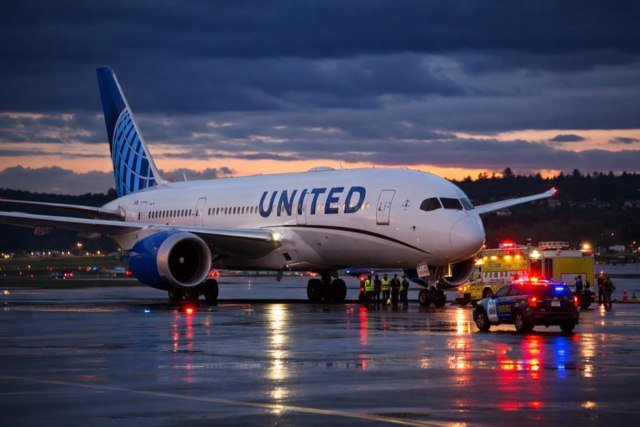
The United Flight UA109 Diversion drew attention because it looked dramatic on a flight map: a transatlantic United Airlines service departed Munich for Washington Dulles, turned around over the North Atlantic, and landed in Dublin instead. But the most important point is that the diversion appears to have been a controlled safety decision, not a catastrophic in-air failure. Reports published on October 30–31, 2025 said the Boeing 787-8 operating UA109 diverted after a crew member suffered a medical issue, with the aircraft landing safely in Dublin before later continuing to Washington.
- What happened on United Flight UA109?
- Why the United Flight UA109 Diversion was the right call
- Why Dublin was a logical diversion airport
- Are medical diversions common?
- Why this incident mattered beyond one flight
- What passengers can learn from the United Flight UA109 Diversion
- Final verdict on United Flight UA109 Diversion
- FAQ: United Flight UA109 Diversion
That distinction matters. In aviation, a diversion often sounds alarming to the public, yet many diversions are signs that the system is working as designed. Aviation safety references note that diversions can happen for many reasons, including weather, technical faults, fuel concerns, security events, and medical issues affecting passengers or crew members. The captain, or pilot in command, is the decision-maker in most such cases and can deviate from the original plan in the interest of safety.
What happened on United Flight UA109?
Based on available reporting, United Flight UA109 was operating from Munich Airport (MUC) to Washington Dulles International Airport (IAD) on October 30, 2025 when it diverted to Dublin Airport (DUB). Travel and aviation-tracking reports identified the aircraft as a Boeing 787-8 Dreamliner and said the flight turned back over the Atlantic after a crew medical emergency. AIRLIVE reported the diversion in real time on October 30, 2025, and Travel And Tour World later reported that the aircraft landed safely in Dublin and then resumed its journey to Washington.
One detail circulating online was that the affected crew member had pain from a blister. That detail appears in secondary reporting and in a social-media summary surfaced by search, but it is not something I could independently verify from a primary airline statement in the sources reviewed here. The firmer, better-supported takeaway is simply that the diversion was tied to a crew member’s medical condition, and there is no strong evidence in the sources reviewed that the aircraft itself suffered a mechanical failure.
That difference is important for readers and travelers. When a headline says “emergency landing” or “diversion,” many people assume engine trouble or a major systems failure. In this case, the available reporting points instead to an operational safety response triggered by a medical issue involving crew fitness. That may be less dramatic than internet speculation, but it is exactly the kind of judgment commercial aviation is built around.
Why the United Flight UA109 Diversion was the right call
A diversion is not only about getting someone medical help quickly. It is also about maintaining safe and compliant flight operations for the rest of the journey. SKYbrary, a widely used aviation safety reference, lists medical issues affecting either a passenger or a crew member among the standard reasons a flight may divert and explains that the pilot in command typically chooses the most suitable alternate airport after considering operational conditions.
FAA guidance also reinforces the captain’s authority during emergencies and urgency situations. The agency notes that when safety requires it, the pilot can deviate from the original clearance and then coordinate with air traffic control as soon as possible. In plain language, once the crew determines that continuing to destination is no longer the safest option, the flight plan changes.
For cabin staffing, U.S. regulations require minimum numbers of flight attendants based on seating capacity. Under 14 CFR 121.391, airplanes with more than 100 seats must carry two flight attendants plus one additional flight attendant for each unit or part of 50 seats above 100. That does not prove, by itself, that UA109 fell below its required complement, because airlines can carry more than the minimum and the exact approved staffing for a specific aircraft can vary by operations specifications. Still, the regulation helps explain why a crew medical issue can become more than a comfort problem: cabin crew availability is a core safety matter, not just a service issue.
This is the real lesson behind the United Flight UA109 Diversion. Commercial aviation does not wait for a situation to become visibly disastrous before acting. It is designed to intervene early, while options are still good and the aircraft is still near a practical alternate airport. That conservative mindset is one reason air travel remains so safe.
Why Dublin was a logical diversion airport
For a Munich-to-Washington flight heading west over the Atlantic, Dublin is not a random choice. It is a major airport with strong transatlantic positioning, robust medical and ground support, and geographic convenience for flights still relatively close to Europe. Secondary reporting on UA109 specifically described Dublin as a practical alternate on that route, and the timing of the diversion suggests the aircraft was still in a phase of flight where returning toward Ireland made operational sense.
This matters because alternate-airport planning is built into long-haul flying. Diversion airports are not improvised in panic; they are part of the operational framework before departure. SKYbrary notes that while alternates are commonly specified in the flight plan, the pilot may also consider other suitable airports depending on runway information, weather, assistance available, and the nature of the onboard problem. In a crew medical scenario, proximity to prompt medical assessment can outweigh the inconvenience of disrupting the route.
So when readers ask, “Why didn’t the plane just continue to Washington?” the answer is simple: because a flight is judged by safe completion, not by schedule adherence. If medical support, crew fitness, or regulatory considerations are better addressed by landing sooner, the most professional decision is often to divert.
Are medical diversions common?
They are not rare, but they are not the norm on every flight either. The CDC’s Yellow Book says medical emergencies occur on about 1 of every 604 commercial flights. The same CDC guidance says that about 90% of those emergencies still continue to their destination, while around 10% divert to an alternate airport. The events most likely to cause diversion are the more serious ones, including cardiac arrest, chest pain, possible stroke, and certain obstetric or gynecologic concerns.
That statistic helps put the United Flight UA109 Diversion into perspective. A diversion for a medical issue is uncommon enough to attract attention, but common enough that airlines, airports, dispatch teams, and cockpit crews train for it. In other words, this was unusual for the passengers on board, but not unusual for the aviation system itself.
It also explains why a diversion should not automatically be read as evidence of airline failure. In many cases, it means the opposite. It means the crew recognized a risk, used established procedures, coordinated with ATC and ground teams, and solved the problem before it escalated. That is not a breakdown of safety culture. It is safety culture in action.
Why this incident mattered beyond one flight
The United Flight UA109 Diversion mattered because it became a miniature case study in how aviation decision-making really works. Online audiences often search these incidents expecting a hidden scandal, dramatic malfunction, or passenger chaos. But many real-world diversions are much quieter and more procedural. The cockpit makes a risk-based decision, the aircraft lands at a suitable airport, medical or operational support is provided, and the journey continues if and when it is safe to do so. Reporting on UA109 indicates exactly that pattern.
It also mattered because it showed how strongly commercial aviation prioritizes people over schedule. Airlines are under pressure to protect on-time performance, aircraft rotations, crew legality, and customer satisfaction. Even so, when a crew member’s health becomes a factor, the timeline changes immediately. That is the kind of tradeoff many industries talk about, but aviation is one of the few where the structure to enforce it already exists.
For travelers, that is reassuring. The map may look dramatic. The delay may be inconvenient. But the system is designed so that “inconvenient now” is preferable to “unsafe later.” UA109 is a reminder that behind every commercial flight is a layered network of regulations, operational planning, cockpit judgment, airport coordination, and medical contingency support.
What passengers can learn from the United Flight UA109 Diversion
The first lesson is not to assume the worst from a diversion headline. A diverted flight may involve a serious situation, but it can also reflect a precautionary response to keep a manageable problem from becoming a larger one. That seems to be the best-supported interpretation here. The aircraft landed safely, no injuries were reported in the available coverage, and the flight reportedly continued after the stop in Dublin.
The second lesson is that diversions are often about more than passengers. Public conversation tends to focus on passenger medical events, unruly travelers, or mechanical issues. But crew members are part of the safety chain too. If a crew member becomes unwell, especially on a long-haul international sector, the airline cannot simply treat that as a minor staffing inconvenience.
The third lesson is practical: passengers should keep medications, essential chargers, identification, and a basic change of plans mindset accessible during long-haul travel. Most diversions end safely and efficiently, but they can still create missed connections, late arrivals, or uncertainty during the ground stop. Being prepared does not prevent a diversion, but it makes the experience easier to manage. That final point is practical advice rather than source-based reporting, but it is a sensible takeaway from any irregular operation.
Final verdict on United Flight UA109 Diversion
The most credible reading of the United Flight UA109 Diversion is straightforward. On October 30, 2025, the Munich-to-Washington United service diverted to Dublin after a crew medical issue, landed safely, and later continued onward. The incident appears to have involved a medical and operational safety decision, not a confirmed aircraft mechanical failure.
Why does that matter? Because it shows how modern aviation handles uncertainty. A transatlantic route was interrupted, an alternate airport was used, the affected crew member received attention, and the flight resumed only after the situation was stabilized. That is exactly what passengers should want from an airline and a flight crew when something unexpected happens.
In the end, the United Flight UA109 Diversion matters not because it was sensational, but because it was professional. It is a reminder that the safest flight is not always the one that arrives exactly on time. Sometimes, it is the one that changes course early, lands calmly, and puts safety first without apology.
FAQ: United Flight UA109 Diversion
What caused the United Flight UA109 Diversion?
Available reporting says UA109 diverted because of a crew member medical issue during the flight from Munich to Washington Dulles.
Where did UA109 divert to?
The aircraft diverted to Dublin Airport (DUB) in Ireland.
Was there a mechanical problem on the aircraft?
The sources reviewed do not provide solid evidence of a mechanical problem. The best-supported explanation is a crew medical event.
Are medical diversions common in commercial aviation?
Medical emergencies happen on about 1 in 604 commercial flights, and roughly 10% of those events lead to diversion, according to the CDC.
Why do diversions matter to travelers?
They show how airlines prioritize safety, compliance, and timely medical support over sticking rigidly to schedule.