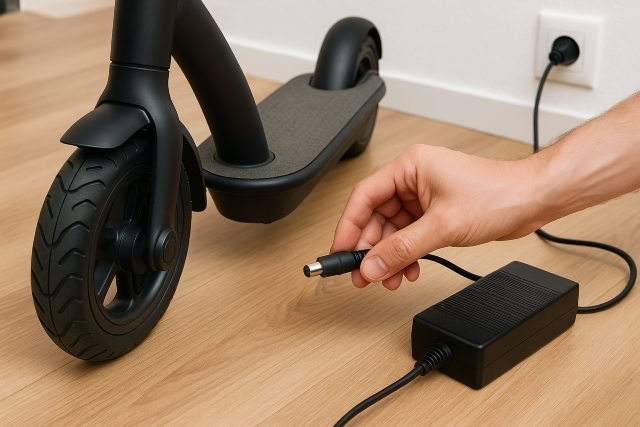
Knowing how to properly use an electric scooter charger is one of the most important steps in keeping your scooter’s battery healthy, extending its lifespan, and improving overall performance. Although it may seem as simple as plugging the charger into a wall outlet, the process involves specific techniques and best practices that can significantly impact battery life. In the first few moments of reading this guide, you will learn how small adjustments in your charging routine can lead to substantial improvements in ride quality and long-term durability.
- How an Electric Scooter Charger Works
- Choosing the Right Electric Scooter Charger
- How Long You Should Charge Your Electric Scooter
- Safety Tips When Using an Electric Scooter Charger
- Electric Scooter Charging Hacks for Better Battery Life
- What Happens If You Use the Wrong Electric Scooter Charger?
- Frequently Asked Questions About Electric Scooter Chargers
- Real-World Charging Scenario for Daily Riders
- Final Thoughts: Making the Most of Your Electric Scooter Charger
This comprehensive guide explores how chargers work, what to look for when choosing one, how long you should charge your scooter, common safety practices, and practical charging hacks supported by real-world research and expert recommendations.
How an Electric Scooter Charger Works
An electric scooter charger transforms AC power from your home into DC power that a lithium-ion battery can safely store. Most electric scooters operate on 36V, 48V, or 52V battery systems, each requiring a charger specifically designed for that voltage range. Good chargers include intelligent overcharge protection, temperature regulation, and automatic shutoff functions. These features are not merely conveniences but critical components that prevent battery degradation. Research from Battery University indicates that improper charging habits can cause up to 20 to 30 percent reduction in battery capacity over time, highlighting the importance of proper charger selection and usage.
Choosing the Right Electric Scooter Charger
Selecting the correct charger goes beyond finding one that fits your scooter’s port. Voltage must be compatible with your scooter’s battery type. For instance, a 36V battery typically requires a charger that outputs 42V, while a 48V battery relies on a charger around 54.6V. Matching amperage is equally important. A charger with higher amperage charges the scooter faster but also increases heat and chemical stress, which may shorten battery life if used frequently. Connector type also plays a significant role, as scooters often use aviation plugs, barrel connectors, or GX16 connectors. Choosing a mismatched charger can result in overheating, battery swelling, or permanent damage, so following manufacturer recommendations is essential.
How Long You Should Charge Your Electric Scooter
The typical charging time for most electric scooters ranges from three to eight hours. The actual duration depends on battery size, charger amperage, and the current charge level when you begin charging. Many riders assume that charging to 100 percent is always ideal, but lithium-ion batteries actually prefer staying within the 20 to 80 percent range. Studies published in the Journal of Power Sources support this strategy, noting that partial charging significantly reduces chemical wear within the cells. As a result, adopting a routine that avoids deep discharge and prolonged full charge can greatly extend the battery’s usable life.
Safety Tips When Using an Electric Scooter Charger
Charging your scooter safely involves more than plugging it in and walking away. The environment you choose matters. Charging in a cool and ventilated space reduces the risk of overheating, which is one of the primary causes of lithium-ion degradation. Leaving your scooter charging overnight might seem convenient, but doing so keeps the battery at full capacity unnecessarily, accelerating long-term wear even if the charger includes smart protection circuits. It is also important to check your charger regularly for signs of wear such as frayed cables, loose connectors, or discoloration. These signs may indicate electrical stress or overheating. Reputable and certified chargers are always the safest choice because off-brand alternatives may lack proper voltage regulation and surge protection.
Electric Scooter Charging Hacks for Better Battery Life
One of the most effective charging hacks is to plug in your scooter before the battery drops to extremely low levels. Allowing the battery to reach below 15 percent repeatedly forces deeper discharge cycles, which strain the cells and reduce capacity over time. Another helpful strategy is to stop charging around 80 to 90 percent during daily use. This reduces voltage stress, prevents overcharging, and promotes longer battery longevity. Many professional fleets that rely on electric scooters for rental services use this technique to prolong battery life across hundreds of daily charge cycles.
Another useful hack involves letting the scooter rest for at least 20 to 30 minutes after riding before you begin charging. During a ride, the battery temperature increases, and immediate charging adds even more heat. Giving the battery time to cool stabilizes the cell chemistry and reduces stress. Smart charging adapters can also be helpful because they allow you to set a charging limit so the battery automatically stops at a specific percentage, even if your scooter does not include its own charge-management software.
What Happens If You Use the Wrong Electric Scooter Charger?
Using an incompatible charger can create several problems, ranging from reduced battery capacity to complete battery failure. Incorrect voltage can cause overheating or swelling, and using a charger with the wrong connector may damage the charging port. Some scooters include warranties that become void if you use non-approved chargers, which can lead to expensive repairs later. More importantly, unsafe chargers introduce fire hazards, especially when battery cells are exposed to unregulated currents. This makes adhering to your manufacturer’s recommended charger not only a matter of performance but also personal safety.
Frequently Asked Questions About Electric Scooter Chargers
One common question is how to tell whether an electric scooter charger is functioning correctly. Most chargers include indicator lights that turn red while charging and switch to green once the battery reaches full capacity. If the light does not turn on, testing the charger in another outlet or checking for cable damage is the first step.
Many riders also ask whether fast chargers are safe. Fast charging is acceptable only if your scooter is specifically designed to handle higher amperage. Even then, frequent fast charging can accelerate wear due to increased heat generation, so it is best used sparingly.
Another frequent concern involves charger temperature. It is normal for a charger to become slightly warm while in use, but excessive heat may indicate poor ventilation or internal malfunction. Moving the charger to an open, cool area usually helps. If the heat persists, stopping charging until you diagnose the issue is the safest approach.
Real-World Charging Scenario for Daily Riders
A rider who uses an electric scooter for commuting might follow a practical routine that aligns with both battery longevity and consistent performance. This rider may return home with the battery at around 40 percent and then charge it up to 80 or 85 percent before going to sleep. The next day, if additional range is needed, a short top-up session at work may raise the battery level enough for the return trip. About once each month, the rider allows the scooter to charge fully to recalibrate the battery management system. This routine keeps the scooter’s performance stable without placing unnecessary stress on the battery.
Final Thoughts: Making the Most of Your Electric Scooter Charger
Your electric scooter charger is more than just a power accessory; it is one of the most important tools for maintaining your scooter’s long-term performance, safety, and reliability. Charging correctly can add months or even years to your battery’s lifespan while also reducing the likelihood of unexpected range drops or costly battery replacements. When you use proper charging habits — such as avoiding extreme discharge, limiting full charges, choosing the right charger, and charging in a safe environment — you protect both your investment and your riding experience. Smarter charging ultimately leads to smoother rides and a scooter that remains dependable for years to come.