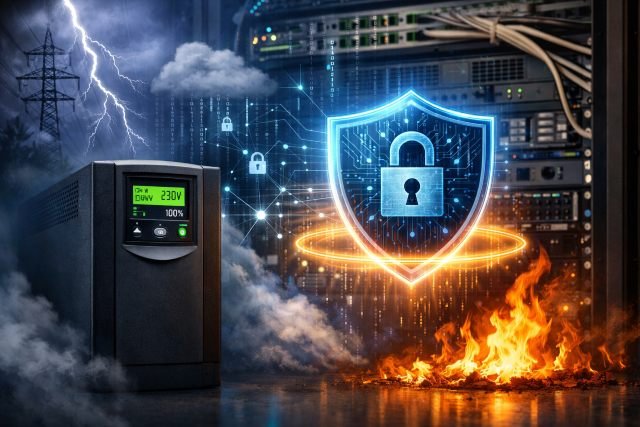
Electronic systems protection refers to the strategies, controls, and operational practices used to keep electronic systems safe from cyber threats, power issues, physical interference, environmental damage, and human error. It covers everything from enterprise IT networks and cloud infrastructure to hospital devices, manufacturing equipment, industrial control systems (ICS), IoT sensors, and smart-building technologies.
- What Is Electronic Systems Protection?
- Why Electronic Systems Protection Is Critical
- The Most Common Threats to Electronic Systems
- Electronic Systems Protection Frameworks
- Electronic Systems Protection: The Core Strategies That Deliver Maximum Safety
- Strategy Summary Table
- Real-World Scenario: Layered Protection Prevents a Major Disruption
- Compliance Tips: How to Align Protection with NIST Without Overcomplicating
- FAQ: Electronic Systems Protection
- Conclusion: Electronic Systems Protection Is Total Safety, Not Just Cybersecurity
This topic has become critical because modern organizations depend on always-on systems. When systems fail, businesses lose productivity, customers lose trust, and safety risks escalate. Cybersecurity incidents remain expensive and disruptive, with IBM reporting the global average cost of a data breach reached $4.88 million in 2024. Meanwhile, threat analysis from ENISA highlights ongoing risks such as ransomware, availability attacks, and data threats that continue to challenge organizations worldwide.
What Is Electronic Systems Protection?
Electronic systems protection is the practice of safeguarding electronic systems to ensure they remain secure, reliable, and safe to operate. This includes protecting confidentiality, integrity, and availability, while also addressing physical security, environmental resilience, and power stability. The goal is not only to prevent attacks, but also to prevent downtime, limit damage, and recover quickly when something goes wrong.
Why Electronic Systems Protection Is Critical
Electronic systems protection matters because organizations face threats from multiple directions at once. A single failure may trigger cascading outcomes such as data exposure, operational shutdown, equipment damage, and compliance penalties. Financial loss is only part of the story. Outages can break production schedules, delay healthcare services, disrupt critical infrastructure, and create safety risks for employees and the public.
On the cyber side, threat landscapes continue to evolve rapidly. ENISA’s reporting emphasizes major challenges such as ransomware and attacks targeting service availability, which is especially important for organizations that rely on continuous uptime. On the compliance side, structured frameworks like NIST SP 800-53 exist because protection cannot be improvised. NIST provides comprehensive control guidance designed to address hostile attacks, human mistakes, environmental events, and system failures.
The Most Common Threats to Electronic Systems
Electronic systems are exposed to cyber threats such as phishing, credential theft, ransomware, vulnerability exploitation, and misconfiguration risks. These threats often appear small at first but grow quickly when monitoring is weak or when systems are not segmented properly.
Physical threats are equally serious. Unauthorized access to server rooms, theft of devices, tampering with network equipment, and insider risk can compromise system integrity even if cyber defenses are strong.
Environmental and electrical threats are frequently underestimated. Voltage spikes, brownouts, prolonged outages, static discharge, overheating, humidity, water leakage, dust buildup, smoke exposure, and fire can destroy electronics or shorten hardware life. Operational threats, such as poor patching practices, weak backups, lack of alert response, and outdated incident response plans, often become the hidden cause of major outages.
Electronic Systems Protection Frameworks
Effective protection programs are structured. Rather than adding scattered tools, organizations benefit from using a framework that defines what controls matter, why they matter, and how they fit together.
NIST SP 800-53 Revision 5 provides a broad catalog of security and privacy controls for modern systems and organizations, designed to address cyber threats, human error, natural disasters, and structural issues. This makes it a strong foundation for organizations that need consistent, auditable protection.
For organizations that must protect controlled information or meet supplier security requirements, NIST SP 800-171 Revision 3 outlines specific security requirements for nonfederal systems. It includes guidance across access control, incident response, system integrity, and other core areas that support electronic systems protection programs.
Electronic Systems Protection: The Core Strategies That Deliver Maximum Safety
Start with accurate asset visibility
Protection begins with knowing what you own and what it does. Many incidents become severe simply because teams don’t know a system exists, don’t know it is internet-exposed, or don’t know who is responsible for updating it. The fastest way to improve electronic systems protection is to create a living inventory that includes servers, endpoints, IoT devices, network equipment, cloud assets, OT/ICS devices, third-party connections, and critical applications. When inventory is linked to risk scoring, teams can prioritize protection where it matters most.
Strengthen access control and reduce unnecessary privileges
Identity remains one of the most commonly exploited weak points. Strong electronic systems protection requires multi-factor authentication, least privilege principles, role-based access controls, and careful oversight of administrator permissions. NIST frameworks emphasize access control as a core family because it reduces unauthorized access and limits damage when credentials are compromised.
A practical approach is to treat privileged access as a special category. Administrator actions should be gated, logged, and reviewed. This is where privileged access management practices provide the most benefit.
Segment networks to contain failures and prevent lateral movement
Network segmentation is one of the most powerful strategies in electronic systems protection because it prevents a single compromise from spreading. When systems are grouped into zones, attackers and malware encounter barriers that slow them down and increase detection chances. Segmentation is particularly important for separating IT from OT, isolating guest networks, separating backup systems from production networks, and limiting access to sensitive resources such as payment or identity systems.
Segmentation works best when paired with internal firewalls, strong routing policies, secure remote access, and continuous monitoring of inter-zone traffic.
Patch vulnerabilities and reduce exposure to known exploits
Many breaches begin with vulnerabilities that already have known fixes. This is why patch management is essential. Effective protection programs maintain a patch cycle, prioritize high-risk vulnerabilities, focus first on internet-facing systems, and validate patch effectiveness through vulnerability scanning. When operational constraints delay patching, compensating controls such as segmentation and tighter monitoring should be applied until patching is completed.
Use encryption to limit damage and protect communication
Encryption protects data even when access controls fail. It should be applied to data in transit and data at rest. Electronic systems protection programs should also address encryption for backups and portable devices because stolen laptops and exposed storage remain common risks. Mature programs use secure key management solutions to prevent weak encryption practices from becoming another vulnerability.
Address power protection as a first-class requirement, not an afterthought
Power instability can be as destructive as cyberattacks. Sudden surges can damage servers, switches, and controllers, while brownouts and outages can corrupt data and disrupt operations. Strong electronic systems protection includes UPS systems for critical equipment, surge suppression, power conditioning, proper grounding, and in some environments, generator backup. These controls are essential in data centers, healthcare facilities, industrial plants, and security monitoring environments.
The key is to match the power protection design to the criticality of the system. Not all systems require the same level of redundancy, but every critical system needs protection against sudden failure.
Protect systems from heat, moisture, dust, and fire
Environmental protection is often overlooked until a failure occurs. Overheating causes performance degradation, random shutdowns, and shortened hardware lifespan. Moisture and leaks can cause catastrophic damage. Dust buildup and poor ventilation can lead to thermal issues and electrical failures. Fire and smoke exposure can destroy equipment even without direct flame contact.
Electronic systems protection includes temperature and humidity monitoring, alert thresholds integrated into operational dashboards, proper airflow design, dust mitigation in industrial spaces, leak detection in server rooms, and appropriate fire suppression systems suitable for electronics.
Monitor continuously and prepare for incidents before they happen
A protection strategy without monitoring is incomplete. Organizations need telemetry from endpoints, network traffic, cloud services, and key infrastructure. Detection tools such as EDR and centralized logging systems help identify abnormal activity early. Threat landscapes like ENISA’s emphasize that attacks affecting availability, including ransomware and disruption campaigns, require rapid detection and response capability.
Incident response readiness is equally important. Organizations should define escalation paths, maintain response playbooks, practice scenarios through tabletop exercises, and ensure legal and communications procedures are prepared for real incidents.
Backups and recovery planning are your last line of defense
Backups are not only about storage; they are about resilience. A strong backup strategy protects against ransomware, accidental deletion, hardware failure, and natural disasters. Mature electronic systems protection programs test recovery regularly because a backup that cannot be restored is not a backup. Increasingly, immutable backups are recommended to prevent attackers from encrypting or deleting recovery copies.
Reduce supply chain risk and secure third-party access
Electronic systems are connected to vendors, cloud platforms, service providers, and software supply chains. This makes third-party security a central part of electronic systems protection. NIST includes supply chain risk management as a key component in its control catalog, reflecting how compromises can originate from outside the organization.
Organizations should assess vendor security, restrict vendor access using least privilege, monitor third-party activity through logging, and maintain inventories of approved software and dependencies.
Strategy Summary Table
| Protection Area | Key Focus | Safety Outcome |
|---|---|---|
| Identity & Access | MFA, least privilege, admin oversight | Reduces unauthorized access |
| Network Security | Segmentation and filtering | Limits spread of attacks |
| Patch Management | Timely updates and scanning | Prevents known exploits |
| Monitoring | Centralized logging and detection | Improves early detection |
| Power Protection | UPS, surge suppression, grounding | Prevents downtime and damage |
| Environmental Controls | Cooling, sensors, fire controls | Extends hardware reliability |
| Backup & Recovery | Tested backups, immutable storage | Enables rapid restoration |
| Supply Chain Security | Vendor controls and audits | Lowers third-party risk |
Real-World Scenario: Layered Protection Prevents a Major Disruption
Consider a mid-sized manufacturer facing two risks at once: unstable power fluctuations affecting production equipment and a phishing campaign targeting employee credentials. Like many organizations, they had limited segmentation between office systems and operational technology.
They improved electronic systems protection by deploying UPS systems and surge suppression on core controllers, enforcing multi-factor authentication for email and remote access, segmenting IT and OT networks, implementing immutable backups for production configurations, and deploying monitoring that could identify abnormal behavior quickly. The outcome was stronger uptime stability and the ability to contain a later malware event before it reached production systems.
This scenario demonstrates the true value of electronic systems protection: not merely preventing incidents, but limiting the impact and enabling fast recovery.
Compliance Tips: How to Align Protection with NIST Without Overcomplicating
Organizations often struggle because they attempt to implement everything at once. A more practical approach is to start with high-impact NIST-aligned controls, then expand systematically. NIST provides structured control families that help organizations build protection programs that are consistent and measurable.
A realistic path begins with identity and access controls, moves into segmentation and endpoint security, strengthens backup and recovery, expands monitoring and incident response maturity, and finally tightens vendor and supply chain controls to reduce external risk.
FAQ: Electronic Systems Protection
What is electronic systems protection?
Electronic systems protection is the practice of safeguarding electronic systems from cyberattacks, physical interference, electrical instability, environmental damage, and operational failures to ensure secure and reliable operation.
What are the most important electronic systems protection strategies?
The most important strategies include strong access control, segmentation, patch management, monitoring, backup resilience, power protection, environmental controls, and vendor risk management. These strategies work best when implemented as layered defenses rather than isolated tools.
How does NIST support electronic systems protection?
NIST frameworks provide structured, recognized control sets that help organizations reduce risk systematically. NIST SP 800-53 Rev. 5 offers a comprehensive catalog of security and privacy controls designed to address threats and operational failures across modern systems.
What is the biggest risk to electronic systems today?
The biggest risks typically combine credential compromise, ransomware, unpatched vulnerabilities, and misconfiguration. ENISA reporting highlights availability attacks and ransomware as major threats affecting organizations and critical services.
What happens when electronic systems protection is weak?
Weak protection increases the likelihood of downtime, data exposure, equipment damage, compliance penalties, and operational disruption. IBM’s research shows how costly these incidents can be, with the global average breach cost reaching $4.88 million in 2024.
Conclusion: Electronic Systems Protection Is Total Safety, Not Just Cybersecurity
Electronic systems protection is now a full-spectrum safety strategy. Modern systems face cyber risks, physical threats, power instability, and environmental hazards — all of which can cause serious downtime and damage. The most successful organizations treat protection as layered resilience, combining access control, segmentation, patching, monitoring, backups, power conditioning, environmental safeguards, and supply chain governance.
When these controls are aligned with trusted frameworks like NIST SP 800-53 and informed by real-world threat reporting such as ENISA’s landscape analysis, protection becomes practical, measurable, and audit-ready.