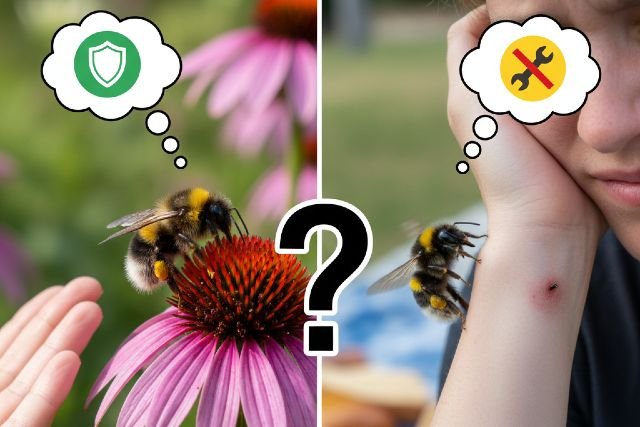
Do bumble bees sting? This is a common question for gardeners, hikers, and anyone who spends time outdoors. The short answer is yes, bumble bees can sting, but they are far less aggressive than many people assume. These fuzzy insects are primarily focused on pollinating plants and usually avoid humans unless they feel threatened.
- Do bumble bees sting humans?
- Are bumble bees aggressive?
- Can bumble bees sting more than once?
- Do bumble bees die after they sting?
- What does a bumble bee sting feel like?
- How dangerous are bumble bee stings?
- What to do if a bumble bee stings you
- Signs of an allergic reaction to a bee sting
- How to avoid bumble bee stings outdoors
- Should you remove a bumble bee nest?
- Do bumble bees sting? Final thoughts
Understanding when and why bumble do bumble bees sting can help you stay safe outdoors while also protecting these essential pollinators. This article explains who can sting, what a sting feels like, how dangerous it is, and what to do if you are stung.
Do bumble bees sting humans?
Yes, bumble bees do sting humans, but only female bumble bees are capable of stinging. The stinger is a modified egg-laying organ, which is why male bumble bees do not sting at all. Worker bees and queen bees both have stingers, but they rarely use them unless they feel their safety or nest is under threat.
Most people who are stung by a bumble bee report that the incident occurred accidentally. Common situations include stepping on a bee in grass, trapping one inside clothing, or unknowingly getting too close to a nest.
Are bumble bees aggressive?
Bumble bees are generally calm and non-aggressive. Unlike wasps or yellow jackets, they are not territorial over food sources and do not actively seek out humans to sting. When a bumble bee stings, it is almost always a defensive reaction rather than an attack.
If a bumble bee repeatedly flies near your face or body, it may be warning you that you are too close to its nest. Slowly moving away usually resolves the situation without any harm.
Can bumble bees sting more than once?
Yes, bumble bees can sting more than once. Their stingers are smooth rather than barbed, which allows them to withdraw the stinger after use. This is different from honey bees, which often die after stinging because their barbed stinger becomes lodged in the skin.
Even though bumble bees are capable of stinging multiple times, they almost never do so unless the threat continues. Leaving the area calmly after a sting greatly reduces the risk of additional stings.
Do bumble bees die after they sting?
No, bumble bees usually do not die after stinging. Because their stinger is not barbed, it does not tear away from their body. This allows them to survive the encounter and return to their colony.
This biological difference is one of the reasons bumble bees are considered less risky than honey bees when it comes to stings.
What does a bumble bee sting feel like?
A bumble bee sting typically causes immediate sharp pain or a burning sensation. The area around the sting often becomes red, swollen, and warm to the touch. Itching may develop as the sting heals.
For most people, the discomfort fades within a few hours and swelling usually resolves within one or two days. Severe pain or long-lasting symptoms are uncommon unless the person has an allergy.
How dangerous are bumble bee stings?
For the majority of people, bumble bee stings are not dangerous. They are painful but cause only mild, localized reactions. However, for individuals with insect sting allergies, a sting can trigger a severe reaction known as anaphylaxis.
According to the U.S. Centers for Disease Control and Prevention, an average of about 70 deaths per year are linked to hornet, wasp, and bee stings combined in the United States. These cases are rare, but they highlight the importance of recognizing allergic symptoms and seeking emergency care when necessary.
What to do if a bumble bee stings you
If you are stung by a bumble bee, move away from the area calmly to prevent further stings. Wash the sting site with soap and water to reduce the risk of infection. Applying a cold compress can help reduce swelling and pain.
Over-the-counter antihistamines and topical treatments such as hydrocortisone cream or calamine lotion may help relieve itching and inflammation. If symptoms worsen or signs of an allergic reaction appear, seek medical attention immediately.
Signs of an allergic reaction to a bee sting
A severe allergic reaction may include difficulty breathing, swelling of the face or throat, dizziness, nausea, or widespread hives. These symptoms can develop quickly and require emergency medical treatment.
Anyone who knows they are allergic to bee stings should carry prescribed emergency medication and inform others nearby when spending time outdoors.
How to avoid bumble bee stings outdoors
The best way to avoid bumble bee stings is to remain calm around them and avoid sudden movements. Swatting at bees often increases the chance of being stung. Wearing shoes when walking through grass and being cautious around flowering plants can significantly reduce accidental encounters.
When gardening or mowing lawns, watch for repeated bee activity near the ground, which may indicate a nest. Giving these areas space helps prevent defensive behavior.
Should you remove a bumble bee nest?
In many cases, bumble bee nests do not need to be removed. Bumble bees are important pollinators, and their nests are often temporary, lasting only one season. If a nest is not located near high-traffic areas, leaving it undisturbed is usually the safest option.
If a nest poses a risk due to its location, contacting a professional who specializes in humane wildlife or bee management is recommended. Avoid using insecticides, as they can harm beneficial pollinators and disrupt local ecosystems.
Do bumble bees sting? Final thoughts
So, do bumble bees sting? Yes, they can, but stings are uncommon and usually defensive. Female bumble bees have smooth stingers and can sting more than once, but they prefer to avoid conflict whenever possible.
By understanding bumble bee behavior, staying calm outdoors, and knowing how to respond to a sting, you can safely enjoy nature while respecting one of the environment’s most valuable pollinators.
If you want, I can now adapt this version for a specific niche such as gardening, pest control, outdoor parenting, or hiking blogs, or further optimize it for featured snippets only.