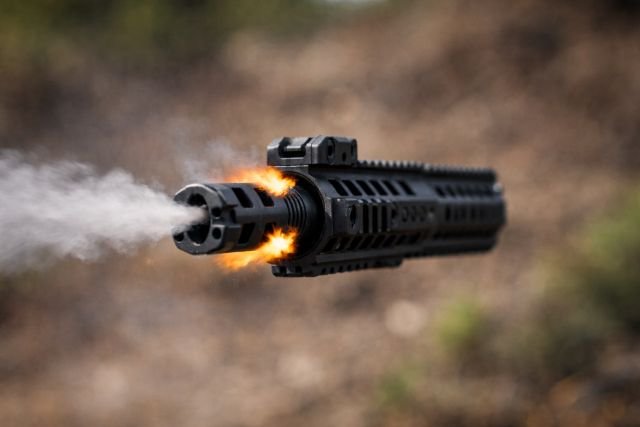
If your sights jump high during fast strings and you feel like you’re “waiting” for the gun to settle, you’re not imagining it. Rapid fire magnifies small inefficiencies in recoil control, and the most obvious one is muzzle rise. A well-matched muzzle rise eliminator can keep the muzzle flatter, help you track the sight picture through recoil, and cut the time between accurate follow-up shots.
- What is a muzzle rise eliminator?
- Muzzle brake vs compensator vs hybrid: which is the best muzzle rise eliminator?
- How a muzzle rise eliminator actually creates better control
- What improvements are realistic for rapid fire?
- Best muzzle rise eliminator choice by use case
- The specs that matter most for muzzle rise elimination
- A rapid-fire scenario that shows why “best” depends on your setup
- Setup tips that unlock the device’s full benefit
- FAQ
- Conclusion
The important nuance is that “muzzle rise eliminator” is a performance goal, not a single standardized product category. In most cases, what people mean is a compensator or a hybrid muzzle brake/compensator that redirects propellant gas to counter muzzle climb. The difference matters, because some devices reduce rearward “kick” more than they reduce vertical rise, and some prioritize comfort over maximum control. Getting “shockingly better control” comes from matching the device design to your platform, your ammo, and your training intent, not from buying the most aggressive-looking part.
This guide explains what a muzzle rise eliminator is, how it works, how to choose the right type for fast shooting, what trade-offs to expect, and how to set it up so the improvement shows up on the timer and on target.
What is a muzzle rise eliminator?
A muzzle rise eliminator is a muzzle device (or equivalent porting solution) designed primarily to reduce the upward rotation of the barrel during firing. That upward rotation—often called muzzle climb or muzzle flip — happens because recoil force is applied along the bore axis while your support (hands, shoulder, stance) is below it, creating torque that tips the muzzle upward.
Most “true” muzzle-rise-focused devices do their work by redirecting high-pressure gases upward through ports on the top of the device. When gas vents upward, the equal-and-opposite reaction pushes the muzzle downward, helping to counteract climb. That idea is a direct application of Newton’s third law of motion, which describes paired action–reaction forces in interactions.
Muzzle brake vs compensator vs hybrid: which is the best muzzle rise eliminator?
You’ll see the terms “muzzle brake” and “compensator” used interchangeably in casual conversation, but the underlying design intent is different.
A muzzle brake is typically described as a device that reduces recoil by diverting gases to the sides or at angles that generate forward counter-thrust, which can reduce how hard the firearm pushes back into you. A compensator is commonly described as a device that reduces muzzle rise by venting gas upward to push the muzzle down. Several mainstream firearms-industry explanations present this same distinction, while also noting that many products blend features and land in “hybrid” territory.
For rapid fire, “best” usually means “best for keeping sights stable between shots.” In that context, hybrids and compensator-forward designs tend to win because vertical control is the limiter for fast, accurate follow-ups. If you want the shortest path to noticeably flatter sight tracking, prioritize top-porting compensation or a brake/comp hybrid that includes meaningful top ports.
How a muzzle rise eliminator actually creates better control
When a cartridge fires, expanding gases propel the projectile forward and also escape the muzzle at high velocity. A muzzle device captures and redirects some of that escaping gas. If it vents gas upward, the reaction force pushes the device downward, countering muzzle climb. Explanations of compensator function commonly describe this same mechanism and explicitly tie it to Newton’s third law in plain language.
It’s helpful to separate two outcomes that get lumped together as “recoil control.”
Rearward recoil reduction is about reducing how much the gun pushes straight back. Muzzle rise reduction is about reducing the upward rotation that breaks your sight picture. A device can do one well and the other only modestly, or it can do both if it’s designed as a hybrid. That’s why a “brake-only” setup can feel softer but still lift your sights higher than you’d like, while a comp-forward setup can keep sights flatter even if the rearward push still exists.
What improvements are realistic for rapid fire?
A good muzzle rise eliminator can feel like cheating compared to a bare muzzle, but expectations should stay grounded. Performance varies by cartridge pressure, barrel length, device geometry, and how you grip and track sights.
In recoil testing and comparative reviews, it’s common to see meaningful reductions in measured recoil impulse or peak force for effective muzzle brakes, sometimes around or above the 50% range in certain test setups. For example, one published recoil testing write-up reported peak-force reductions above 50% for multiple brakes in their test group, with top performers higher still. Another comparative “shootout”-style review cited a recoil reduction figure around 50% for a hybrid device in their testing context.
Those are recoil-force numbers and won’t translate perfectly to “my dot stays dead still,” but they do show that gas redirection can produce substantial measurable effects. On the muzzle-rise side, several industry and enthusiast explanations describe compensators specifically as targeting muzzle flip by directing gases upward, and some sources cite wide ranges for how much muzzle rise can be reduced depending on setup.
The practical takeaway is that the biggest day-one improvement most shooters feel is faster sight recovery. The biggest long-term improvement shows up when you combine the device with consistent grip and sight tracking, because compensation rewards repeatability.
Best muzzle rise eliminator choice by use case
The most useful way to choose “the best muzzle rise eliminator for rapid fire” is to match the design to your environment and priorities.
Hybrid brake/comp: best all-around rapid-fire control
If you want a single choice that tends to deliver the most obvious improvement in rapid strings, a hybrid device is the safest “performance-first” bet. Hybrids redirect gas laterally to reduce recoil while also using top ports to fight muzzle rise. That combination helps keep the gun flatter and reduces how far the sights leave the target, which is exactly what costs you time during rapid fire.
The trade-off is blast and concussion. More aggressive gas redirection to the sides is commonly associated with increased noise and unpleasant side blast for people near you, and that’s a real consideration at indoor ranges or crowded bays.
Compensator-forward design: best for flattest sight tracking
If your main goal is “keep the dot/front sight from lifting,” a compensator that emphasizes upward venting is often the cleanest solution. Explanations of pistol and rifle compensators repeatedly highlight that upward ports create a downward counter-force that reduces muzzle flip.
The trade-off is that rearward recoil may not drop as dramatically as it can with a brake-first design, especially on higher-recoiling setups. Some sources also note that compensators can change blast and perceived noise patterns for those around you.
Comfort-forward choice: why some shooters accept less rise reduction
Some shooters prioritize range comfort, especially indoors, and choose designs that reduce the perceived concussion to neighbors even if they give up some peak “flatness.” If your environment makes you avoid practicing, even the best-performing device is a bad choice. A slightly less aggressive option that you’ll actually train with can outperform an extreme device that lives in a drawer.
The specs that matter most for muzzle rise elimination
Even without naming specific brands, you can make a high-confidence pick by focusing on the features that drive the physics.
Port orientation matters most. If the device has meaningful top ports, it is more likely to reduce muzzle rise because it is venting gas upward to push the muzzle down. This is the core design logic described in compensator explanations across multiple sources.
Gas volume and pressure are your “fuel.” Devices are working with the gas that exits your muzzle, so higher-pressure setups and shorter barrels can make the device feel more effective, though often at the cost of more blast. The device’s internal volume and port size influence how much gas it can redirect and how sharply the forces apply.
Added length and mass can help in a non-magic way. A bit of forward weight can reduce how fast the muzzle moves by adding inertia, which can feel smoother in rapid strings. This is not a substitute for good porting, but it’s a common reason two devices with similar porting can still feel different.
Alignment and timing matter. A top-ported device only works as intended if the ports are actually oriented correctly. If a device is “timed” incorrectly, you may not get the downward counter-force you paid for. This is one of those unglamorous details that can make a great device feel mediocre.
A rapid-fire scenario that shows why “best” depends on your setup
Imagine two shooters with similar rifles and similar skill levels. Shooter A installs a brake-first device with strong side baffles and minimal top compensation. Shooter B installs a hybrid with significant top ports. On a controlled pair drill, both feel less rearward shove, but Shooter B’s dot tracks more vertically “in place” and returns faster to the exact aiming point. Shooter A’s gun feels softer, yet the dot still lifts higher and takes longer to settle because the torque that causes climb wasn’t countered as strongly.
Now add a practical constraint. If both are shooting in a tight indoor lane, Shooter B’s device might be more unpleasant to neighbors if it’s more aggressive, potentially limiting practice time. In that case, Shooter A might train more often and ultimately shoot better despite slightly worse device performance. That’s why the best muzzle rise eliminator is the one you can run hard in your real environment.
Setup tips that unlock the device’s full benefit
A muzzle rise eliminator amplifies what you do right and exposes what you do inconsistently. When shooters say a compensator “did nothing,” the most common reason is not that compensation is fake, but that their grip and tracking don’t let the benefit show up.
If you want a real, repeatable difference, focus on keeping your support consistent and tracking the sight through recoil rather than trying to “find” it after the shot. A compensator is best at turning chaotic movement into a more predictable pattern. Your job is to take advantage of that predictability.
Also remember that “felt recoil” and “sight behavior” can diverge. Reviews and guides that distinguish brakes and compensators emphasize that these devices can be optimized for different recoil components, which matches what shooters observe on the range.
FAQ
What is the best muzzle rise eliminator for rapid fire?
For most rapid-fire use, a hybrid brake/comp or a compensator-forward design with meaningful top ports tends to provide the most noticeable improvement in sight tracking, because it directly targets muzzle climb by venting gas upward.
Do compensators reduce recoil or just muzzle flip?
Compensators are primarily designed to reduce muzzle rise by redirecting gas upward, creating a downward reaction force. Depending on design and setup, they may also change felt recoil, but their core purpose is fighting muzzle flip.
How much improvement should I expect?
Measured recoil-force reductions for effective muzzle devices can be substantial in some test contexts, and published testing sometimes reports reductions above 50% for certain designs and setups. Your personal outcome depends on platform, ammo, and technique, but faster sight recovery is a common practical benefit.
Are muzzle rise eliminators louder?
Often, yes. Devices that vent gas to the sides can increase perceived blast and noise for the shooter and especially for people next to you. This is frequently mentioned as a key trade-off when comparing brakes and compensators.
Conclusion
A muzzle rise eliminator is one of the most effective hardware upgrades for rapid-fire control because it targets the problem that slows follow-up shots: vertical muzzle climb that breaks your sight picture. The best-performing options for most shooters are compensator-forward designs and hybrid brake/comp devices, because they vent gas in a way that pushes the muzzle down, directly countering flip through the same action–reaction principle described by Newton’s third law.
The smartest way to choose is to balance performance with where and how you shoot. If you can tolerate blast and want maximum flatness, prioritize meaningful top porting. If you’re training indoors or around others, pick a device you’ll actually practice with regularly. Pair the device with consistent grip and intentional sight tracking, and the improvement won’t just feel better — it will show up in faster, cleaner strings and more confident control.