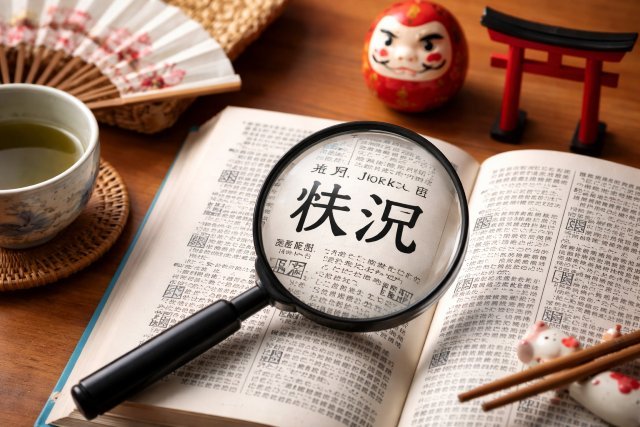
If you’ve ever heard someone say “it depends on the situation” while talking about Japan, you’re already close to the heart of Jyokyo. In Japanese, Jyokyo (状況, usually written as jōkyō) most directly means “situation,” “conditions,” or “state of affairs.” But in real life, Jyokyo is more than a dictionary translation. It’s a cultural habit of constantly scanning context — who’s involved, what’s unspoken, what would preserve harmony — and then choosing the most appropriate action.
- What does Jyokyo mean?
- Jyokyo and Japanese “context-first” communication
- Why Jyokyo matters in Japanese culture
- Jyokyo in everyday life: real scenarios
- Jyokyo for Japanese language learners: how to use it correctly
- Jyokyo, “reading the air,” and the modern workplace
- Common misunderstandings (and how to avoid them)
- FAQ: Quick answers
- Conclusion: Jyokyo as a cultural superpower
Understanding Jyokyo helps you make sense of everyday Japanese interactions: why “no” might not sound like “no,” why silence can be meaningful, and why the right response is often the one that fits the moment rather than the one that’s bluntly “accurate.”
What does Jyokyo mean?
Jyokyo (状況 / じょうきょう) means “situation,” “circumstances,” “conditions,” or “state of affairs.” It’s used in casual conversation, news reporting, business updates, and formal writing — anywhere you need to describe what’s going on and what factors shape it.
A very common, practical usage is asking for a status update — basically “what’s the situation?” For example, JapanDict glosses 状況 as “state of affairs / situation / conditions / circumstances.”
Jyokyo vs. “situation” in English
English speakers often treat “situation” as a neutral fact: a summary of events. Japanese Jyokyo can function that way too — but it frequently carries an implied next step:
- What should we do, given the circumstances?
- What is appropriate, given relationships and hierarchy?
- What is safest, least disruptive, most harmonious?
That’s why Jyokyo shows up in workplaces and social settings where “reading the room” matters.
Jyokyo and Japanese “context-first” communication
Japan is widely described as a high-context culture, meaning people rely more on shared understanding, nonverbal cues, and situational awareness than on explicit verbal detail. Edward T. Hall introduced the “high-context vs. low-context” framework in Beyond Culture (1976).
When a culture leans high-context, Jyokyo becomes a social skill: you’re expected to notice what’s happening and adjust your words, tone, and timing accordingly.
One place this becomes very visible is the idea of “reading the air” (kuuki wo yomu), a phrase often explained as reading the room or reading between the lines. In Japanese work culture especially, “unspoken rules” and subtle expectations can be powerful.
Why Jyokyo matters in Japanese culture
Jyokyo matters because it connects to several core cultural priorities:
Harmony (wa) and avoiding social friction
A common description of Japanese communication is that it can be indirect to maintain harmony and help others “save face.” Cultural Atlas notes Japanese communication is often ambiguous or indirect to avoid conflict, with heavy attention to nonverbal cues like tone and expression.
In a context like that, Jyokyo is the lens people use to decide what to say (or not say).
Hierarchy and role-awareness
In many settings, how you speak depends on your relationship to the other person — seniority, in-group/out-group boundaries, formality, and responsibilities. Jyokyo includes those relational factors: it’s not only “what’s happening,” but “what does this mean for us, right now?”
Risk sensitivity and uncertainty avoidance
Some cross-cultural research frameworks describe Japan as relatively high in uncertainty avoidance (a preference for predictability, structure, and careful risk management). One Penn State cultural leadership blog cites Japan scoring 92 on Hofstede’s Uncertainty Avoidance Index (UAI), emphasizing discomfort with unknown situations and a cultural tendency toward rituals and planning.
Whether or not you use Hofstede scores in your own work, the practical takeaway is clear: Jyokyo-aware communication reduces uncertainty by helping people coordinate smoothly without forcing blunt confrontations.
Jyokyo in everyday life: real scenarios
To make Jyokyo feel concrete, here are a few realistic situations where it changes behavior.
Scenario 1: The “soft no” at work
A manager proposes a plan you think is risky. In many Western workplaces you might say, “I disagree,” and then explain.
In a Jyokyo-sensitive setting, you might instead say something like, “That could be difficult under the current conditions,” or “Let’s review the constraints.” The goal isn’t to hide your opinion — it’s to protect relationships and keep the group aligned.
This fits what “reading the air” articles describe: noticing the atmosphere and choosing a response that doesn’t embarrass anyone publicly.
Scenario 2: Silence as information
In some cultures, silence suggests confusion or disengagement. In Japanese conversations, silence may indicate reflection, polite restraint, or a signal that the topic is sensitive — again, depending on Jyokyo.
If you interpret silence only through your own cultural default, you may miss what’s being communicated.
Scenario 3: Social invitations and “maybe”
You invite someone out. They respond warmly but vaguely. The literal words might sound like a “yes,” but the Jyokyo (timing, tone, context, prior cues) might hint they’re declining without saying it directly.
This is one reason learners often feel Japanese is “hard to read” — the meaning is distributed across words + situation.
Jyokyo for Japanese language learners: how to use it correctly
If you’re learning Japanese, Jyokyo is a vocabulary word you’ll encounter early, but it’s also a mindset you develop over time.
Common phrases with Jyokyo
You’ll see Jyokyo in “status update” contexts, like asking someone to explain the current state of affairs. JapanDict gives an example sentence where 状況 appears in a “please inform me” structure — very typical in business or formal settings.
A useful habit is to notice how often Japanese speakers frame decisions through circumstances rather than personal preference.
Actionable tip: practice “context cues” alongside vocabulary
When you learn a Jyokyo-related phrase, also track:
- Who is speaking (seniority, closeness)?
- Where it’s happening (office, family, public space)?
- What is not being said (hesitation, indirectness, silence)?
This is the difference between understanding Japanese words and understanding Japanese communication.
Jyokyo, “reading the air,” and the modern workplace
The slang KY (from kuuki yomenai, “can’t read the air”) became popular as a label for someone who misses the social context. GLOBIS explains KY as referring to a person oblivious to social cues, and connects it directly to high-context communication and unspoken rules in Japanese workplaces.
This doesn’t mean Japan is uniquely subtle or that all Japanese people communicate the same way. But it does mean context awareness is often rewarded, especially in group-oriented settings.
Common misunderstandings (and how to avoid them)
Misunderstanding 1: “Indirect means dishonest”
Indirectness is often a strategy for politeness, harmony, and relationship maintenance — not a lack of sincerity. Cultural Atlas explicitly connects indirectness to avoiding loss of face and maintaining harmony.
What to do: Replace “Are they lying?” with “What outcome are they trying to protect in this situation?”
Misunderstanding 2: “If they don’t say it, it isn’t important”
In high-context communication, what’s implied can be as important as what’s spoken. Hall’s framework exists largely to describe this difference.
What to do: Watch for repeated hints, timing, and who speaks (or stays silent).
Misunderstanding 3: “One rule fits all of Japan”
Regional, generational, and organizational differences matter. Jyokyo isn’t a rigid rulebook; it’s an attentiveness to the factors that shape meaning.
What to do: Treat Jyokyo as a feedback loop: observe → act → notice response → adjust.
FAQ: Quick answers
What is Jyokyo in Japanese?
Jyokyo (状況 / じょうきょう) means “situation,” “circumstances,” or “state of affairs.” It’s used to describe what’s happening and the conditions shaping it.
Why is Jyokyo important in Japanese culture?
Jyokyo matters because Japanese communication often relies on context — relationships, setting, and unspoken cues — especially in high-context environments.
Is Jyokyo the same as “reading the air”?
They’re related but not identical. Jyokyo is the “situation/conditions,” while reading the air (kuuki wo yomu) is the skill of sensing that situation and responding appropriately.
How do I get better at understanding Jyokyo as a foreigner?
Pay attention to tone, timing, silence, hierarchy, and group dynamics. In workplaces, learn how decisions are signaled indirectly and watch for cues about what’s appropriate.
Conclusion: Jyokyo as a cultural superpower
At its simplest, Jyokyo means “the situation.” But in practice, Jyokyo is a cultural compass: it teaches you to respond to people and moments with sensitivity, not just logic. When you understand Jyokyo, Japanese communication becomes less mysterious — because you stop looking only for explicit statements and start reading the full scene: relationships, atmosphere, and what harmony requires right now.
If you’re learning Japanese, working with Japanese colleagues, or simply trying to understand everyday life in Japan more deeply, focusing on Jyokyo will make your interactions smoother, your interpretations more accurate, and your cultural confidence much stronger.