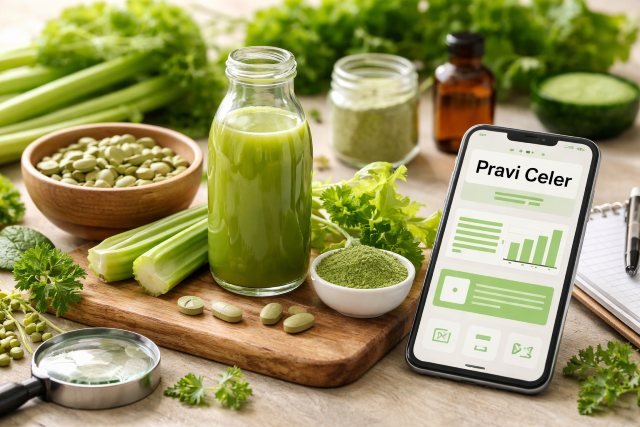
If you’ve been seeing Pravi Celer pop up in wellness posts, Balkan recipes, or “real food” conversations, you’re not alone. In the simplest sense, Pravi Celer points to “true/real celery” — often implying the whole celery plant (stalks, leaves, root/celeriac, and seeds) and the more traditional, flavorful way it’s used across kitchens and cultures. Celery itself is Apium graveolens, a well-known plant in the parsley family with a long culinary and herbal history.
- What Is Pravi Celer?
- Why Pravi Celer Matters
- Pravi Celer vs Regular Celery: What’s the Difference?
- Nutritional Snapshot: What Celery Brings to the Table
- Evidence-Based Benefits: What We Know (and What We Don’t)
- How to Use Pravi Celer
- Storage and Prep Tips
- Safety, Side Effects, and Who Should Be Careful
- Examples: “Pravi Celer” in Everyday Life
- FAQ: Pravi Celer
- Conclusion: Bringing Pravi Celer Into Real Life
You’ll learn what Pravi Celer is, why it matters, how it differs from “regular celery habits,” and exactly how to use it — plus FAQs, safety notes, and practical tips you can apply today.
What Is Pravi Celer?
Pravi Celer is a phrase used online and in some South Slavic language contexts to mean “real/true celery.” You’ll often see it used to emphasize authenticity — either the traditional ingredient (celery as it’s actually used in many regional dishes) or the whole-plant approach (using leaves, stalks, root, and seeds rather than treating celery as “just crunchy sticks”).
Why Pravi Celer Matters
Celery is easy to underestimate because it’s light, crisp, and mostly water. But “Pravi Celer” matters because it nudges you toward what actually makes celery valuable:
1) You get more nutrition when you use more of the plant
Stalks are great, but celery leaves and root bring different flavors and nutrient profiles. Celery is generally low-calorie and hydrating, and it contributes vitamins/minerals that support everyday nutrition.
2) You tap into celery’s bioactive compounds — without turning it into a miracle cure
Research reviews note celery contains compounds like apigenin and luteolin (flavonoids often discussed for antioxidant/anti-inflammatory activity). That’s interesting science, but it’s not a license to claim celery “cures” anything. Think of it as a supportive food, not a replacement for medical care.
3) It’s culturally “real”
In many European and Balkan cooking traditions, celery isn’t a garnish — it’s a base flavor (soups, stocks, stews) and often paired with carrots and onions as a foundation. That cultural usage is part of what people mean when they say “Pravi Celer.”
Pravi Celer vs Regular Celery: What’s the Difference?
In most grocery stores, “celery” usually means trimmed stalk celery. Pravi Celer is less about a separate species and more about how you choose and use celery.
| Feature | “Regular celery use” | “Pravi Celer” approach |
|---|---|---|
| What you use | Mostly stalks | Stalks + leaves + root (celeriac) + sometimes seeds |
| Goal | Crunch, low-cal snack | Flavor base + nutrition + less waste |
| Cooking | Often raw only | Raw, cooked, blended, simmered, pickled |
| Mindset | Single-purpose | Whole-plant, traditional, practical |
Celery’s botanical identity stays the same: Apium graveolens.
Nutritional Snapshot: What Celery Brings to the Table
Celery is widely known for being hydrating and low calorie, and nutrition databases are the best place to ground this in reality rather than vibes. For precise macros/micros, refer to USDA FoodData Central, which is one of the most authoritative nutrition sources available.
What people typically get from a “Pravi Celer” pattern of eating:
- Hydration + volume (helpful for fullness)
- Fiber (especially if you also use root/celeriac and leaves, not just stalks)
- A steady, savory flavor base that can make healthy meals taste better
Evidence-Based Benefits: What We Know (and What We Don’t)
Let’s separate reasonable, supported benefits from exaggerated claims.
Benefit 1: Supports heart-health patterns (especially when it replaces processed foods)
Celery itself can be part of a heart-healthy eating pattern — mainly because it’s a vegetable that helps you build meals with more produce and fewer ultra-processed calories.
Important nuance: There is research interest in celery and blood pressure, including systematic reviews/meta-analyses of trials examining celery interventions. But effects vary across studies, and celery is not a substitute for prescribed treatment.
Benefit 2: Celery seed extract may modestly affect blood pressure (supplement context)
A clinical trial on celery seed extract capsules in hypertensive patients reported safety and improvements in some markers over the study period. This does not mean everyone should supplement, but it explains why celery seed appears in wellness conversations.
Benefit 3: Contains bioactive compounds studied for antioxidant/anti-inflammatory properties
Scientific reviews describe celery’s phytochemicals (including flavonoids) and discuss potential mechanisms. Translation: it’s a plant with interesting compounds — one reason vegetables are consistently associated with better long-term health outcomes.
What Pravi Celer does NOT do (real talk)
- It doesn’t “detox” your liver in a magical way (your liver already detoxes).
- It doesn’t erase hypertension, diabetes, or high cholesterol on its own.
- It doesn’t compensate for an otherwise poor diet.
How to Use Pravi Celer
Here’s the practical part: how people actually use Pravi Celer at home without making life complicated.
1) Use stalks for quick wins
Best for: snacks, salads, crunch, blending.
Try:
- Chopped into tuna/chicken salad for texture
- Added to smoothies if you like a fresh “green” note
- Sautéed briefly before adding soups (this upgrades flavor)
2) Use celery leaves like an herb (because they basically are)
Celery leaves are underrated. They’re punchier than stalks and work like parsley with an attitude.
Use leaves:
- Stirred into soup right before serving
- Mixed into yogurt-based dips
- Chopped into omelets
3) Use celeriac (celery root) for “comfort food” swaps
Celeriac has a deeper, earthy celery flavor and is perfect for:
- Creamy mash (alone or mixed with potatoes)
- Roasting as wedges
- Grating raw into slaw (lemon + olive oil + salt works)
Britannica notes celery is widely used cooked for stocks and soups — celeriac fits that tradition beautifully.
4) Use celery in stock as your flavor foundation (Pravi Celer “secret”)
If you want to cook more at home, this is the highest ROI habit:
- Simmer celery (stalks + leaves) with onion and carrot
- Freeze the stock in portions
- Use it to make everything taste “restaurant-level” without extra salt
5) Celery juice: how to do it without getting weird about it
Celery juice is popular. If you enjoy it, keep it simple:
- Wash thoroughly
- Blend with water and strain (or use a juicer)
- Drink it because you like it, not because you expect miracles
If you’re doing celery juice for health reasons, anchor expectations in evidence: it’s a vegetable beverage, not a medical treatment.
Storage and Prep Tips
Stalks:
Wrap in a towel/paper towel and store in a bag or container. Keep it crisp by avoiding excess moisture pooling.
Leaves:
Store like herbs — lightly wrapped, and use sooner than stalks.
Celeriac:
Keeps longer than stalks. Once cut, wrap tightly to prevent browning.
Pro tip: If stalks go limp, soak them in cold water for 10–20 minutes to revive crunch.
Safety, Side Effects, and Who Should Be Careful
Celery is safe for most people as food. The big watch-out is celery allergy, which can be serious.
Celery allergy and cross-reactivity
Celery allergy is associated with cross-reactivity in some pollen-allergy patterns (often discussed as birch/mugwort-celery syndrome). If you’ve had reactions, don’t experiment — talk to an allergist.
If you use celery seed supplements
Supplements are more concentrated than food. Evidence exists (including clinical trials), but supplementation decisions should be individualized, especially if you take blood pressure meds, diuretics, or have allergies.
Examples: “Pravi Celer” in Everyday Life
Scenario 1: Busy professional who wants healthier lunches
You keep celery stalks for crunch, but you also chop leaves into a quick chickpea salad. That turns “snack celery” into a meal upgrade.
Scenario 2: Home cook trying to cut takeout
You make a weekly pot of stock using celery stalks + leaves and freeze it. Suddenly soups, rice, and sauces taste better, and cooking feels easier.
Scenario 3: Fitness-focused eater who wants volume foods
You add roasted celeriac as a base under protein bowls. It’s satisfying, flavorful, and keeps meals interesting.
FAQ: Pravi Celer
Is Pravi Celer different from celery?
Pravi Celer usually refers to “true/real celery” and often implies using more of the plant (stalks, leaves, root/celeriac, sometimes seeds), rather than only stalks. Celery itself is Apium graveolens.
What part of Pravi Celer is healthiest?
There isn’t one “best” part. Stalks support hydration and crunch, leaves act like a nutrient-dense herb, and celeriac offers fiber and a satisfying texture. Using more parts increases variety and reduces waste.
Does Pravi Celer help blood pressure?
Evidence on celery interventions (including celery seed extract in supplement form) suggests potential modest effects in some studies, but results vary and it should not replace prescribed treatment.
Is celery juice worth it?
It can be a convenient way to consume a vegetable if you enjoy it. Just keep expectations realistic: it’s not a cure-all, and whole vegetables still matter.
Can I eat Pravi Celer every day?
Most people can eat celery daily as part of a varied diet. If you have celery allergy symptoms, stop and seek medical guidance.
Conclusion: Bringing Pravi Celer Into Real Life
Pravi Celer isn’t just a trendy phrase — it’s a useful way to think about celery as a whole, versatile ingredient: stalks for crunch, leaves for bold flavor, celeriac for comfort-food texture, and (for some) seeds as a traditional herbal add-on. When you use Pravi Celer in this whole-plant way, you get better flavor, less food waste, and an easy pathway to more vegetable-forward meals — grounded in what celery actually is (Apium graveolens) and what research realistically suggests about its compounds and uses.
If you want, I can also write a matching supporting recipe post (celery stock, celeriac mash, or a “7-day Pravi Celer meal plan”) to strengthen your internal linking and topical authority.