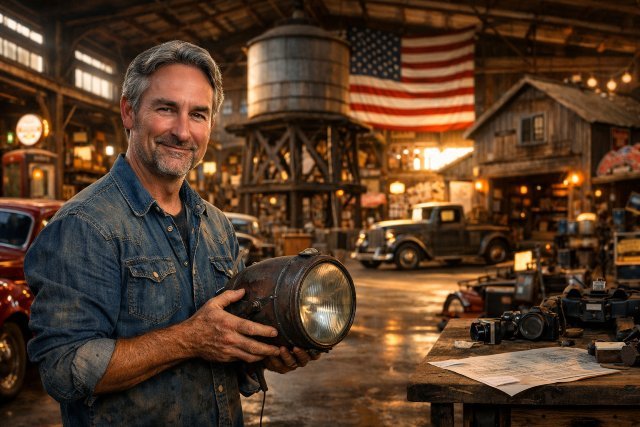
If you know Mike Wolfe from American Pickers, you already know his superpower: he can spot forgotten value from a mile away. But the Mike Wolfe Passion Project goes beyond rescuing cool objects. It’s a bigger, bolder idea — reviving the places those objects came from, and proving that “old” can be the starting point for what comes next.
- What Is the Mike Wolfe Passion Project?
- Why This Vision Is Bigger Than “Picking”
- Columbia Motor Alley: The Flagship Example of the Mike Wolfe Passion Project
- Two Lanes: The Storytelling Engine Behind the Passion Project
- Two Lanes Guesthouse: Turning Preservation Into an Experience
- The Economics Behind the Dream: Does Preservation Actually Pay Off?
- The Design Philosophy: How Wolfe’s Projects Avoid Looking Like “Theme Parks”
- Actionable Takeaways: How to Apply the Mike Wolfe Passion Project Mindset
- Common Questions People Ask About the Mike Wolfe Passion Project
- Conclusion: Why the Mike Wolfe Passion Project Resonates
This isn’t just about collecting Americana. It’s about preserving it in real life, on real streets, in real communities — especially in small-town downtowns that many people drive past without ever slowing down.
By the time you finish this deep dive, you’ll understand what the Mike Wolfe Passion Project really is, why it’s become his most ambitious vision, and how the same mindset can help anyone — homeowners, entrepreneurs, city leaders, or creatives — turn “run-down” into “remarkable.”
What Is the Mike Wolfe Passion Project?
At its core, the Mike Wolfe Passion Project is a preservation-first approach to revitalization: save the building, honor the story, and make it useful again.
Mike has described how years on America’s backroads exposed him to abandoned dealerships, gas stations, and service garages — places that once powered local life. His goal is to help people see those “forgotten” spaces as future community anchors.
That’s the heart of the project: not nostalgia for nostalgia’s sake, but adaptive reuse — restoring historic spaces while giving them a modern purpose.
Why This Vision Is Bigger Than “Picking”
For a long time, the public version of Mike Wolfe’s work looked like this: travel, negotiate, haul, restore, sell. Simple story. Fun TV.
But the passion project flips the model.
Instead of saving a single sign, bike, or gas pump, Wolfe increasingly focuses on saving the context — the buildings, blocks, and main streets that made those artifacts meaningful in the first place. Columbia Motor Alley is a great example: it’s literally a restored historic auto space built to celebrate transportation history and preservation together.
This shift matters because it changes the stakes:
- An item restored is a win.
- A building restored is a statement.
- A district restored can change a town’s future.
Columbia Motor Alley: The Flagship Example of the Mike Wolfe Passion Project
If you want one place that captures the Mike Wolfe Passion Project in a single snapshot, it’s Columbia Motor Alley in Columbia, Tennessee.
On the official Antique Archaeology page, Columbia Motor Alley is framed as the point where Mike’s love of transportation history and historic preservation “comes together,” with an explicit hope that it inspires others to imagine what abandoned places could become again.
Media coverage around the opening also describes it as a revived classic car–themed destination built from a former dealership space, reinforcing the idea that this is about place-based storytelling, not just retail.
What makes this project “ambitious” (not just interesting)
Ambition isn’t only about size. It’s about complexity.
A project like Columbia Motor Alley asks you to juggle:
- Historic design details and authenticity
- Modern building codes and safety requirements
- A business model that keeps the restoration financially alive
- Community expectations (and sometimes skepticism)
- Ongoing maintenance, not just a one-time renovation
That’s a different game than restoring a single collectible. It’s closer to urban regeneration, just done with a preservationist’s heart.
Two Lanes: The Storytelling Engine Behind the Passion Project
Every major “movement” needs a narrative platform. For Wolfe, that platform is Two Lanes — his backroads-inspired storytelling and lifestyle brand.
On the official Two Lanes page, it’s described as an offering shaped by decades of exploring forgotten wonders on two-lane roads, built around “stories and connections,” and curated goods that reflect a purposeful, authentic way of living.
Two Lanes matters because it turns preservation into something people can participate in. Even if you never set foot in Columbia, you can still connect with the project’s values: craftsmanship, patience, and respect for history.
Two Lanes Guesthouse: Turning Preservation Into an Experience
The Two Lanes Guesthouse is another smart expression of the Mike Wolfe Passion Project — because it transforms restoration into a lived experience.
In a post on the Two Lanes blog, the guesthouse is described as a one-bedroom loft rental in historic downtown Columbia, located above a bike shop, designed with modern amenities and decorated in Wolfe’s signature style.
A separate feature also notes it’s open to the public as a Main Street loft vacation rental — essentially inviting travelers to step into the “Two Lanes” lifestyle.
This is a big deal in preservation terms. When people stay in a restored building, they stop seeing preservation as abstract. It becomes personal.
The Economics Behind the Dream: Does Preservation Actually Pay Off?
The strongest criticism of passion projects is predictable: “Nice idea — but can it last?”
Historic preservation has a compelling data-backed answer: yes, when done well.
The U.S. National Park Service reported that certified historic rehabilitation projects under the Federal Historic Preservation Tax Incentives Program in FY 2022 represented $7.3 billion in private investment, generating ~122,000 jobs and adding about $7 billion to GDP, alongside broader economic output impacts.
That doesn’t mean every restoration becomes a goldmine. But it does prove something important: preservation isn’t automatically a financial drag. In many cases, it’s a legitimate economic strategy.
The “green” argument is also real
Preservation can also be climate-smart, because reusing existing buildings avoids the carbon cost of demolition and new construction. The Preservation Green Lab has published research focused on quantifying the environmental value of building reuse.
So when the Mike Wolfe Passion Project emphasizes reuse, it’s not just romantic — it can be practical, too.
The Design Philosophy: How Wolfe’s Projects Avoid Looking Like “Theme Parks”
One fear towns have (fairly or not) is that outside investment will turn a real place into a “set.”
What makes Wolfe’s approach feel different — at least when it works — is that it tends to center on:
- Original bones: restoring what’s already there instead of gutting it into generic modernism
- Craft and patina: letting materials show their age in a way that feels honest
- Usefulness: ensuring the space has a job (retail, gathering, lodging, service)
- Story-first choices: decor that supports the building’s history rather than overpowering it
Columbia Motor Alley, for example, is explicitly framed as a preservation project meant to inspire others to reimagine neglected transportation-era buildings.
Actionable Takeaways: How to Apply the Mike Wolfe Passion Project Mindset
You don’t need a TV show to borrow the approach. Here’s how to translate the Mike Wolfe Passion Project into real-world moves:
Start with a “story audit”
Before you renovate anything — home, shop, or building — identify what story you’re trying to preserve. Is it industrial? Railroad-era? Farm town? Auto culture? Mid-century retail?
When the story is clear, design choices become easier and the result feels less random.
Choose adaptive reuse over total replacement
Ask: “What can I keep that others would throw away?”
It might be original brick, signage, windows, flooring, or even a weird old service bay that becomes your most memorable feature.
Make it financially survivable
A passion project becomes a burden if it can’t pay for its own upkeep. Consider how the space earns revenue without compromising authenticity — events, rentals, services, retail, or partnerships.
Preservation incentives and research can support this strategy in certain cases (like historic rehab programs).
Common Questions People Ask About the Mike Wolfe Passion Project
What is Mike Wolfe’s passion project, exactly?
The Mike Wolfe Passion Project is his broader mission of preserving Americana through historic restoration, adaptive reuse, and storytelling, seen in projects like Columbia Motor Alley and Two Lanes.
Where is Columbia Motor Alley?
Columbia Motor Alley is in Columbia, Tennessee, and is presented by Wolfe as a restored historic dealership space celebrating transportation history and preservation.
Is Two Lanes Guesthouse real and open to the public?
Yes — Two Lanes Guesthouse is described as a public vacation rental loft in historic downtown Columbia.
Does historic preservation actually help local economies?
It can. For example, the National Park Service reports significant economic activity and job creation associated with certified historic rehabilitation projects in the federal incentive program.
Conclusion: Why the Mike Wolfe Passion Project Resonates
The reason the Mike Wolfe Passion Project feels so compelling is that it treats preservation like a living thing.
It doesn’t argue that the past was perfect. It argues that the past is useful — as a teacher, as an identity anchor, as an economic engine, and sometimes as a greener option than starting from scratch.
From Columbia Motor Alley’s celebration of transportation-era spaces to Two Lanes’ backroads storytelling and the experience-driven Two Lanes Guesthouse , Wolfe’s most ambitious vision is clear:
Save what can be saved, tell the story with respect, and build a future that still looks like the place you came from.