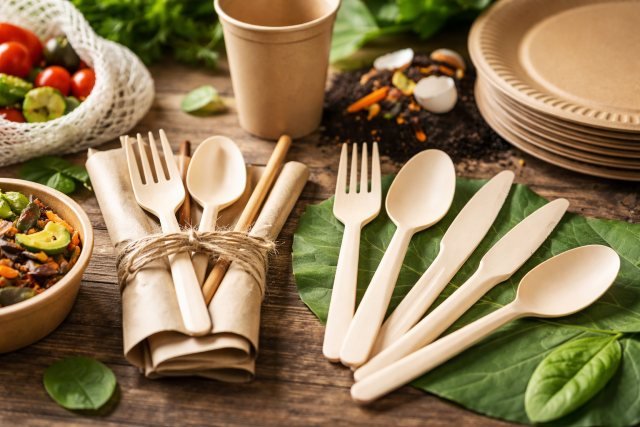
Compostable Cutlery is one of those rare sustainability swaps that can be genuinely practical, visible, and impactful — especially if you’re dealing with takeout, catering, office lunches, or events where reusable silverware isn’t realistic. In the first few bites of a meal, that fork or spoon becomes the most “touchable” piece of single-use culture, which is why it’s also one of the easiest places to start changing habits.
- Why single-use cutlery is a bigger problem than it looks
- What “compostable” actually means (and what it doesn’t)
- Compostable Cutlery materials you’ll see (and how to choose)
- Certifications that separate “real compostable” from greenwashing
- Does compostable cutlery really reduce environmental impact?
- The composting infrastructure question (the part brands don’t highlight)
- How to make Compostable Cutlery work in real life
- FAQs: Compostable Cutlery
- The bottom line: when Compostable Cutlery truly “makes a difference”
But here’s the truth most articles skip: compostable utensils only make a real difference when they’re the right material, certified properly, and matched to a composting route that actually exists. Otherwise, they can behave like any other waste item — headed to landfill, contamination problems included.
This guide breaks down how Compostable Cutlery works, what to buy, how to use it responsibly, and when it beats plastic (and when it doesn’t).
Why single-use cutlery is a bigger problem than it looks
A plastic fork seems small, but the scale is huge. Plastic production has risen dramatically over the last decades, reaching hundreds of millions of tonnes per year globally. Our World in Data reports annual global plastic production in the hundreds of millions of tonnes, reflecting how deeply plastics are embedded in everyday consumption.
Zoom in to the waste side, and the picture doesn’t get prettier. Global plastic waste recycling rates remain very low, with major shares landfilled, burned, or leaked into the environment. The University of Michigan’s Center for Sustainable Systems summarizes research indicating that only a small fraction of plastic waste is recycled globally, with a large portion landfilled and a meaningful share mismanaged or leaked.
Cutlery is particularly frustrating because it’s often made from mixed plastics, is food-contaminated, and is too small/light for many recycling systems to capture efficiently. That’s why many municipalities treat it as trash even when other plastics are accepted.
The “microplastic” angle people don’t think about
Beyond litter and landfill, there’s rising attention on microplastics linked to everyday kitchen and food-contact items. A systematic review in Environment International notes kitchens as a notable source of microplastic emissions, including disposable utensils among the everyday items that can shed particles.
That doesn’t mean a plastic fork is guaranteed to dose you with microplastics in a measurable way every time — but it does reinforce why reducing unnecessary plastic contact (especially with hot, oily, or acidic foods) is a sensible direction.
What “compostable” actually means (and what it doesn’t)
“Compostable” is not the same as “biodegradable,” and neither automatically means “will break down in your backyard.”
In practice, compostable products are designed to break down under managed composting conditions and to meet performance and safety requirements (disintegration, biodegradation, and limits on harmful residues). One widely recognized U.S. standard is ASTM D6400, which is specifically written for plastics designed to be composted in municipal and industrial aerobic composting facilities.
In Europe, compostability for packaging is commonly evaluated against EN 13432, which lays out requirements and procedures around biodegradability, disintegration during treatment, and effects on compost quality.
The key takeaway: compostable is a performance claim that depends on the system it’s designed for, not a magic property that guarantees it disappears anywhere.
Compostable Cutlery materials you’ll see (and how to choose)
Most compostable utensils fall into a few buckets. The “best” choice depends on where your waste is going and how the utensils will be used (hot foods, liquids, greasy meals, etc.).
PLA/CPLA (plant-based bioplastics)
PLA (polylactic acid) and its heat-resistant variants are common in compostable foodservice items. They’re often sturdy and pleasant to use, but they’re typically intended for industrial composting, not backyard piles. European Bioplastics’ backgrounder on EN 13432 emphasizes industrial composting performance requirements and the controlled nature of the process.
If you’re buying PLA/CPLA utensils, certifications matter (we’ll get to that), because “PLA-like” marketing language can be vague.
Starch blends and other compostable biopolymers
Some utensils use starch blends, sometimes combined with other compostable polymers to improve strength and heat tolerance. These can perform well for everyday catering and takeout, again usually in managed composting systems.
Wood or bamboo
Wooden or bamboo cutlery is often home-compostable in theory, but real outcomes depend on thickness, coatings, and your compost conditions. They can be a strong option when industrial composting access is limited, but they may not feel as comfortable for certain foods, and “splintery fork syndrome” is real if quality is low.
Pulp/fiber molded utensils
Less common than plates and bowls, but growing. These can be compelling for compostability and low-plastic messaging, though durability varies widely.
Certifications that separate “real compostable” from greenwashing
If you remember one thing from this article, make it this: buy certified compostable products, not vibes.
In North America, the Biodegradable Products Institute (BPI) is a major certification body. Their Commercial Compostability Certification Scheme describes a program built around verifying products break down in professionally managed composting facilities and conform to relevant ASTM standards, with certified items listed in a public database.
Also, BPI states that BPI-certified products meet ASTM D6400 or ASTM D6868 testing standards for compostability in managed facilities.
In Europe, EN 13432 compliance is a key reference point for packaging and compostability claims in industrial composting contexts.
A quick reality check on “home compostable”
“Home compostable” is a stricter, more consumer-sensitive claim because home compost piles are cooler, less controlled, and slower than industrial systems. Some products are certified for home composting, but many “compostable” utensils are not. If your audience is households or small offices without organics pickup, this distinction becomes the difference between success and a well-intentioned landfill detour.
Does compostable cutlery really reduce environmental impact?
It can, but only under the right conditions.
Here’s what we can say with confidence:
Plastic production and waste are enormous and still rising, with low global recycling rates and significant mismanagement.
And for plastic waste in municipal streams, official data shows plastics remain a large and growing component of waste categories.
Now, does switching to Compostable Cutlery reduce emissions and pollution? It depends on at least four factors:
First is end-of-life. Compostable utensils have to reach composting (industrial or home, depending on what they’re designed for). If they go to landfill, decomposition is limited and the climate benefits shrink dramatically.
Second is what they replace. Compostable makes the most sense when the alternative is non-recyclable plastic, and when reuse isn’t feasible (busy events, delivery-only operations, large-scale catering).
Third is contamination and sorting. Compostables can help divert food waste if your system accepts them and signage is clear. But in a system that doesn’t accept them, they can become “wishcycled” contamination.
Fourth is product design and verified performance. Standards like ASTM D6400 are explicitly framed around performance in municipal/industrial aerobic composting facilities, not casual disposal.
A helpful way to think about it: compostable cutlery is not a standalone climate solution. It’s a tool that can reduce plastic leakage and support organics diversion when the system is set up for it.
The composting infrastructure question (the part brands don’t highlight)
Industrial composting works by maintaining conditions that encourage microbial breakdown: controlled moisture, aeration, and temperatures that can be far higher and more consistent than home piles. Guidance around EN 13432 emphasizes industrial composting and the controlled process needed to meet performance requirements.
Certification programs like BPI are built around “professionally managed composting facilities,” which is another way of saying: the system matters as much as the fork.
If you’re a business, this infrastructure piece is where you can make Compostable Cutlery genuinely high-impact: align purchasing with your hauler/municipality rules, train staff, and make disposal nearly foolproof for customers.
How to make Compostable Cutlery work in real life
For restaurants, cafes, and takeout brands
If you offer utensils by default, consider a “utensils on request” toggle in delivery apps and at checkout — then use compostable utensils for the customers who actually need them. This reduces total items purchased and thrown away while still improving the footprint of what remains.
Then focus on your waste stream: if you have organics pickup, pick a certified product matched to that program and use clear bin signage. If you don’t have organics pickup, you may be better off with a high-quality wooden utensil that can break down in more settings, or you might prioritize encouraging reusables for dine-in and keeping disposables minimal for takeout.
For offices and workplaces
Offices are a sweet spot because you can control both purchasing and disposal. Compostable Cutlery paired with a food-scraps bin can meaningfully reduce mixed trash. The biggest unlock is behavior: put the compost bin closer than the trash bin, and make it visually obvious which items belong where.
For weddings, festivals, and large events
Events generate high volumes in short bursts, which makes waste sorting more chaotic — but it also makes system design easier because you can standardize what vendors use.
If every vendor uses certified compostable serviceware and you provide staffed waste stations, you can capture a large share of food scraps plus compostables together, reducing plastic contamination and landfill hauling.
FAQs: Compostable Cutlery
What is Compostable Cutlery?
Compostable Cutlery refers to forks, knives, and spoons made from materials designed to break down in managed composting conditions into compost, water, CO₂, and biomass, while meeting defined safety and residue requirements under recognized standards such as ASTM D6400.
Is compostable cutlery the same as biodegradable?
No. “Biodegradable” can be a vague claim unless it specifies conditions and timelines. “Compostable” is typically tied to test standards and controlled composting environments, such as the industrial composting context described in EN 13432 and ASTM frameworks.
Can I put compostable cutlery in my backyard compost?
Sometimes, but not always. Many compostable plastics are designed for industrial facilities, not home piles. If you need backyard compatibility, look specifically for home-compostable certification and avoid assuming “compostable” automatically means “backyard.”
How do I know if a product is actually compostable?
Look for recognized certifications and standards. In North America, BPI certification indicates products meet ASTM D6400 or D6868 criteria for managed composting facilities, and certified products are listed publicly.
What happens if compostable cutlery goes to landfill?
It likely won’t break down as intended, because landfill conditions are not designed for aerobic composting. The biggest benefits of Compostable Cutlery appear when it reaches a managed composting process.
The bottom line: when Compostable Cutlery truly “makes a difference”
Compostable Cutlery can be a meaningful eco swap when it replaces non-recyclable plastic in situations where reuse isn’t realistic — and when you’ve got a clear path to composting. The swap becomes especially powerful in offices, campuses, and events where you can standardize purchasing and control disposal.
To make it count, treat compostability as a verified performance claim, not a marketing adjective. Use certified products aligned with recognized standards like ASTM D6400 and credible certification programs such as BPI, which are explicitly built around breakdown in professionally managed composting facilities.
And if you want one simple guiding principle to end on: Compostable Cutlery is not “better because it’s plant-based.” It’s better when it’s certified, correctly collected, and actually composted — because that’s when the system turns a single-use item into something that can return to soil instead of becoming permanent waste.