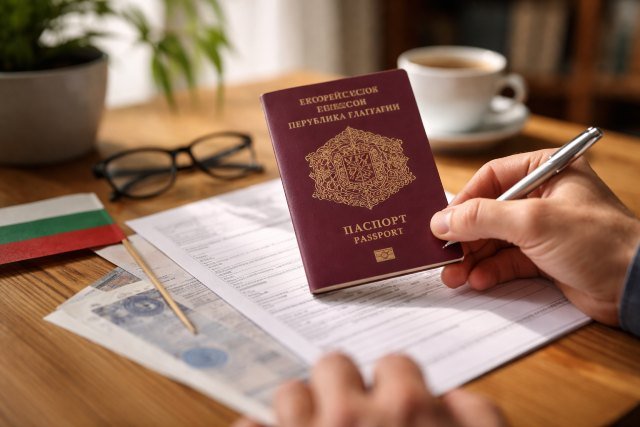
If you have been searching for Prasanja za Bugarski Pasos, you are probably looking for clear answers about the Bulgarian passport process, the documents involved, and the most practical way to prepare. In online searches, the phrase is commonly used as a broad keyword meaning “questions about the Bulgarian passport,” especially around citizenship, passport issuance, renewal, and interview preparation. It is not the official legal name of one specific Bulgarian procedure, so the safest approach is to separate the topic into two parts: first, how Bulgarian citizenship is acquired, and second, how a Bulgarian passport is issued once citizenship is confirmed.
- What Prasanja za Bugarski Pasos Usually Means
- Understanding the Bulgarian Citizenship Process First
- Who May Be Eligible
- Documents Commonly Involved
- Is There an Interview?
- Applying from Abroad
- Online Renewal and When It Helps
- Special Rules for Children
- Why a Bulgarian Passport Matters
- Practical Tips That Improve Your Chances
- Final Thoughts on Prasanja za Bugarski Pasos
That distinction matters because a Bulgarian passport is not the first step. Before a foreign national can receive one, Bulgarian citizenship must usually be granted through a lawful route such as origin, naturalisation, restoration, or another path recognized by Bulgarian law and processed through the Ministry of Justice or Bulgarian diplomatic and consular missions abroad. Official MFA guidance states that citizenship documents can be submitted through diplomatic and consular representations abroad to the Ministry of Justice, which confirms that citizenship and passport issuance are connected but legally separate stages.
What Prasanja za Bugarski Pasos Usually Means
Prasanja za Bugarski Pasos is often used by readers who want answers to common concerns such as: Who qualifies for a Bulgarian passport? What papers are needed? Is there an interview? How long does it take? Can someone apply from abroad? These are reasonable questions, but the official authorities do not use this phrase as a formal category. Instead, Bulgaria’s Ministry of Foreign Affairs divides the issue into services like Bulgarian citizenship, passport, identity card, and temporary passport.
For that reason, anyone researching this topic should be careful with generic blog advice. A lot of online content simplifies the process too much. The official sources show that the real procedure depends on your legal basis, your current nationality, your residence history, your civil-status documents, and whether you are applying for citizenship, renewing an existing passport, or requesting a passport for a child.
Understanding the Bulgarian Citizenship Process First
The most important thing to understand is that you do not apply directly for a Bulgarian passport as a foreigner unless you are already a Bulgarian citizen. The first legal milestone is citizenship. The Bulgarian MFA explains that foreigners seeking Bulgarian citizenship submit documents to the Ministry of Justice, either directly or via Bulgarian diplomatic and consular missions abroad. That means the passport stage comes after citizenship approval, not before it.
This is where many misunderstandings begin. Some people search for Prasanja za Bugarski Pasos when what they actually need is information on Bulgarian citizenship by descent, by naturalisation, or by restoration. Others are already Bulgarian citizens living abroad and simply need a new passport. Those are very different cases, with different authorities, timelines, and document checks.
A good real-world example is someone whose parent or grandparent was Bulgarian. That person may be focused on proving origin and gathering civil records, not on passport biometrics yet. By contrast, a Bulgarian citizen living abroad with an expiring passport is already in the document-renewal stage and may be able to use consular or even online renewal options under specific conditions.
Who May Be Eligible
Eligibility depends on the legal route. Bulgarian authorities recognize pathways such as acquisition of citizenship by foreigners, and official embassy guidance has long listed documentation sets for categories including naturalisation, restoration, and cases involving Bulgarian parentage. In practice, applicants often fall into ancestry-based, family-based, or long-term residence/naturalisation cases. The exact documents differ by route, so you should always match your paperwork to the right legal basis rather than copying a checklist from a general article.
That is one of the biggest tips for anyone researching Prasanja za Bugarski Pasos: do not build your file around assumptions. Build it around your legal category. If you apply under the wrong route, even well-prepared documents can become incomplete or irrelevant.
Documents Commonly Involved
Although the exact package varies, official embassy information on Bulgarian citizenship has historically included items such as an application to the Minister of Justice, a detailed CV, a photograph, a birth certificate or legalized/notarized copy in Bulgarian, a declaration, criminal-record documentation, and medical documentation in some categories. The Bulgarian MFA also directs applicants to the Ministry of Justice for detailed and route-specific requirements.
After citizenship is acquired, the passport stage has its own requirements. According to the Bulgarian MFA, a Bulgarian citizen residing abroad may submit a passport application at a Bulgarian diplomatic or consular mission. The applicant must generally appear in person because the consular officer takes digital images of the signature, face, and fingerprints.
That personal appearance requirement is especially important. Many applicants wrongly assume a passport can be arranged fully remotely. In reality, biometrics still drive the process in most standard cases. The personal visit is not just a formality; it is part of the identity verification system.
Is There an Interview?
One reason the keyword Prasanja za Bugarski Pasos has become popular is that many people associate it with the interview or question stage of citizenship-related processing. Official English-language public pages are more direct about document submission than about publishing a standard interview script, so applicants should avoid expecting a fixed list of official questions online. What usually matters is whether your documents and statements are internally consistent and whether you can clearly explain your basis for the application. The Ministry of Justice route and embassy submission process indicate that applications are formal legal matters, not casual questionnaires.
In practical terms, applicants should be ready to answer simple but important points accurately. These may include personal identity details, family links, civil-status facts, how you qualify, and whether your translated and legalized documents match your spoken explanations. The strongest preparation is not memorizing “trick questions.” It is making sure your file is truthful, complete, and consistent from start to finish.
Applying from Abroad
For many applicants, this is the most useful section. Bulgarian MFA guidance makes clear that Bulgarian citizens abroad can apply for passport issuance through diplomatic or consular missions. For citizenship matters, the MFA also states that documents can be submitted through diplomatic and consular representations abroad to the Ministry of Justice. That means you may be able to start or continue major parts of the process outside Bulgaria, depending on the stage and the service.
For passport services abroad, the MFA says passport applications are submitted personally during consular service hours and often by prior appointment where required. It also states that regular passport issuance abroad is generally within 90 days and accelerated service within 60 days, while warning that delivery logistics can still vary because of diplomatic courier schedules.
This is an area where applicants should stay practical. “Official timeline” does not always mean “passport in your hand on that date.” Shipping, consular workload, missing data, and follow-up corrections can all affect the real wait.
Online Renewal and When It Helps
There is one especially useful official update for Bulgarians abroad. Since 2021, Bulgarian citizens abroad have been able to submit applications online for Bulgarian personal documents without an electronic signature in certain cases. The MFA explains that this option is available to people who have already provided biometric data for a previous document and whose prior Bulgarian passport or ID card was received through a personally submitted application within 59 months before the replacement request. It also requires that there be no change in name, personal number, gender, citizenship, permanent address, or major lasting facial changes.
This is excellent for renewals, but it is not a shortcut for first-time citizenship cases. It also does not mean the finished document can always be received by courier. The MFA specifically says that for electronically submitted applications, receipt of the ready document is possible only in person at the relevant consular office, because the recipient’s identity must be verified and the document being replaced must be returned.
Special Rules for Children
If your research into Prasanja za Bugarski Pasos involves minors, the rules are stricter. Official MFA guidance for passport services abroad states that when a passport is issued to a person under 18, both parents sign the application before a consular official and the child’s birth certificate must also be submitted. One parent may sign alone only if specific supporting documents are produced, such as a properly certified power of attorney, a court ruling, or proof affecting parental rights.
Travel is another issue. The MFA warns that taking a child under 18 outside Bulgaria without proper authorization from the other parent or without an appropriate court decision may create serious legal problems. It also notes that destination countries may impose their own documentary requirements for children traveling with one parent or another accompanying adult.
That makes preparation doubly important for family cases. It is not enough to have the passport application ready. You also need to think ahead about travel consent and supporting family documents.
Why a Bulgarian Passport Matters
A Bulgarian passport matters because Bulgarian nationality also gives EU citizenship. Official EU guidance explains that anyone who holds the nationality of an EU country automatically has EU citizenship. EU citizens have the right to live and move within the EU without discrimination based on nationality, and as EU nationals they do not need a permit to work in any EU country, subject to the normal conditions that apply under EU and national law.
This is one reason interest in Prasanja za Bugarski Pasos remains high. For many people, the passport is not just a travel document. It represents mobility, work options, study opportunities, and long-term flexibility within the European Union. That said, those benefits should not tempt anyone into rushing the application with weak paperwork. The stronger the opportunity, the more carefully you should prepare the legal file.
Practical Tips That Improve Your Chances
The first tip is simple: treat citizenship documents and passport documents as two separate folders, even if they are part of one long journey. This keeps your case organized and reduces the chance of mixing civil records, legal proofs, and later biometric or consular paperwork.
The second tip is to make every translation, date, spelling, and family detail consistent. In citizenship-related matters, small mismatches can create delays because authorities may ask for clarifications or corrections. The MFA passport page confirms that discrepancies can trigger notices and, if not corrected within the required time, the procedure can be terminated.
The third tip is to use official sources first. The Bulgarian MFA provides service pages for citizenship, passports, temporary passports, child travel requirements, and online document renewal. Those pages are more reliable than general blogs because they describe the actual state procedure.
The fourth tip is to plan for appointments and logistics. Even when the legal side is clear, you may still need an appointment slot, biometric capture, document delivery time, or an in-person pickup.
The fifth tip is to avoid overconfidence about online renewal. It is useful, but only for a defined group of existing document holders who meet the biometric and data-stability conditions.
Final Thoughts on Prasanja za Bugarski Pasos
The phrase Prasanja za Bugarski Pasos may sound like one simple topic, but in reality it covers several connected legal and consular stages. The key is to understand whether you are asking about Bulgarian citizenship, passport issuance, passport renewal, a child’s passport, or rights that come after becoming a Bulgarian citizen. Once you separate those stages, the process becomes much easier to navigate.
The smartest approach is to rely on official Bulgarian government guidance, prepare route-specific documents, keep every record consistent, and understand that citizenship approval comes before passport issuance. For applicants who qualify, the result can be highly valuable because Bulgarian nationality also brings EU citizenship rights related to living, moving, and working across the European Union.