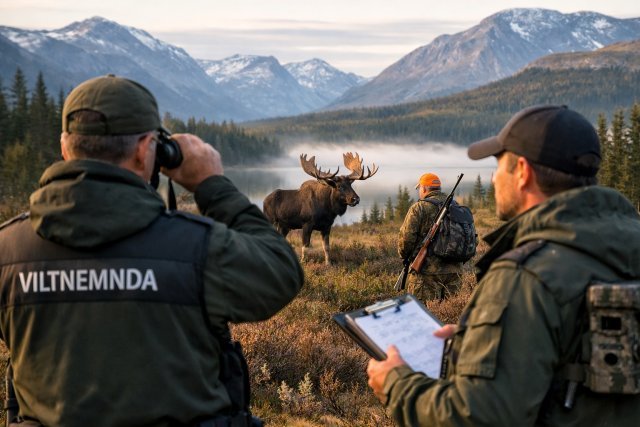
If you have been trying to understand Viltnemnda and its role in Norway, the short answer is this: wildlife and hunting in Norway are not controlled by a single local committee acting alone. Instead, authority is shared across national law, central agencies, county-level oversight, and the municipality. In many municipalities, Viltnemnda refers to the local wildlife board or delegated municipal body that helps make decisions on wildlife management, especially around local hunting rules, deer management, and practical implementation of national regulations. The legal framework still rests primarily on the Wildlife Act, central regulations, and municipal decisions made under delegated authority.
- What does Viltnemnda mean in Norway?
- Who actually controls wildlife and hunting in Norway?
- How the municipality and Viltnemnda work together
- What powers does Viltnemnda typically influence?
- Hunting in Norway is legal, but not casual
- Why local control matters in wildlife management
- Is Viltnemnda still important today?
- Common questions about Viltnemnda
- What the numbers say about hunting in Norway
- A note on the future of wildlife law in Norway
- Conclusion
That balance matters because Norway treats wildlife as both a public resource and a management responsibility. Hunting is allowed, but it is tightly regulated through national legislation, seasonal rules, training requirements for hunters, and local decisions on how certain species such as moose, red deer, and roe deer are managed in practice. In other words, Viltnemnda sits inside a larger system rather than above it.
What does Viltnemnda mean in Norway?
In Norwegian local administration, Viltnemnda is commonly understood as the municipal wildlife board, or the local body exercising delegated authority over wildlife-related matters. The exact organizational form can vary from one municipality to another, but the practical role is usually tied to local wildlife management, especially where municipalities issue regulations or decisions on huntable species such as moose and deer. Recent local regulations published in Lovdata still show municipal rules being formally adopted “by Viltnemnda” in municipalities such as Haram, Giske, and Høyanger.
That said, the legal structure of wildlife administration in Norway was changed years ago so that the municipality itself is the formal public authority in the system, with appeals generally going to the county governor, now the Statsforvalteren. In practice, this means Viltnemnda often acts as the municipality’s political committee or delegated wildlife body, not as an independent layer outside government.
Who actually controls wildlife and hunting in Norway?
The real answer is shared control.
At the top, the Norwegian state sets the framework through legislation and national policy. The Wildlife Act, known as viltloven, has long been the main legal basis for hunting and wildlife management. National authorities also issue regulations, define broad hunting seasons, and set administrative responsibilities.
Below that, national agencies guide implementation. The Norwegian Environment Agency, Miljødirektoratet, provides guidance on hunting seasons, wildlife management, injured wildlife procedures, and regulatory interpretation. It also publishes guidance explaining how municipalities manage cervids such as moose, red deer, and roe deer.
Then comes the municipality. This is where local governance becomes visible. Municipalities can open hunting for certain species within their borders, set or apply local rules connected to minimum area requirements and cervid management, collect certain fees, approve local hunting structures, and handle practical responsibilities such as follow-up on injured large game. In many places, that municipal role is carried out through or with the help of Viltnemnda.
County-level authorities also matter. The Statsforvalteren has an oversight and appeals role in several environmental matters and provides regional guidance. In protected areas and sensitive environmental zones, county-level administration may become especially important.
So, if someone asks, “Who controls wildlife and hunting in Norway?” the most accurate answer is: the national government sets the law, agencies provide guidance, municipalities make many local decisions, and Viltnemnda often functions as the municipal wildlife body that applies those rules on the ground.
How the municipality and Viltnemnda work together
This is where many readers get confused. Norway’s wildlife management model is strongly local in day-to-day practice, especially for cervid management. The municipality can open hunting for moose, red deer, and roe deer within its boundaries, and local regulations often address matters such as hunting access, local opening provisions, and minimum-area rules. Official commentary from the Norwegian Environment Agency states that the municipality can open hunting for elk, red deer, and roe deer within its borders.
That is why local committees like Viltnemnda remain relevant. Even when national law frames everything, somebody at municipal level has to translate it into workable local management. That can include evaluating wildlife pressure, agricultural damage, habitat conditions, harvest balance, and public safety concerns. In a country with large rural areas and different species pressures from region to region, purely centralized control would be impractical.
A useful real-world example is deer management. Local regulations in Lovdata show municipalities and Viltnemnda setting rules related to deer hunting and minimum-area decisions. These are not symbolic powers. They directly affect how many animals may be harvested and under what local structure hunting can proceed.
What powers does Viltnemnda typically influence?
The exact answer depends on the municipality, but several recurring functions stand out.
First, local wildlife boards are closely associated with deer and large game administration. Norway’s regulatory guidance on cervid management makes the municipality central to opening hunting, managing local structures, and following up on practical rules.
Second, municipalities have direct responsibilities when wildlife is injured. The Norwegian Environment Agency states that the municipality must follow up searches for injured or shot moose, red deer, and roe deer with sufficient length, quality, and intensity. It also states that the municipality has responsibility for searches involving sick or injured large game outside ordinary hunting time.
Third, local authorities handle part of the financing structure around management. Regulations on municipal and county wildlife funds explain that municipalities with moose and red deer hunting must set and collect culling fees for harvested animals, within national limits.
Taken together, these powers show why Viltnemnda matters. It may not write Norway’s wildlife laws, but it often shapes how those laws are carried out locally.
Hunting in Norway is legal, but not casual
One mistake many outside readers make is assuming that if hunting is locally managed, it must be loosely regulated. Norway is actually quite structured.
The Norwegian Environment Agency explains that the national hunting and trapping guide covers the hunting periods in force from 1 April 2022 to 31 March 2028. For example, red deer may be hunted from 1 September to 23 December in municipalities where local regulations open for red deer hunting.
Hunters must also meet competency requirements. Official study-plan guidance states that the mandatory hunter education course must be completed and the exam passed in order to be registered in the Hunters’ Register, and that such registration is a prerequisite for hunting, culling, or trapping in Norway.
There has also been an administrative update since 1 January 2025: the Norwegian Environment Agency notes that guidance on the conduct of hunting, trapping, the hunter exam, and the shooting test would be found on the Norwegian Agriculture Agency’s website from that date. That tells readers something important about Norway’s system: responsibilities can be reallocated administratively, but the overall framework remains highly formal and rule-based.
Why local control matters in wildlife management
Wildlife policy is never only about hunting. It also involves animal welfare, biodiversity, land use, road safety, and conflict prevention.
Norway’s biodiversity strategy underscores the government’s broader commitment to protecting ecosystems and species, while hunting regulations and local cervid management are part of a practical system for balancing ecological and social needs.
That balance becomes clear in injured-wildlife cases. The municipality’s responsibility to follow up on wounded large game is not simply a hunting issue. It reflects a welfare duty to prevent unnecessary suffering. The Norwegian Environment Agency explicitly says animals should not be subjected to unnecessary suffering and that there can be a need, for animal welfare reasons, to kill wildlife that is injured outside ordinary hunting periods.
This is one of the strongest arguments for having a local body such as Viltnemnda involved. Wildlife management is too immediate and place-specific to be run only from Oslo. Local decision-makers are better positioned to understand seasonal migration, traffic risks, agricultural loss, and species density in their own municipality.
Is Viltnemnda still important today?
Yes, but the most accurate way to describe its importance is functional rather than absolute.
Some older legal terminology around wildlife bodies has changed over time, and the municipality is now the formal administrative level emphasized in the law. Still, the word Viltnemnda remains active in contemporary municipal regulations and local governance practice. In 2024 and 2025, Lovdata entries continued to record local wildlife regulations as being adopted by Viltnemnda in specific municipalities.
That means the term is still highly relevant for anyone researching Norwegian wildlife governance, especially at the local level. It may not always mean the same committee structure in every municipality, but it still points to the local wildlife decision-making layer.
Common questions about Viltnemnda
Does Viltnemnda make Norway’s hunting laws?
No. National law and regulations set the overall rules. Viltnemnda usually works within municipal authority and delegated local responsibilities.
Can a municipality control hunting seasons on its own?
Not completely. National rules define the overall framework, but municipalities can open hunting locally for certain species and make important practical decisions under that framework.
Who handles injured moose or deer?
The municipality has official responsibility to follow up searches for injured large game and to manage certain injured-wildlife cases outside ordinary hunting time.
Do hunters in Norway need formal training?
Yes. The mandatory hunter education course and exam are required for registration in the Hunters’ Register, which is necessary to hunt legally in Norway.
What the numbers say about hunting in Norway
Hunting is not a niche footnote in Norway. Statistics Norway says its registered hunters data show how many people are in the official Norwegian Register of Hunters, how many paid the hunting licence fee, and how many new hunters passed the hunting test in the last hunting year. That alone shows that hunting is a regulated national activity supported by official registers and annual reporting.
Statistics Norway also maintains separate statistics for active hunters, small game and roe deer hunting, and wild reindeer hunting. This reflects a management system built on data, not only on tradition.
A note on the future of wildlife law in Norway
There is also a policy development worth noting. In April 2025, the government presented Prop. 78 L (2024–2025), a proposal for a new wildlife resources law that would replace the current Wildlife Act. Because this is a proposal, not something readers should assume is already in force, it is best treated as a sign that Norway’s wildlife governance framework is evolving rather than as a final legal fact.
For article readers, that means one practical thing: the role of terms like Viltnemnda, municipal authority, and agency guidance may continue to develop. But the core idea will likely remain the same: Norway combines national legal control with strong local administration.
Conclusion
Viltnemnda is best understood as Norway’s local wildlife governance layer at the municipal level, not the sole authority over wildlife and hunting. The state sets the rules, national agencies issue guidance, county authorities oversee and hear appeals in some cases, and municipalities handle many practical and regulatory decisions on the ground. In that local system, Viltnemnda often functions as the visible decision-making body for wildlife and hunting matters.
That is why the term continues to matter. If you are researching who controls wildlife and hunting in Norway, the honest answer is not one institution but a layered governance model. Still, when local hunting rules, deer management, or injured-wildlife response are being discussed, Viltnemnda is often the name people encounter first. In that sense, Viltnemnda remains one of the clearest entry points for understanding how Norwegian wildlife management actually works.