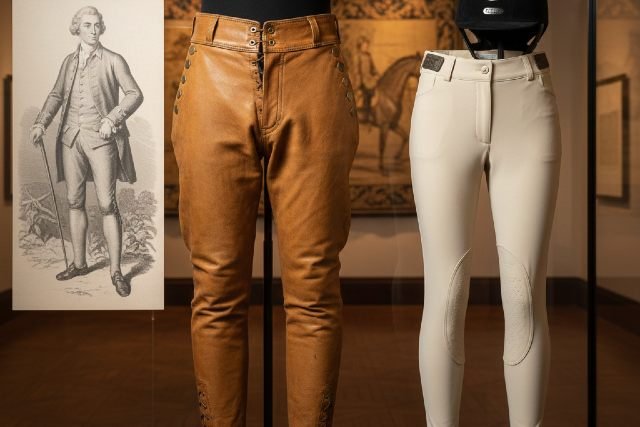
Breeches are a type of lower-body garment that traditionally cover the body from the waist and end at or just below the knee. They were widely worn in Europe for centuries and became especially iconic between the 16th and 18th centuries when they were the standard alternative to full-length trousers. Today, breeches still exist in specialized contexts such as horseback riding, traditional uniforms, historical reenactments, and costume design. The word “breeches” is typically used as a plural-only noun in English, much like “pants.”
- Breeches Meaning
- Breeches Etymology: Where the Word Comes From
- Breeches vs Trousers vs Culottes
- The History of Breeches: How They Evolved Over Time
- Breeches and the French Revolution: When Clothing Became Political
- Why Breeches Declined in Everyday Wear
- Modern Breeches: Where You Still See Them Today
- How to Choose the Right Breeches
- Breeches FAQs
- Conclusion: Breeches Then and Now
Breeches Meaning
In modern usage, breeches refers to a garment covering the body from the waist to the knee, or slightly below, traditionally worn by men and boys. This definition is consistent across historical and dictionary references, where breeches are commonly described as knee-length leg coverings designed to be worn with stockings or boots.
Breeches typically fit more closely than early loose hose, and classic versions are tailored, structured, and often fastened at the knee. Older sources also show that the word could sometimes refer broadly to leg coverings or undergarments depending on the century and region, but the most recognized image remains the knee-length tailored style.
Breeches Etymology: Where the Word Comes From
The term breeches comes from Old English “brēc,” a word historically connected with garments covering the lower body. Linguists note that the word is related to other early European terms for leg garments, reflecting how ancient and widespread the concept of fitted lower-body clothing was across the continent. The plural-only structure is also historically rooted, and breeches is sometimes described as a “double plural” in English development.
Breeches vs Trousers vs Culottes
Although breeches are sometimes loosely equated with “pants,” they are distinct from trousers in traditional clothing history. Breeches typically end at the knee and are often fastened there, while trousers extend to the ankles and became widespread in Western menswear from the late 18th century into the 19th century.
Culottes are closely related because the term often refers to knee breeches in French fashion history, particularly among aristocratic dress traditions. Knickerbockers and “knickers” are later knee-length garments that became more common in the 19th and early 20th centuries, often used for sport or casual wear. Modern “riding breeches,” while sharing the name, are usually ankle-length and are specifically engineered for equestrian comfort and performance.
The History of Breeches: How They Evolved Over Time
Breeches in the 16th Century: Status and Visual Power
Breeches rose to prominence in the 1500s as men’s clothing became more structured and expressive. In Renaissance Europe, legwear shifted from medieval hose toward more constructed garments, and breeches became increasingly decorative, sometimes padded or puffed. At this time, clothing functioned as a social language. The materials, silhouette, and detailing signaled wealth and rank, and breeches helped define the masculine court style in several European regions.
Breeches in the 17th Century: Toward a Tailored Shape
By the 1600s, breeches gradually shifted away from exaggerated puffiness and moved toward a more tailored look. This transition was influenced by changing court fashion, military aesthetics, and practical needs such as movement and riding. Many historical sources describe how breeches became more fitted and gradually longer, setting the stage for the classic knee-breeches shape that would dominate in the next century.
Breeches in the 18th Century: The Golden Era of Knee Breeches
The 1700s are often considered the peak of breeches fashion. Knee breeches were worn broadly by men and boys across social classes, though wealthy individuals wore higher-quality fabrics and more refined tailoring. Historical clothing references note that eighteenth-century breeches were commonly fitted, lined, and fastened, and were a standard pairing with stockings and formal shoes. The silhouette became a defining marker of the era and remains one of the most recognizable pieces of early modern menswear.
Breeches and the French Revolution: When Clothing Became Political
One of the most fascinating chapters in the story of breeches is their link to the French Revolution. During this period, breeches were strongly associated with aristocratic identity, while trousers were associated with the working class. The term sans-culottes, meaning “without breeches,” became a label for revolutionary supporters who rejected elite fashion and wore trousers as a statement of political alignment and social identity. This contrast illustrates how clothing can become symbolic, and how a garment as simple as legwear can represent class conflict and ideology.
Why Breeches Declined in Everyday Wear
By the early 19th century, breeches largely disappeared from daily menswear as trousers became dominant. This change was tied to industrialization, which favored practical, durable clothing suited to work and mass production. It was also shaped by political and cultural shifts that made aristocratic styles less appealing and pushed fashion toward simpler silhouettes. Although breeches fell out of everyday use, they did not vanish completely. Instead, they survived in specialized functions such as riding, ceremonial uniforms, and later costume and historical fashion communities.
Modern Breeches: Where You Still See Them Today
Equestrian Breeches in Horse Riding
In modern contexts, breeches are most commonly associated with equestrian sports. Riding breeches are designed to reduce friction, improve comfort, and enhance stability in the saddle. They are typically made from stretch fabrics and often include reinforced knee patches or full-seat grip for better contact. Many riding guides also distinguish breeches from jodhpurs, particularly in how they pair with boots and how the fabric falls at the ankle.
Breeches in Reenactment, Theater, and Costume
Breeches remain essential in historical reenactment and costume because they instantly convey time period. Whether used in stage productions, museum interpretations, or film, breeches visually communicate the 17th–18th century Western fashion silhouette. Costume designers continue to rely on breeches for accuracy, symbolism, and clarity in historical storytelling.
Breeches in Ceremonial and Traditional Uniforms
Certain ceremonial uniforms incorporate breeches or breeches-inspired garments, especially in contexts connected to equestrian roles, heritage dress, or formal tradition. Their continued presence in these settings reflects the garment’s long-standing association with discipline, refinement, and historical continuity.
How to Choose the Right Breeches
If you are buying breeches for riding, fit and fabric matter most. Breeches should feel snug without restricting movement, and the seams should be smooth enough to prevent irritation during long rides. The choice between knee-patch and full-seat designs often comes down to riding discipline and personal preference, as different designs offer different levels of grip. Fabric choice should also reflect climate, because lightweight materials improve breathability in summer while insulated options enhance comfort in winter.
Care is equally important. Washing breeches inside out can protect grip materials, and avoiding harsh softeners helps preserve elasticity. Air drying also reduces wear, especially for technical fabrics that rely on stretch and shape retention.
Breeches FAQs
What are breeches?
Breeches are knee-length garments that cover the waist and legs and typically end at or just below the knee, historically worn by men and boys and often fastened around the knee.
Are breeches the same as trousers?
No. Breeches are traditionally knee-length and often fastened at the knee, while trousers are full-length garments that extend to the ankles and became more common in Western fashion from the late 18th and 19th centuries onward.
Why did men stop wearing breeches?
Breeches declined because trousers became more practical for industrial life and changing fashion norms. Cultural and political shifts also contributed to the decline of aristocratic styles in favor of simpler, more standardized clothing.
What does “sans-culottes” mean?
Sans-culottes means “without breeches” and referred to French Revolution supporters who wore trousers rather than elite knee breeches, turning clothing into a visible symbol of political identity.
What are riding breeches used for today?
Riding breeches are used in equestrian sports to improve comfort, reduce friction, and enhance grip and stability in the saddle, often featuring stretch fabrics and reinforced grip areas.
Conclusion: Breeches Then and Now
Breeches are more than an old-fashioned term. They represent centuries of fashion evolution, class identity, and even political symbolism. From Renaissance courts to eighteenth-century formalwear, breeches shaped the look of men’s clothing for generations. Their role in the French Revolution shows how clothing can become a powerful social marker, distinguishing elites from working-class movements.
In the modern world, breeches live on most clearly through equestrian sport, where performance-driven design keeps them relevant and functional. Whether you’re reading historical literature, studying fashion history, or shopping for riding apparel, understanding breeches gives you a clearer view of how a single garment influenced both style and society over time.