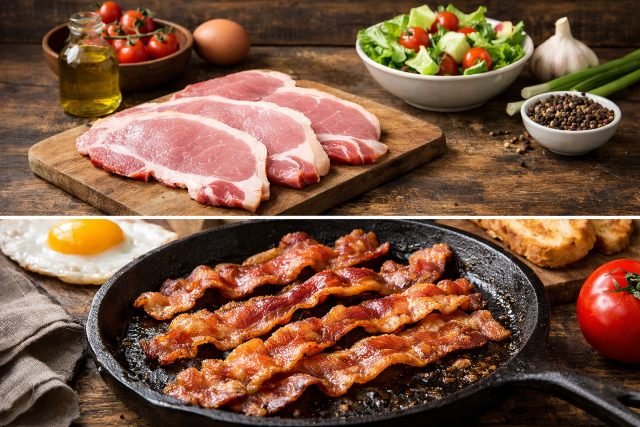
If you’ve ever wondered whether back bacon is the “healthiest bacon option,” you’re not alone. Back bacon is often seen as a better choice because it usually comes from the leaner part of the pig, meaning it tends to have less fat than streaky bacon. That’s why many people assume it’s automatically healthier.
- What Is Back Bacon?
- Back Bacon vs Streaky Bacon: What’s the Real Difference?
- Is Back Bacon the Healthiest Bacon?
- Back Bacon Nutrition Facts
- Back Bacon vs Regular Bacon: Comparison Table
- The Sodium Catch: Why “Healthiest Bacon” Can Be Misleading
- Processed Meat Research: Does Back Bacon Carry the Same Risks?
- So, Is Back Bacon a Myth or a Better Choice?
- Back Bacon and Weight Loss: Can It Help?
- Back Bacon vs Turkey Bacon: Which Is Healthier?
- How to Choose Healthier Back Bacon
- Healthier Ways to Cook Back Bacon
- Portion Size: The Real “Secret” to Healthier Bacon
- Who Should Be Extra Careful With Back Bacon?
- Featured Snippet Answer: Is Back Bacon Healthier Than Regular Bacon?
- FAQ: Back Bacon Questions
- Conclusion: Back Bacon — Healthiest Bacon Option or Just a Myth?
But the truth is more nuanced. While back bacon can be lower in calories and fat, it’s still typically a processed meat, and many versions are high in sodium. That means the healthiest bacon claim depends on what you compare it to, how much you eat, and how often you eat it.
What Is Back Bacon?
Back bacon comes from the pork loin, which runs along the back of the pig. Because the loin is naturally leaner than the belly, back bacon generally contains more meat and less fat than streaky bacon. In the UK and Ireland, “back bacon” is the most common type of bacon, while in North America the closest version is often called “Canadian bacon,” though Canadian bacon is sometimes leaner and shaped differently depending on the producer.
The biggest takeaway is simple: back bacon is more “meat-forward” in both texture and nutrition. It usually cooks with less grease, tastes less fatty, and has a firmer bite.
Back Bacon vs Streaky Bacon: What’s the Real Difference?
The main difference is where the meat comes from. Back bacon is cut from the loin, while streaky bacon is cut from the pork belly. Pork belly contains far more fat, which is why streaky bacon crisps more aggressively and tastes richer.
Back bacon, on the other hand, is typically leaner. That often makes it lower in calories and saturated fat. However, both types are usually cured, which means sodium content is still a major consideration.
Is Back Bacon the Healthiest Bacon?
Back bacon is often a healthier choice than streaky bacon because it tends to be leaner and lower in calories. But it is not a health food, and it’s not automatically “healthy” just because it has less fat.
Back bacon still counts as processed meat in most cases because it is cured, smoked, or salted. Depending on the product, it may contain preservatives like nitrites or nitrates, and sodium can remain quite high. The healthiest option is usually the one you eat in moderation, with fewer additives and lower sodium.
Back Bacon Nutrition Facts
Nutrition varies by brand and country, but the general pattern is consistent: back bacon is usually much lower in fat and calories than pork belly bacon.
Nutrition databases commonly show that Canadian/back bacon is around 146 calories per 100g with roughly 28g of protein and about 2.8g of fat, while pork belly bacon can exceed 500 calories per 100g due to much higher fat content. Sodium in back bacon is still significant and can approach about 1,000 mg per 100g depending on curing.
Back Bacon vs Regular Bacon: Comparison Table
| Nutrient (per 100g) | Back Bacon (Canadian-style) | Pork Belly Bacon |
|---|---|---|
| Calories | ~146 | ~548 |
| Protein | ~28g | ~35.7g |
| Fat | ~2.8g | Much higher |
| Sodium | ~993mg | ~2193mg |
Sources: USDA-referenced nutrition databases
This comparison clearly shows why back bacon has a “healthier bacon” reputation. The calorie difference is huge, and the fat content is dramatically lower. Still, sodium remains a concern, and the product is still processed.
The Sodium Catch: Why “Healthiest Bacon” Can Be Misleading
Even lean bacon can be salty. The curing process that gives bacon its flavor also raises sodium. The American Heart Association suggests keeping sodium under 2,300 mg per day and ideally closer to 1,500 mg for most adults.
That matters because even a modest serving of back bacon can contribute a meaningful amount of your daily sodium limit, especially when it’s combined with bread, cheese, sauces, or other processed breakfast foods. People often underestimate how quickly sodium adds up when multiple items in a meal contain salt and preservatives.
If your goal is better heart health or lower blood pressure, back bacon may still fit, but portion size and product choice matter more than most people realize.
Processed Meat Research: Does Back Bacon Carry the Same Risks?
This is where the “healthiest bacon” claim becomes complicated. Back bacon is usually classified as processed meat because it is cured, smoked, salted, or preserved. The World Health Organization’s IARC has reported that eating 50g of processed meat daily is associated with an 18% increased risk of colorectal cancer.
It’s important to interpret this responsibly. It doesn’t mean back bacon is “toxic,” and it doesn’t mean occasional intake is a major risk on its own. It does mean that frequent, daily consumption of processed meat can increase long-term health risks. The key is that risk increases with consistent intake over time, not from a single breakfast.
If you already consume deli meats, sausages, and cured foods regularly, adding bacon daily compounds the exposure. If bacon is an occasional food in an otherwise balanced diet, the overall risk impact is smaller.
So, Is Back Bacon a Myth or a Better Choice?
Back bacon is not a myth in terms of being healthier than streaky bacon. It genuinely tends to be leaner and lower in calories, and for many people, that makes it a better choice.
But it is a myth if someone believes back bacon is “healthy” in the way that whole foods like fish, beans, or vegetables are healthy. It is still a processed product and still often high in sodium. The healthiest approach is to view back bacon as a lighter version of bacon, not as a health food.
Back Bacon and Weight Loss: Can It Help?
Back bacon can be useful in weight-loss diets because it’s high in protein and often lower in calories than traditional bacon. Protein helps support satiety, which can reduce overall calorie intake across the day.
But the benefits depend on how you use it. If back bacon is paired with fiber-rich foods such as vegetables or whole grains, it can fit well into a balanced, calorie-controlled meal. If it’s stacked with buttered toast, fried potatoes, sugary sauces, and cheese, the calorie savings disappear quickly.
For weight management, the smartest approach is small servings, balanced plates, and avoiding high-calorie add-ons.
Back Bacon vs Turkey Bacon: Which Is Healthier?
Turkey bacon is often marketed as a healthier substitute, but it is still frequently processed and can be high in sodium. Some turkey bacon products include binders and additives that reduce overall nutritional quality despite fewer calories.
Back bacon can sometimes be closer to a whole-meat cut, but it still depends on curing methods, ingredient lists, and sodium content. The most practical way to choose between them is simple: compare labels and pick the one with fewer additives, lower sodium, and better protein-per-calorie ratios.
How to Choose Healthier Back Bacon
The healthiest back bacon is usually the one with fewer ingredients, less sodium, and minimal additives. Many people focus only on calories and forget that sodium and preservatives are major factors.
When you shop, check the serving size and sodium per serving. Look for versions labeled low-sodium when available, and consider products that are minimally processed. Also be cautious of products with long ingredient lists that include multiple preservatives, flavor enhancers, and added sugars.
No matter what, portion size will still play the biggest role in determining the health impact.
Healthier Ways to Cook Back Bacon
Cooking method affects both nutrition and potential risks. Bacon cooked at extremely high heat until deeply browned or charred can form undesirable compounds.
The healthiest approach is usually gentler cooking, such as baking at moderate heat or pan-cooking on medium heat while avoiding burning. Air fryers can also reduce excess grease and cook evenly, but you still want to prevent over-crisping.
The goal is to cook it safely, avoid charring, and keep your portion controlled.
Portion Size: The Real “Secret” to Healthier Bacon
Even back bacon becomes unhealthy when portions are too large or eaten too often. If you eat bacon regularly, the bigger issue is less about which bacon and more about frequency and total processed meat intake.
A realistic guideline is treating back bacon as an occasional choice, keeping servings small, and pairing it with nutrient-dense foods. This gives you the flavor satisfaction without turning it into a daily habit that could increase long-term risk.
Who Should Be Extra Careful With Back Bacon?
People with high blood pressure, heart disease risk factors, kidney concerns, or sodium-sensitive conditions should be more cautious because cured meats contribute significant sodium. Since many diets already contain hidden salt from bread, sauces, packaged snacks, and restaurant meals, bacon can push sodium intake over recommended limits quickly.
The American Heart Association emphasizes that most people consume too much sodium and that lowering sodium supports better cardiovascular health outcomes.
Featured Snippet Answer: Is Back Bacon Healthier Than Regular Bacon?
Yes, back bacon is usually healthier than regular streaky bacon because it is leaner and lower in calories and fat. However, it is still processed meat and can be high in sodium, so the healthiest approach is eating it in moderation and choosing lower-sodium varieties when possible.
FAQ: Back Bacon Questions
Is back bacon healthier than streaky bacon?
Back bacon is usually healthier than streaky bacon because it contains less fat and fewer calories, but sodium can still be high, so moderation matters.
Is back bacon considered processed meat?
Yes. Most back bacon is cured, salted, smoked, or preserved, which places it in the processed meat category.
How often can I eat back bacon?
For best health, treat it as an occasional food rather than a daily staple, since daily processed meat intake is linked with higher long-term health risk.
Does back bacon contain less sodium than regular bacon?
Often yes, but sodium varies widely by brand and curing method, so checking the label is essential.
What is the healthiest bacon option?
The healthiest bacon option is typically the one with lower sodium, fewer additives, and smaller portions eaten less frequently.
Conclusion: Back Bacon — Healthiest Bacon Option or Just a Myth?
Back bacon is not a myth when it comes to being a lighter alternative. In most cases, back bacon is leaner, lower in calories, and lower in fat than streaky bacon, making it a better choice for people who want the flavor of bacon with fewer calories.
But the “healthiest bacon” label has limits. Back bacon is still processed, sodium can still be high, and long-term research suggests frequent processed meat intake may increase health risks.
If you want the healthiest way to enjoy back bacon, choose lower-sodium products, avoid charring, keep portions small, and make it an occasional treat within a balanced diet.