If you’re researching advanced base camp, you’re almost certainly looking at Everest Advanced Base Camp (ABC) on the Tibet (north) side — the high camp used by climbers and expedition teams for acclimatization and logistics. Unlike “standard” Everest Base Camp visits on the Tibetan side (often reached by road to the Everest Base Camp area), Advanced Base Camp is dramatically higher, commonly described around 6,400 meters, and that single fact changes everything: the pace, the preparation, the risks, and the overall cost.
- What is Advanced Base Camp?
- Best time to go to Advanced Base Camp
- Permits and access: what you need to know before you budget
- How much does Advanced Base Camp cost?
- What to expect at Advanced Base Camp
- Altitude sickness and health risk: the non-negotiable planning section
- Packing for Advanced Base Camp: what actually matters
- FAQs about Advanced Base Camp
- Conclusion
This guide walks you through the best time to go, a realistic way to think about costs, what the experience actually feels like at extreme altitude, and how to plan the trip so it stays epic in the good way.
What is Advanced Base Camp?
In mountaineering, an “advanced base camp” is a higher staging camp placed above the main base camp to support acclimatization and movement toward a climbing route. On Everest’s north side, Everest Advanced Base Camp is widely described as being around 6,400m, and is significantly higher and more demanding than the lower Everest Base Camp area.
That difference isn’t just technical language. It’s the difference between a high-altitude journey that many fit travelers can handle with a careful itinerary, and an extreme-altitude experience where even strong trekkers can struggle if acclimatization is rushed.
Best time to go to Advanced Base Camp
When people ask “best time,” they usually mean three things at once: clearer views, fewer weather disruptions, and the safest conditions to move higher. At Everest Advanced Base Camp, you’re also balancing wind and temperature, because cold and exposure increase quickly as you approach 6,000m and beyond.
Spring: April to May
Spring is the classic window because it overlaps with Everest’s main expedition season. Many trekkers choose spring for the combination of generally improving weather, better chances of clear visibility, and the overall “Everest energy” that comes when expeditions are active on the north side.
What to expect in spring is a mix of brilliant, sharp mornings and brutally cold nights, especially as you push higher. Wind can be intense in exposed areas, and at this altitude, wind doesn’t just feel unpleasant; it can meaningfully affect your body temperature and recovery.
Autumn: late September to October
Autumn is another popular choice for high-altitude travel because the air is often clearer and drier after the monsoon season in the greater Himalayan region. Conditions can be stable, visibility can be excellent, and some travelers prefer the quieter feel compared to spring’s expedition buzz.
The caution here is that “good season” never guarantees safe passage. Heavy snowfall and rapid weather shifts can still cause disruptions, and that risk matters more the higher you go because you have less margin for error. Planning with buffer days is not a luxury at Advanced Base Camp; it’s often the difference between a complete trek and an early turnaround.
Shoulder periods: late March and early November
Shoulder-season trips can sometimes be cheaper or less crowded, but they’re more exposed to volatility. Late March can still carry winter-like cold and wind. Early November can bring earlier winter patterns and higher odds of snow or closures. If you’re set on shoulder season, the smartest move is choosing an itinerary with extra acclimatization and “weather slack,” so the plan never depends on pushing through poor conditions.
Permits and access: what you need to know before you budget
For most foreign travelers, Tibet travel is not designed for independent touring in the way many other regions are. Multiple Tibet travel permit guides explain that international tourists generally need a Tibet Travel Permit, and that it is typically obtained through an authorized tour operator rather than as an individual applicant.
That requirement influences your Advanced Base Camp plan in a very practical way: your “cost” isn’t just the trek. It’s the guided framework that makes access possible, including the paperwork, the transport logistics, and a licensed guide structure.
How much does Advanced Base Camp cost?
Advanced Base Camp costs vary by operator, itinerary length, support level, and season. Instead of chasing one magic number, it’s more useful to understand what makes the price move up or down. The highest cost drivers are almost always the same: transport across Tibet, staffing and support logistics, acclimatization days, and safety infrastructure.
A shorter itinerary can look cheaper on paper, but at this elevation, an itinerary that’s too tight can cost you more in the end if you need extra nights, delayed transport, or a forced turnaround because your body isn’t adapting.
The main cost factors you should expect
Permits and administration are one foundational cost because Tibet access relies on regulated documentation and authorized handling.
Transport is another major driver because the north-side Everest approach typically involves long overland travel legs before trekking even begins. Those vehicle days, drivers, fuel, and route logistics are substantial parts of most packages.
Then there’s the “expedition-style” layer: camp logistics, staff support, food planning at high altitude, and the reality that services become harder and more expensive the higher you go. Advanced Base Camp is often described as a serious, extremely challenging high-altitude undertaking, and that characterization is reflected in the logistics most reputable operators build into their trips.
Finally, there’s the safety margin. If you’re doing this responsibly, you’re paying for conservative pacing, experienced decision-making, and the ability to adapt when conditions change.
A realistic way to budget without overpromising
Most travelers should plan for Advanced Base Camp as a premium high-altitude trekking project rather than a standard scenic tour. Even if you don’t upgrade to luxury hotels or private logistics, the baseline requirements—permits, regulated guiding structure, long transport, high-altitude support, and contingency planning—put it in a higher bracket than many classic treks.
What to expect at Advanced Base Camp
People often ask if Advanced Base Camp is “technical.” The better question is whether it’s “extreme,” because physiologically it absolutely is.
At around 6,400m, you’re operating in what’s often described as extreme altitude territory, where the body’s ability to recover is limited and where small issues escalate faster. You might be walking on non-technical terrain, but you’re doing it with less oxygen, harsher cold, stronger wind exposure, and reduced sleep quality.
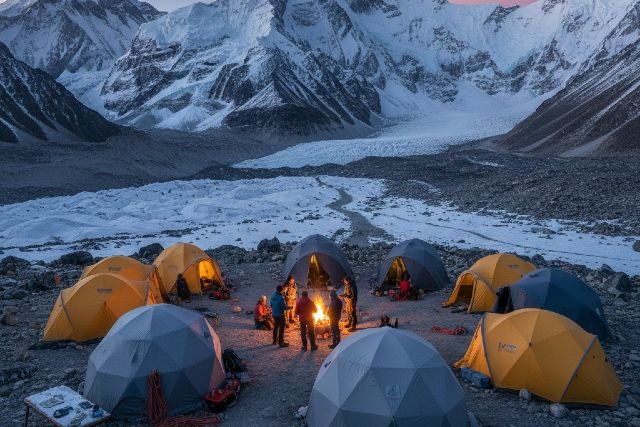
Many trek descriptions emphasize that reaching ABC feels surreal because you are positioned in a stark, glacial environment facing Everest’s north side, with a sense of proximity that standard viewpoints don’t replicate.
How the itinerary usually feels in real life
Most north-side ABC itineraries start with gradual acclimatization through time on the plateau and staged elevation gains. This is not just “nice to have.” It is the core strategy that gives your body a chance to adapt before you attempt the highest portion of the trek.
The early days can feel deceptively manageable. You might feel strong at the start, especially if you’re fit, well-rested, and excited. Then the altitude accumulates. Sleep becomes lighter. Appetite can drop. Hydration becomes harder to maintain because cold air is dry and you may not feel thirsty. You also move slower, even if your legs feel fine, because your breathing becomes the limiting factor.
By the time you approach Advanced Base Camp, you can expect a quieter mind and a narrower focus. Most people aren’t thinking about Instagram captions at this stage. They’re thinking about breathing rhythm, foot placement, staying warm, and whether they’re still feeling “normal” enough to continue.
Altitude sickness and health risk: the non-negotiable planning section
If there’s one topic that separates a successful Advanced Base Camp trek from a miserable or dangerous one, it’s altitude management.
The CDC’s Yellow Book guidance for high-altitude travel emphasizes gradual acclimatization and, for some travelers, preventive medication strategies under medical guidance. The Wilderness Medical Society’s clinical practice guidelines similarly focus on evidence-based prevention and treatment of acute altitude illness, with recommendations graded by evidence quality.
The practical takeaway is simple: you do not “tough out” altitude illness. You manage it early and conservatively, and you treat worsening symptoms with the seriousness they deserve.
Symptoms people commonly dismiss too early
At high altitude, it’s common to feel off. That’s why it’s so easy to ignore early warning signs. The symptoms most often discussed in clinical guidance and summaries include headache, nausea, dizziness, fatigue, and sleep disturbance, particularly as they worsen with continued ascent.
If symptoms intensify, or if you develop breathlessness at rest, confusion, poor coordination, or a persistent cough, you are no longer in the “normal discomfort” zone. The safest move is to stop ascending and follow your guide’s protocol, which often includes descent if symptoms progress. Clinical summaries frequently identify descent as the key treatment when altitude illness is significant.
Packing for Advanced Base Camp: what actually matters
Packing lists on the internet often obsess over brands. At Advanced Base Camp, performance matters more than labels.
What matters most is having a reliable warmth system, because cold becomes a recovery problem, not just a comfort issue. Wind protection is just as important as insulation. A sleep system that keeps you warm and supports rest is critical because sleep is already compromised by altitude, so you can’t afford extra disruption from cold. Protecting eyes and skin from intense UV and glare is essential in high glacial terrain. Hydration needs special attention because cold temperatures increase the chance your water system freezes, and dehydration can worsen altitude symptoms.
The most helpful gear decision you can make is choosing equipment you already know works for you, rather than experimenting at 5,500m.
FAQs about Advanced Base Camp
Is Advanced Base Camp harder than Everest Base Camp?
Yes. Everest Advanced Base Camp is widely described around 6,400m on the north side, which is significantly higher than standard base camp areas. That altitude difference makes it more demanding even if the terrain itself is not technically difficult.
What is the best month for Advanced Base Camp?
Many travelers target April to May or late September to October because those windows often provide better conditions and visibility compared to harsher winter periods, while still requiring buffer days for weather changes.
Do I need a permit for Advanced Base Camp in Tibet?
Most sources explaining Tibet travel regulations state that foreign travelers need a Tibet Travel Permit and that it is typically handled through an authorized tour operator rather than an independent application.
What’s the biggest risk at Advanced Base Camp?
The biggest risk is altitude illness. Authoritative guidance emphasizes gradual acclimatization for prevention, and clinical recommendations highlight that worsening symptoms require immediate action, commonly including descent in significant cases.
Conclusion
If you want the closest trekking-style experience to Everest’s north-side expedition world, advanced base camp delivers something rare: a stark, glacial environment, an intense sense of scale, and a perspective that feels genuinely “inside” the Everest story. The trade-off is that it demands serious planning, a realistic budget, and respect for altitude. With the right season, a conservative acclimatization plan, and a permit-and-logistics setup handled by an authorized operator, an Advanced Base Camp trek can be one of the most powerful high-altitude journeys you ever do.