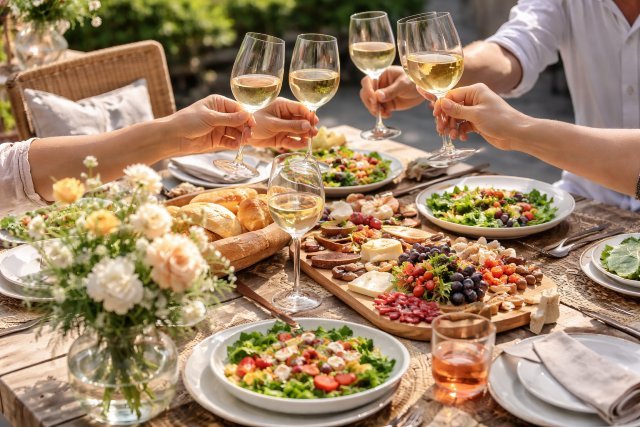
If you’ve ever wanted a simple way to strengthen friendships, welcome new colleagues, or turn an ordinary weekday into something warm and meaningful, Bjudlunch is a surprisingly powerful tradition to borrow. In Swedish, bjudlunch is commonly used to describe an “invitation/treat lunch,” where the host invites someone and covers the meal — either at home or at a restaurant. It’s not about showing off. It’s about connection, comfort, and making it easy for people to say “yes” to spending time together.
- What Is Bjudlunch?
- Why Bjudlunch Works So Well (Even Outside Sweden)
- Bjudlunch Etiquette: The “Unspoken Rules” That Make It Feel Swedish
- How to Plan a Bjudlunch Step-by-Step
- Menu Planning for Bjudlunch: Simple, Seasonal, and Guest-Friendly
- Atmosphere: How to Make a Bjudlunch Feel Warm in 5 Minutes
- Hosting Scenarios: Real-World Bjudlunch Examples
- Common Questions About Bjudlunch (FAQ)
- Conclusion: Host a Bjudlunch That People Remember
And there’s a reason this matters beyond etiquette. Research tied to the World Happiness Report suggests that sharing meals is strongly associated with higher life satisfaction and positive emotions, and in some analyses it’s as predictive of wellbeing as major economic factors across cultures.
How to host a Bjudlunch that feels effortless, thoughtful, and memorable — whether you’re inviting a friend, a neighbor, or a client.
What Is Bjudlunch?
Bjudlunch (from Swedish bjuda — to invite/treat — plus lunch) generally refers to a lunch invitation where one person clearly takes the role of host and pays or provides the meal. The tone is generous, but the vibe is balanced — often aligned with the Swedish idea of “lagom” (not too much, not too little — just right).
Why Bjudlunch Works So Well (Even Outside Sweden)
A great lunch invitation does something most social plans fail to do: it reduces friction. It answers the “what are we doing?” question, sets a friendly timeframe, and gives the guest a clear role — show up and enjoy.
There’s also a deeper effect: shared meals are a reliable, repeatable way to build connection. The World Happiness Report chapter on meal sharing highlights meaningful differences in wellbeing linked to how often people eat with others.
Bjudlunch Etiquette: The “Unspoken Rules” That Make It Feel Swedish
Swedish hospitality often values equality, clarity, and ease. That doesn’t mean rigid rules — it means fewer awkward moments.
1) Be clear that it’s an invitation (and you’re hosting)
The simplest way to avoid bill-confusion is to signal it upfront:
- “I’d love to invite you to lunch — my treat.”
- “Can I bjudlunch you this week?”
This matches the spirit of bjudlunch: the guest shouldn’t have to negotiate who pays mid-meal.
2) Keep it “lagom”: thoughtful, not overproduced
A Bjudlunch can be special without being elaborate. The goal is comfort and attention, not performance. The cultural idea of lagom is frequently explained as “just the right amount,” and it’s a helpful mental model for planning food, timing, and atmosphere.
3) Make conversation easy
The best lunch hosts don’t dominate the table — they design for flow. A good rule: ask warm, open questions early (“What’s been energizing you lately?”) and save heavy topics for later unless your guest leads there.
How to Plan a Bjudlunch Step-by-Step
Choose the purpose first
A “catch-up lunch” feels different from a “welcome lunch” or a “thank-you lunch.” When you know the purpose, you can choose:
- the right setting (home vs. café),
- the right menu (light vs. celebratory),
- the right guest count (1:1 vs. small group).
Pick a time window that respects real life
Most people love lunch because it’s naturally time-bounded. For a memorable Bjudlunch, set a clear window:
- 60–90 minutes for a weekday,
- up to 2 hours for a relaxed weekend lunch.
This keeps it friendly and easy to accept.
Decide the format: home, restaurant, or hybrid
At home feels personal and budget-friendly.
At a restaurant is low-effort and great for business contexts.
Hybrid (order-in or catered at home/office) can be perfect for busy hosts.
For business lunches, Swedish-style expectations often lean toward relationship-building over high-pressure deal talk, and keeping things polite, punctual, and straightforward.
Menu Planning for Bjudlunch: Simple, Seasonal, and Guest-Friendly
A great Bjudlunch menu has one job: make people comfortable. That means food that’s:
- easy to serve,
- easy to eat,
- adaptable for dietary needs.
Home Bjudlunch menus that always work
Think “one main + something fresh + something small-sweet.” It’s the easiest way to feel complete without turning lunch into a full production.
Examples that fit the vibe:
- soup + bread + salad
- open-faced sandwiches (Swedish-style smörgås) + simple sides
- baked pasta/veg casserole + greens
- salmon or roasted veg + potatoes + quick sauce
Restaurant Bjudlunch: what to choose
If you’re hosting out, pick a place that’s:
- not too loud,
- easy to reach,
- consistent in service speed.
If it’s a professional lunch, choose dishes that are easy to eat while talking (less mess, fewer bones, fewer “two-hands-required” foods). Practical lunch-meeting guidance consistently recommends minimizing “high-risk” foods for awkwardness.
Don’t ignore food safety (it’s part of great hosting)
If you’re serving buffet-style or letting food sit out, follow the “danger zone” guidance: keep hot foods hot and cold foods cold, and don’t leave perishables out too long. U.S. food-safety guidance commonly emphasizes hot foods at/above 140°F (60°C), cold foods at/below 40°F (4°C), and a 2-hour rule for leaving food out (1 hour if it’s very hot).
Even if you’re not in the U.S., the principle is universal: safe food makes a relaxed guest.
Atmosphere: How to Make a Bjudlunch Feel Warm in 5 Minutes
A Bjudlunch doesn’t need perfect décor. It needs signals of welcome.
Make these small choices:
- light and seating that feels unhurried,
- water/coffee ready without asking,
- music low enough that no one strains,
- a clear place for coats and bags.
If you’re hosting Swedish-style, minimal and cozy beats formal and fussy.
Hosting Scenarios: Real-World Bjudlunch Examples
Scenario 1: “New neighbor” Bjudlunch
You invite a new neighbor for a Saturday lunch. You keep it simple: soup, bread, a small dessert. The conversation stays light: the neighborhood, favorite places nearby, work schedules.
The win: you’ve created a social bridge without making it feel like a formal event.
Scenario 2: “Team thank-you” Bjudlunch at a restaurant
You treat two teammates after a stressful deadline. You pick a spot with quick service and comfortable seating. You keep the talk appreciative and human first — project details second.
The win: it reads as gratitude, not a performance review.
Scenario 3: “Client relationship” Bjudlunch
You host a client at lunch with a clear plan: connection first, agenda last 15 minutes. That aligns with relationship-driven business lunch norms often associated with Swedish etiquette.
The win: the client leaves feeling understood, not sold to.
Common Questions About Bjudlunch (FAQ)
What does Bjudlunch mean?
Bjudlunch commonly refers to a lunch invitation where the host treats the guest(s) — either paying at a restaurant or providing the meal at home.
Is Bjudlunch only a Swedish thing?
It’s a Swedish word and cultural concept, but the practice — inviting someone to lunch and hosting generously — works anywhere. The “lagom” mindset (balanced, not flashy) is what makes it feel distinctively Swedish.
How long should a Bjudlunch last?
Usually 60–90 minutes on weekdays. It’s long enough for real conversation and short enough to feel easy and respectful of schedules.
What’s the best food for a Bjudlunch?
Choose food that’s easy to serve and easy to eat while talking — soups, salads, sandwiches, simple mains, and a small dessert. If food will sit out, follow safe temperature guidance (hot foods hot, cold foods cold).
How do I invite someone without making it awkward?
Use clarity plus warmth: “Would you like to join me for lunch this week — my treat?” Clear hosting language removes the uncomfortable bill moment.
Conclusion: Host a Bjudlunch That People Remember
A memorable Bjudlunch isn’t remembered because the plates matched or the dessert was fancy. It’s remembered because it felt easy to accept, comfortable to attend, and genuinely generous — without strings attached.
Keep it lagom: a clear invitation, a thoughtful menu, and an atmosphere that makes conversation flow. When you treat lunch as a small act of community, you’re not just feeding people — you’re building connection. And the evidence is increasingly clear that shared meals matter for wellbeing and life satisfaction.