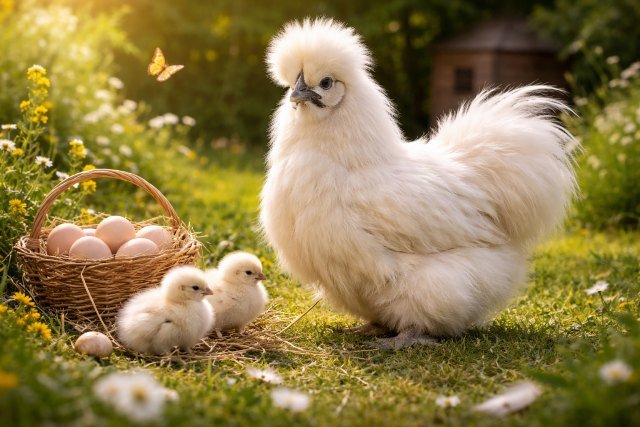
If you’ve ever seen a Fur Hen in real life, you probably did a double-take. This bird looks like it has fur instead of feathers, with a fluffy, cloud-like body and a surprisingly gentle, pet-like vibe. The Fur Hen isn’t a separate species in mainstream poultry science — it’s a popular nickname most often used for the Silkie chicken, a breed famous for its hair-soft plumage and unusual traits like dark skin and five toes.
- What Is a Fur Hen?
- Fur Hen vs. Regular Chicken: Why Do They Look Like They Have Fur?
- The Fur Hen (Silkie) Origin Story
- Fur Hen Characteristics That Make Them So Popular
- Fur Hen Temperament: Are They Friendly?
- Egg Laying: How Many Eggs Does a Fur Hen Produce?
- Broodiness: Why Fur Hens Are Famous as Mothers
- Fur Hen Care Basics
- Are Fur Hens Good Pets for Families?
- Cost and Reality Check: The “Cute Chicken” Trap
- Common Fur Hen Myths
- FAQs
- Conclusion: Is a Fur Hen Right for You?
In this complete guide, you’ll learn what makes a Fur Hen so different, how to care for one responsibly, what to expect from eggs and behavior, and the most common mistakes new keepers make (so you can avoid them).
What Is a Fur Hen?
A Fur Hen is a nickname commonly used for chickens—especially Silkies—that have ultra-soft, fur-like feathers. Technically, they still have feathers (not mammal fur). What creates the “fur” illusion is the feather microstructure: Silkie-type feathers lack the normal interlocking structure that makes typical feathers lie flat. The result is a fluffy, downy look that reads as “fur” to most people.
In plain terms: a Fur Hen is a chicken that looks and feels like a plush toy, but still behaves like… a chicken.
Fur Hen vs. Regular Chicken: Why Do They Look Like They Have Fur?
Feathers aren’t just “bird hair.” They’re complex keratin structures with specialized parts that zip together in many birds. Those interlocking features help feathers hold their shape for flight, insulation, and waterproofing.
Silkie feathering is different enough that it changes the whole silhouette of the bird. Instead of smooth feather sheets, you get a soft, airy “puff.” This is why Fur Hens often look rounder, larger, and fluffier than they actually are.
It’s also worth noting that fur, hair, and feathers are all keratin-based — they’re related materials, just built differently.
The Fur Hen (Silkie) Origin Story
Silkies are widely associated with East Asia (often linked to China), and they’ve been kept for a long time as both ornamental and practical birds. Modern breed organizations and poultry standards describe the Silkie as a distinct breed with hallmark traits: soft “fur-like” plumage, dark skin and bones, and five toes.
You’ll sometimes see dramatic claims online about Fur Hens being “rare wild birds” or “exotic protected species.” In most real-world backyard poultry contexts, when someone says “Fur Hen,” they mean a Silkie (or a Silkie-type cross). If you’re buying one, you should still check local rules for keeping chickens — city ordinances and HOA policies matter more than internet myths.
Fur Hen Characteristics That Make Them So Popular
1) Fur-like plumage (the signature look)
This is the obvious one. The fur-like feathering is the reason the nickname stuck, and it’s also why Fur Hens dominate pet-chicken social media.
2) Dark skin and bones
Many Silkies have dark pigmentation, a trait frequently highlighted by poultry associations and breed references.
3) Five toes (not four)
Most chickens have four toes; Silkies commonly have five, another “wow” feature that makes them feel like a fantasy animal.
4) “Walnut” comb and crested head
Fur Hens often have a rounded comb and a crest that can look like a fluffy hat. That crest is adorable — but it can also affect visibility (more on that in care).
Fur Hen Temperament: Are They Friendly?
Most keepers choose a Fur Hen for personality as much as looks. Silkies are widely described as calm, gentle, and easier to handle than many high-energy breeds.
That said, temperament depends on three things:
- Handling when young (tame birds are made, not found).
- Predator pressure and stress (a terrified chicken won’t act cuddly).
- Breeding selection (pet lines vs. show lines vs. mixed backyard lines).
If your goal is a “lap chicken,” a Fur Hen is one of the best starting points — but you’ll still need daily, consistent, respectful handling.
Egg Laying: How Many Eggs Does a Fur Hen Produce?
This is where expectations need a reset.
Most Fur Hens (Silkies) are lower egg producers compared with mainstream laying breeds. Multiple backyard poultry resources commonly cite ranges around ~80 to 155 eggs per year, often averaging 2–3 eggs per week in season.
Their eggs are typically described as cream or tinted in many references.
If you want maximum eggs, you’ll be happier with production breeds. If you want charm, broodiness, and “pet factor,” Fur Hens make sense.
Broodiness: Why Fur Hens Are Famous as Mothers
Fur Hens are often kept specifically because they’re excellent broodies and attentive moms. Hatcheries and poultry writers frequently call Silkies among the most reliable breeds for going broody and sitting tight on eggs.
This is the “secret superpower” of the Fur Hen:
- If you want to hatch chicks naturally, they can do the job.
- If you don’t want chicks, you may need to manage broodiness so the hen keeps eating and staying healthy.
A practical real-world scenario: many backyard keepers use a broody Fur Hen to hatch eggs from other breeds. You get the best of both worlds — high-performing egg layers for your carton, and a Fur Hen as the nursery manager.
Fur Hen Care Basics
Housing: Dry, draft-safe, and easy to clean
Fur-like feathering can hold moisture and debris more easily than sleek feathers. So while all chickens need clean housing, Fur Hens benefit extra from:
- Dry bedding
- Good ventilation without direct drafts
- A coop setup that doesn’t force them to sleep on wet ground
Weather: Why wet conditions are harder for Fur Hens
Because Silkie-type feathers don’t behave like typical structured feathers, Fur Hens can struggle more in persistent rain and muddy conditions. You don’t need to bubble-wrap them, but you do need to plan for shelter and dry footing.
In hot climates, provide shade and cool water just like any chicken. In cold climates, dryness matters more than “warmth.” A dry, draft-controlled coop beats a sealed, humid coop every time.
Feeding: Same fundamentals, with a few priorities
A quality complete feed (starter/grower/layer depending on age and egg status) is still the base. The “actionable” difference for Fur Hens is management:
- Keep feed and water clean (crests and face fluff can get messy).
- Watch condition closely during broodiness, because broody hens may eat less.
Grooming: Crest trims and cleanliness
Some Fur Hens have crests so full they can limit vision. If a bird seems jumpy or gets pecked, it may simply not see well.
Many keepers carefully trim feathers around the eyes for safety and confidence. If you do this, use calm handling and be conservative — think “open the view,” not “give a haircut.”
Health: What to watch for
Fur Hens aren’t “fragile,” but their feathering and crest can make certain problems more noticeable:
- Dirty vents or matted fluff (clean promptly, improve bedding)
- External parasites (check regularly, especially under fluff)
- Foot and toe issues (they have five toes; check all of them)
If you’re new to chickens entirely, it’s worth reading at least one scientific overview of backyard flock risks and management. Research groups have surveyed backyard owners and discuss common patterns and challenges in small flocks.
Are Fur Hens Good Pets for Families?
They can be, with two important caveats.
First, “good with kids” still requires supervised handling. Chickens can be stressed easily, and stress leads to scratching, flapping, and fear responses.
Second, Fur Hens are often treated as pets more than livestock. That’s part of a bigger trend: backyard chicken keeping has expanded significantly in recent years, and major outlets have reported large numbers of households keeping chickens.
So yes — Fur Hens can be wonderful family birds, but only if you’re willing to keep them safe from predators, handle them gently, and commit to daily care.
Cost and Reality Check: The “Cute Chicken” Trap
A Fur Hen is adorable. That’s exactly why people underestimate the responsibility.
Backyard chicken interest often spikes when egg prices rise, but experienced keepers regularly warn that chickens aren’t a guaranteed money-saver once you account for coop setup, feed, bedding, healthcare, and time.
If your primary goal is savings, do the math first. If your goal is companionship, learning, and homegrown food as a bonus, Fur Hens can be incredibly rewarding.
Common Fur Hen Myths
“Fur Hens are illegal/exotic.”
In most places, they’re just chickens (usually Silkies). What’s actually regulated is keeping poultry at all — city codes, HOA rules, noise complaints, and sometimes rooster bans.
“Fur Hens are a wild species you can find in forests.”
In backyard usage, “Fur Hen” is a nickname for a domestic breed type, not a recognized wild bird category in mainstream ornithology.
“They’re hypoallergenic.”
They’re still birds with feathers, dander, and dust. If allergies are a concern, treat them like any poultry: manage bedding dust, keep housing clean, and avoid close face contact.
FAQs
What is a Fur Hen?
A Fur Hen is typically a Silkie chicken (or Silkie-type mix) known for fluffy, fur-like feathers caused by a different feather structure than most chickens.
Do Fur Hens lay eggs?
Yes. Fur Hens lay eggs, but usually fewer than production breeds. Many keepers report ranges around ~80–155 eggs per year, often 2–3 eggs per week in season.
Are Fur Hens friendly?
Often, yes. Silkies are widely described as calm and handleable, which is why they’re popular as pet chickens.
Why do Fur Hens go broody so much?
Broodiness is strongly influenced by genetics and selection. Silkies are commonly known for reliable broodiness, making them popular natural mothers for hatching.
Can Fur Hens live with other chicken breeds?
Usually, yes — if your coop has enough space and you monitor pecking order. Their fluff can make them targets in aggressive flocks, so watch for feather pulling or bullying and adjust the group if needed.
Conclusion: Is a Fur Hen Right for You?
A Fur Hen — most often a Silkie chicken — brings a rare mix of beauty, gentleness, and personality to a backyard flock. The fur-like feathers are more than a cute gimmick; they’re the visual signature of a breed type with distinct traits like dark skin, five toes, and a reputation for broodiness.
If you want a high-egg-output bird, choose a different breed. But if you want a friendly flock member, a natural mother hen, and a conversation-starting “fluffy bird” that feels like a living plush toy, the Fur Hen is hard to beat.