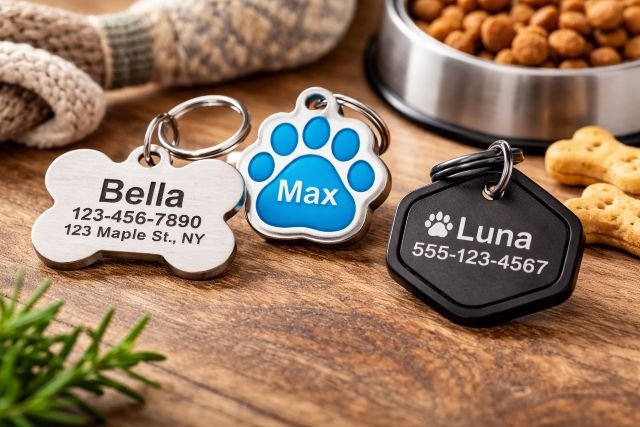
If you’re shopping for dog tags, you’re making one of the smartest, simplest safety upgrades for your pet. Even with microchips and GPS trackers, a readable ID tag is still the fastest way for a good Samaritan to contact you on the spot. In a large ASPCA survey, 15% of recovered dogs were reunited specifically because they were wearing an ID tag or had a microchip, showing how much identification can matter when pets go missing.
- Why dog tags still matter even if your pet is microchipped
- What “top-rated dog tags” really means in everyday use
- Dog tags that are secure, silent, and super durable
- What to engrave on dog tags for the best chance of a fast reunion
- How to keep dog tags silent without giving up security
- Common questions about dog tags
- Conclusion
The challenge is that not all dog tags are built for real life. Some become unreadable within months, some fall off, and some jingle constantly. The best modern options are designed around three goals: they stay attached, stay quiet, and stay legible after daily wear.
Why dog tags still matter even if your pet is microchipped
Microchips are excellent for permanent identification, but they aren’t visible, and they don’t store your contact details by themselves. A microchip typically contains a unique ID number, and it works only if the chip is registered and your information is kept up to date in the registry.
That’s why many veterinary and pet safety resources still emphasize visible ID. The practical advantage of dog tags is speed: someone who finds your dog can call you immediately without needing a scanner or a shelter intake process.
A simple approach most owners use is layered identification. Your dog wears a collar with dog tags for instant contact, and the microchip stays in place as a backup if the collar is lost.
What “top-rated dog tags” really means in everyday use
When owners say “top-rated,” they’re usually describing a tag that stays readable, stays on, and doesn’t create constant noise.
A durable tag keeps its text clear after months of friction from collars, crates, and running. A secure tag uses an attachment method that doesn’t fatigue or loosen over time. A silent tag avoids the constant clinking that can bother people and, in some cases, noise-sensitive dogs.
Dog tags that are secure, silent, and super durable
Slide-on dog tags that sit flat on the collar
If your main priorities are “silent” and “hard to lose,” collar-attached tags are a standout. Instead of dangling, they sit flat against the collar, which reduces snagging and eliminates the classic jingle. The Spruce Pets highlights flat, collar-attached tags and also mentions collars with imprinted or embroidered info as options alongside traditional hanging tags.
Slide-on tags shine in everyday situations where noise and snagging happen most: crate time, wrestling with other dogs, brushing against furniture, and walking near leashes and carabiners.
They do require matching the tag to your collar width. If you rotate collars often, you may want a tag on each collar so your dog never goes out without ID.
Soft silicone dog tags for zero jingle
Silicone dog tags are popular for one reason: silence. They’re lightweight and flexible, so they don’t clink against bowls or buckle hardware. This can be especially helpful in apartments or for dogs who flinch at noise.
The main trade-off is longevity. Some silicone tags hold up well, while others can wear down faster depending on how the text is applied and whether your dog chews at the tag. If your dog is a chewer, treat silicone as a comfort-first option and keep your microchip registration current as a backup.
Stainless steel engraved dog tags for dependable durability
Stainless steel remains a go-to material because it’s tough, resists corrosion, and holds engraving well when done properly. If you want something that handles rain, mud, and frequent outdoor use without much fuss, stainless is usually a safe bet.
The weak point isn’t the metal so much as the setup. A very thin tag can bend, and a low-quality engraving can become hard to read. The better approach is to choose a thicker tag with deep engraving and pair it with a strong attachment that doesn’t spread open.
If you like the traditional hanging style but hate the sound, you can still keep stainless steel and reduce noise by choosing a flatter shape or adding a silencing accessory.
Titanium dog tags for premium strength and lightweight wear
Titanium is often chosen when you want premium durability without extra weight. Some manufacturers emphasize titanium as both corrosion-resistant and notably lighter than stainless steel; for example, Red Dingo states its titanium tags are “super-lightweight” and weigh substantially less than its stainless/enamel tags.
Titanium can be a good match for dogs that spend time around saltwater, for owners who want a long-lasting tag, or for pets that are sensitive to heavier tags bouncing during movement.
The key is the engraving quality. Titanium is only as readable as the engraving process used, so “deep engraved” is the phrase to look for.
QR code dog tags as a smart add-on for modern pet ID
QR code tags link to a digital profile, which can be updated if you change phone numbers or move. That flexibility is the main advantage: you don’t need to re-engrave a tag when your details change.
The trade-off is reliance on the finder. It assumes they have a smartphone, know how to use a QR scan, and are willing to do it. For that reason, QR tags tend to work best when paired with a visible phone number somewhere, either on the tag or on an embroidered collar.
What to engrave on dog tags for the best chance of a fast reunion
The most important goal is instant contact. Your phone number should be the largest, clearest line.
Most owners do well with a simple format: your dog’s name, one primary phone number, a backup number, and a location line like your city and state. You can include an address if you want, but many people prefer not to for privacy reasons.
If your dog has a serious medical need, adding a short note can help, but keep it brief enough that the phone number remains readable.
How to keep dog tags silent without giving up security
Noise usually comes from movement. The simplest way to reduce it is to choose a tag that doesn’t swing.
A flat, collar-attached tag eliminates the jingle entirely. If you prefer a hanging tag, reducing the number of dangling items helps a lot. Many dogs end up wearing multiple tags, and the combined clatter can become constant. Another option is to use a softer tag material or a silencing accessory that buffers contact between metal pieces.
For owners who want a clean, quiet setup, the most common “sweet spot” is a slide-on tag for daily wear, with any additional licensing tags used only when needed.
Common questions about dog tags
What are the best dog tags that don’t jingle?
Slide-on dog tags that sit flat against the collar and silicone dog tags are typically the quietest choices. Flat, collar-attached tags are commonly recommended as a practical alternative to dangling tags.
Do I still need dog tags if my dog is microchipped?
Yes. Dog tags provide visible, immediate contact information, while microchips require scanning and accurate registration details. The AVMA explains that chips store an ID number and must be registered to connect it to your contact information.
What is the most durable dog tag material?
Stainless steel is a strong everyday durability choice. Titanium is a premium option that is often highlighted for being lightweight and corrosion-resistant, depending on manufacturer specs and engraving quality.
What information should I put on a dog tag?
A phone number that’s easy to read is the top priority. A backup number and a general location line can help. Keep it simple so a stranger can act quickly.
Conclusion
The best dog tags are the ones your pet can wear every day without irritation, noise, or failure. If you want maximum “secure and silent,” a flat, collar-attached design is hard to beat, and it aligns with expert-reviewed recommendations that highlight collar-attached tags and imprinted/embroidered ID options. If you want classic durability, stainless steel remains a dependable pick, and if you’re upgrading for premium toughness with low weight, titanium tags are often marketed for being lightweight and corrosion-resistant.
Whatever style you choose, prioritize deep, readable engraving and a secure attachment, and pair your tag with a registered, up-to-date microchip for the best chance of a fast reunion