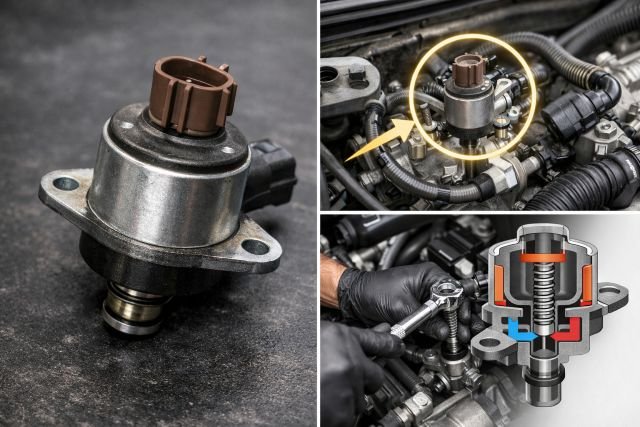
If your diesel has rough starts, weak acceleration, or “low rail pressure” codes, the fuel control actuator is one component you should understand before replacing pricey parts. In common-rail systems, rail pressure has to be controlled extremely precisely, because injection events depend on it. Bosch notes some common-rail systems operate at pressures up to about 2,500 bar, which shows how critical tight control is.
- What is a fuel control actuator?
- Fuel control actuator function in a common-rail diesel
- Fuel control actuator location
- Symptoms of a bad fuel control actuator
- What causes fuel control actuator problems?
- How to diagnose a fuel control actuator correctly
- Fuel control actuator fix options
- A real-world scenario that matches fuel control actuator failure
- FAQs
- Conclusion
This article explains what a fuel control actuator is, how it works, where you’ll typically find it, what symptoms it causes when it fails, and how to diagnose and fix it without wasting money.
What is a fuel control actuator?
A fuel control actuator is an electronically controlled valve that meters the amount of fuel the high-pressure pump compresses before sending fuel to the common rail. You may also see it called a fuel metering valve or fuel volume regulator depending on the pump and manufacturer terminology. In practice, it’s the part that helps the ECU keep rail pressure stable across idle, acceleration, and heavy load.
It helps the engine deliver smooth torque, clean combustion, and consistent starting by ensuring the pump makes the pressure the ECU is requesting, instead of over-fueling or under-feeding the rail.
Fuel control actuator function in a common-rail diesel
In a modern common-rail system, the ECU calculates a target rail pressure based on engine speed, load, temperature, and driver demand. Then it commands the fuel control actuator to meter fuel into the high-pressure pump so actual rail pressure matches the target as closely as possible. Because modern systems run at extremely high pressures, small metering errors can turn into drivability issues quickly.
When everything is healthy, commanded rail pressure and actual rail pressure track closely as you rev the engine or drive. When the actuator sticks, responds slowly, or fails electrically, the system struggles to hit the requested pressure, especially during quick throttle changes and high-load pulls.
Fuel control actuator location
Typical location on CP3 high-pressure pumps
On many CP3 pump setups, the fuel control actuator electrical connector is found at the rear of the CP3 pump, which is why technicians often describe the actuator as being on the rear portion of the injection pump.
That “rear of pump” location matters because access can be tight and it’s easy to damage connectors or introduce dirt if you rush.
Location varies by pump family
Not every engine uses the same pump or layout. Some place the metering valve on the pump inlet side, others integrate it differently. The safest way to confirm for your exact vehicle is to identify the pump type (for example CP3 vs CP4 vs Denso) and cross-check the service diagram.
Symptoms of a bad fuel control actuator
A failing fuel control actuator often shows up as rail pressure control problems. The symptoms can feel random because the valve may work sometimes and stick at other times, especially as heat and fuel temperature change.
You may notice long cranks, rough idle, hesitation, power loss under load, intermittent stalling, or limp mode behavior. You might also see “commanded vs actual rail pressure” mismatches on a scan tool during acceleration.
Common trouble codes related to fuel volume regulation
A very common code family is P0001 and related variants. P0001 is generally defined as “Fuel Volume Regulator Control Circuit/Open,” which points to an electrical circuit issue involving the fuel volume control valve and its wiring, though the actuator itself can also be at fault.
Because the code definition emphasizes the circuit, wiring and connectors deserve serious attention before you condemn the part.
What causes fuel control actuator problems?
Many real-world failures come down to two themes: contamination and electrical issues.
Contamination can create varnish and tiny deposits that make the actuator sluggish or sticky, which hurts rail pressure response. Electrical issues are also common because the connector sits in a hot, vibrating environment. Harness chafing, pin fitment issues, corrosion, or an intermittent open can all trigger circuit codes and pressure-control symptoms consistent with P0001.
Sometimes, the actuator gets blamed when the real issue is upstream fuel supply, like a restricted filter or weak lift pump. A high-pressure pump can’t build stable rail pressure if it’s starved, and the symptoms can look surprisingly similar.
How to diagnose a fuel control actuator correctly
A good diagnosis is mostly about comparing data, not guessing.
Check commanded vs actual fuel rail pressure
A practical method is to log commanded fuel rail pressure and actual fuel rail pressure with a scan tool while revving the engine or doing a short drive. If actual pressure closely matches what the ECM is commanding through the range, many diesel diagnostic guides consider the actuator less likely to be the problem. If actual pressure consistently falls behind commanded, especially during tip-in and load, the actuator becomes a much stronger suspect.
Inspect wiring and the connector carefully
Because P0001 points to an open circuit possibility, you should physically inspect the harness and connector before replacing parts. Look for rubbed-through insulation, loose terminals, corrosion, or damage near the connector strain relief. Small wiring faults can produce big symptoms, and they often return even after a parts swap if you don’t address them.
Rule out fuel supply restrictions first
If the fuel filter is overdue, if there’s air intrusion, or if the lift pump pressure is low, your rail pressure may drop under load and mimic actuator failure. Fixing the supply side first prevents false conclusions.
Fuel control actuator fix options
Repair wiring or connector faults
If your diagnosis points to an electrical open or intermittent wiring issue, repairing the harness, restoring terminal tension, or replacing a damaged connector can be the true fix. This is often cheaper than parts replacement and more durable than “wiggling the harness and hoping.”
Replace the fuel control actuator
When the data and symptoms point to the actuator itself, replacement is a common repair. If you do this job, cleanliness is critical around high-pressure fuel components. Installation instructions for diesel fuel system work repeatedly emphasize that contamination can cause rapid wear and plugging because tolerances are extremely tight.
Many diagnostic writeups also note that people often choose a genuine OEM-grade replacement because the part cost is usually much lower than guessing wrong and chasing the issue through injectors or the pump.
Fix the root cause to prevent repeat failure
If the actuator failed due to contamination, replacing it without improving filtration habits or addressing recurring debris can lead to repeat issues. A fresh filter, clean fuel practices, and checking for air leaks are simple steps that can protect the new part.
A real-world scenario that matches fuel control actuator failure
A common pattern is this: cold starts are fine, but warm starts get progressively worse. Under load, the engine feels flat and may throw rail pressure related faults. You replace the fuel filter and it improves briefly, but it returns. When you log commanded versus actual rail pressure, you see actual pressure consistently lagging during acceleration. That “lags during load” pattern is one of the clearest practical indicators that fuel metering control at the pump level isn’t responding properly.
At that point, after confirming wiring integrity and fuel supply health, replacing the fuel control actuator is a logical next step.
FAQs
What does a fuel control actuator do?
A fuel control actuator meters fuel into the high-pressure pump so the ECU can maintain the rail pressure it’s commanding across idle, acceleration, and heavy load.
Where is the fuel control actuator located?
On many CP3 setups, the fuel control actuator connector is at the rear of the CP3 injection pump, which aligns with typical install and service instructions referencing that rear pump connector location.
What code is related to a fuel control actuator?
P0001 is commonly defined as “Fuel Volume Regulator Control Circuit/Open,” which can involve the actuator, its wiring, or the ECU control circuit.
How can I test a fuel control actuator before replacing it?
A common approach is logging commanded and actual fuel rail pressure on a scan tool during revs or a short drive. If actual pressure tracks commanded closely, the actuator is often not the issue; if it consistently falls behind, it becomes a stronger suspect.
Conclusion
The fuel control actuator is one of the most important control points in a common-rail fuel system because it helps the ECU meter how much fuel the high-pressure pump compresses to meet target rail pressure. With common-rail pressures reaching extremely high levels in modern systems, even small control issues can cause noticeable symptoms.
If you’re seeing hard starts, hesitation, or P0001-family circuit faults, don’t guess. Check wiring and fuel supply basics, then confirm the diagnosis by comparing commanded versus actual rail pressure. Once the evidence points to it, a clean, careful replacement and attention to contamination prevention are the fastest path back to reliable performance.