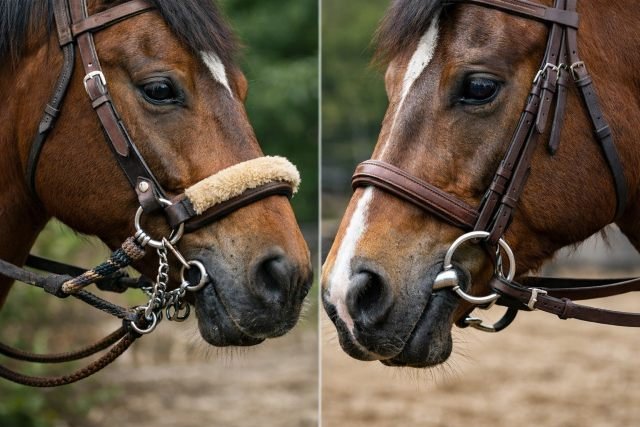
If you’re deciding between a hackamore and a bit, you’re already doing what good horse owners do: thinking about comfort, communication, and safety. A hackamore is a bitless piece of tack that communicates through pressure on the horse’s nose, chin groove, and sometimes the poll, depending on the design. A bit communicates inside the mouth through the tongue, bars, and corners of the lips.
- What Is a Hackamore?
- What Is a Bit?
- Hackamore vs Bit: The Main Difference
- How a Hackamore Works: Understanding Pressure and Control
- How a Bit Works: Why Fit and Hands Matter So Much
- Which Is Kinder: Hackamore or Bit?
- What Research Says About Bit vs Bitless
- When a Hackamore May Be Better Than a Bit
- When a Bit May Be Better Than a Hackamore
- Comfort, Control, and Safety: The Real Trade-Off
- Fit Matters: The #1 Factor People Get Wrong
- How to Choose: A Simple Decision Framework
- Transitioning Between Bit and Hackamore Without Confusion
- Common Myths About Hackamores and Bits
- FAQ: Hackamore vs Bit
- Conclusion: Hackamore vs Bit — Which Is Better for Your Horse?
The most important takeaway is that neither option is automatically kinder. The best choice depends on your horse’s anatomy, training level, riding discipline, your skill level, and the specific type of hackamore or bit you use. In many cases, the rider’s hands and training approach matter more than the equipment itself.
What Is a Hackamore?
A hackamore is a form of headgear that controls the horse without placing anything inside the mouth. Instead, it uses pressure on external structures such as the nasal bones, chin groove, and poll. Under many safety symbol conventions and tack education resources, hackamores are often discussed as part of bitless riding systems, but it’s crucial to understand that hackamore types vary widely in strength and purpose.
The most common types include the traditional bosal, the sidepull, and the mechanical hackamore. A bosal is typically made of rawhide or leather and is used in classic Western training systems, often paired with a mecate rein and refined timing. Sidepulls work with direct pressure on the sides of the noseband, similar to a halter, and are often considered among the mildest bitless options when fitted well. Mechanical hackamores are entirely different in action. They use shanks and leverage, and when reins are pulled, pressure increases on the nose, chin groove, and poll, which can make them quite strong.
What Is a Bit?
A bit is a mouthpiece attached to a bridle that communicates through the horse’s mouth. Depending on the bit type, it can apply pressure to the tongue, bars, corners of the lips, and in some cases the poll and chin groove through leverage and curb action. A well-fitted bit used with soft hands can provide extremely refined communication, but an ill-fitting bit or heavy rein use can create discomfort, tension, or behavioral resistance.
The most common beginner-friendly bit is often the snaffle, which works with direct pressure. Curb bits and other leverage designs increase pressure and are generally intended for more advanced training or specific disciplines.
Hackamore vs Bit: The Main Difference
The main difference is how each tool applies pressure. A hackamore communicates through external pressure on the nose, chin groove, and sometimes the poll. A bit communicates through internal mouth pressure on the tongue, bars, and lips, and in some cases also affects the poll and chin groove depending on the type.
This difference matters because individual horses respond differently to pressure placement, and each design carries different benefits and risks depending on training and riding conditions.
How a Hackamore Works: Understanding Pressure and Control
A hackamore’s effectiveness depends heavily on its structure. Sidepull hackamores apply direct lateral pressure and can feel intuitive for young horses because the cue resembles halter training. Bosals work through subtle pressure and release patterns, often requiring educated hands and timing. Mechanical hackamores work through leverage. When the rider picks up the reins, the shanks rotate, tightening the curb strap or chain and pulling down on the noseband. This creates a compounded force that can become intense quickly, especially with long shanks.
A key point many riders miss is that mechanical hackamores are not simply “bosals with hardware.” Their leverage action makes them more comparable to curb bits in terms of potential strength.
How a Bit Works: Why Fit and Hands Matter So Much
A bit communicates through some of the most sensitive parts of the horse’s head. The tongue, bars, and lips contain many nerve endings. This is why correct fit, dental care, and rider softness are essential. With the right fit and training, a horse can learn to respond to very light rein signals, especially in snaffle-type bits. With poor fit, the same rein pressure can cause pinching, bruising, or stress.
This is also why some horses that appear “bad” in a bit may simply be uncomfortable due to dental issues, tongue thickness, palate shape, or rough contact.
Which Is Kinder: Hackamore or Bit?
The kinder option is the one that produces the least stress and discomfort for your individual horse when used correctly. A gentle rider can be kind in a bit, while a harsh rider can cause pain with a hackamore. This is especially true with mechanical hackamores, where leverage can magnify rein pressure dramatically.
Research supports the idea that rein tension and pressure application are critical variables. Studies examining rein tension signals show horses can respond differently depending on whether pressure comes through the mouth via a bridle or through the noseband/halter system, highlighting that training and timing influence welfare outcomes.
What Research Says About Bit vs Bitless
Scientific work in this area is still developing, but there are credible studies exploring behavioral and welfare-related differences between bitted and bitless approaches. A preliminary study published in Equine Veterinary Journal compared behavior in horses ridden with a jointed snaffle bridle versus a cross-under bitless bridle, documenting measurable differences in a limited sample size.
Other research has investigated rein force and pressure distribution under different equipment systems, contributing to better understanding of how tack influences horse response.
A Frontiers in Veterinary Science study found that rein-tension signals used for backing produced different behavioral responses depending on whether the rein signals were applied through a bridle (bit) or halter (nose pressure), reinforcing that horses interpret pressure differently depending on location and context.
The overall conclusion is that no single setup is universally better. Welfare is influenced by fit, pressure, rider skill, and training approach.
When a Hackamore May Be Better Than a Bit
A hackamore can be a strong option when a horse has mouth sensitivity, dental pain, or recovery needs. It can also be effective for relaxed trail riding, for young horses learning steering cues, and for horses that become tense or anxious with mouth pressure.
Many riders also use a hackamore temporarily to rebuild training foundations, focusing on seat and leg aids rather than rein dependence. In these contexts, a mild hackamore design such as a sidepull can support calm, clear communication.
When a Bit May Be Better Than a Hackamore
A bit can be a better choice when the rider needs refined communication for advanced schooling or when competition rules require a bitted bridle. Many horses also accept and prefer a properly fitted snaffle, especially if they have been trained with consistent contact.
A bit may also be useful in environments requiring precise adjustment of speed, bend, and balance, such as jumping, dressage, or technical arena work. However, it should never be used to compensate for training gaps or to force control through discomfort.
Comfort, Control, and Safety: The Real Trade-Off
One of the biggest misunderstandings in this debate is the belief that stronger equipment equals better safety. In reality, safety comes from responsiveness, relaxation, training consistency, and rider balance. Mechanical hackamores can create strong stopping power due to leverage, but they can also trigger head tossing, resistance, or panic if too strong or fitted incorrectly.
Similarly, a harsh bit used in fear or frustration can cause stress behaviors that reduce control. The safest option is almost always the one that your horse understands clearly and responds to calmly, with the least force.
Fit Matters: The #1 Factor People Get Wrong
Hackamores and bits can both become uncomfortable if fitted incorrectly.
A hackamore noseband should sit on the hard nasal bone, not too low on the soft cartilage near the nostrils. Mechanical hackamores in particular must be positioned correctly and used with caution because leverage increases pressure across the nose, chin groove, and poll.
A bit must be the correct width and height, with attention to mouth anatomy and regular dental care. Many bit problems are actually dental problems or fit problems, not training problems.
How to Choose: A Simple Decision Framework
If your horse shows signs of mouth discomfort, has dental sensitivity, or becomes tense in a bit, a hackamore may be the better starting point, especially a mild sidepull or well-used bosal. If you require refined contact for advanced schooling or compete under rules that require bitted tack, a properly fitted bit may be the better option.
If your horse goes well in both setups, rotating between them can be useful for preventing over-dependence on mouth contact and for reinforcing seat and leg riding.
Transitioning Between Bit and Hackamore Without Confusion
Switching from bit to hackamore should be done gradually. Horses that have been trained in a bit may not immediately understand pressure on the nose, especially if the hackamore uses a different steering style. Starting in a safe enclosure, using simple cues, and keeping sessions short prevents frustration.
Likewise, switching from hackamore to bit should also be introduced thoughtfully, ensuring dental comfort and allowing the horse time to accept mouth contact calmly.
Common Myths About Hackamores and Bits
The biggest myth is that hackamores are always gentler. Mechanical hackamores can be severe due to leverage.
Another common myth is that bits always hurt. A properly fitted bit with soft hands can be humane and effective. A third myth is that bitless riding requires less training. In reality, bitless riding often requires stronger foundations because riders can’t rely on mouth steering for control.
FAQ: Hackamore vs Bit
What is a hackamore?
A hackamore is a bitless piece of tack that controls a horse using pressure on the nose, chin groove, and sometimes the poll, depending on the design.
Is a hackamore gentler than a bit?
Not always. Some hackamores, such as sidepulls, can be mild, while mechanical hackamores can be harsh because leverage increases pressure.
Do horses behave better bitless?
Some studies report behavior differences between bitted and bitless bridles, but outcomes depend on horse training, rein tension, fit, and rider skill.
Can a mechanical hackamore be as strong as a bit?
Yes. Mechanical hackamores can apply strong leverage pressure on the nose, chin groove, and poll, similar in principle to curb action.
What is best for beginners: hackamore or bit?
A mild sidepull hackamore can be beginner-friendly because it works like a halter. A properly fitted snaffle is also commonly recommended. The best choice depends on rider skill, horse training, and environment.
Conclusion: Hackamore vs Bit — Which Is Better for Your Horse?
A hackamore can be an excellent tool for horses with mouth sensitivity, for relaxed riding, and for riders who want to strengthen seat and leg cues. A bit can offer precision, refinement, and discipline compatibility when fitted well and used with educated hands.
Ultimately, the best choice is the one that keeps your horse calm, responsive, and comfortable. If you choose a hackamore, prioritize correct fit and avoid excessive leverage unless you truly understand it. If you choose a bit, prioritize dental care, correct fit, and soft, consistent contact.
And if you’re still unsure, the best path is often the simplest: choose the mildest effective option, focus on training, and let your horse’s comfort and responsiveness guide your decision.