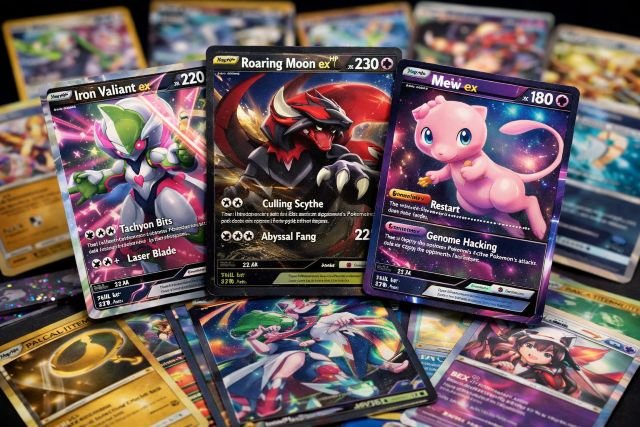
The paradox rift card list has become one of the most searched topics in the Pokémon TCG community because Scarlet & Violet—Paradox Rift delivers something rare: a set that appeals equally to collectors and competitive players. On the collector side, it contains some of the most stunning Illustration Rares and Special Illustration Rares in the modern era, with artwork that feels closer to gallery pieces than trading cards. On the player side, it introduced influential Trainers and powerful Pokémon ex that have shaped deck-building choices across the format.
- What Is Paradox Rift? Why This Set Matters
- Paradox Rift Card List Rankings: Value vs. Strength
- Best Paradox Rift Cards Ranked by Market Value
- Best Paradox Rift Cards Ranked by Competitive Strength
- Value vs Strength: Which Matters More?
- Paradox Rift Card List FAQ
- Expert Tips for Buying and Holding Paradox Rift Cards
- Conclusion: Paradox Rift Card List Best Strategy
Paradox Rift is also a set where hype and usefulness overlap. Many of the most expensive cards are valuable because they look incredible, but several of them are also valuable because they win games. That combination is what keeps a set relevant long after release, and it’s the reason Paradox Rift continues to hold attention even as new expansions arrive.
In this guide, you’ll get a detailed breakdown of the best cards from the paradox rift card list, ranked by both market value and competitive strength. You’ll also learn which cards are worth chasing as long-term collector holds, which ones are staples for tournament play, and which cards sit in the sweet spot between both worlds.
What Is Paradox Rift? Why This Set Matters
Scarlet & Violet—Paradox Rift launched on November 3, 2023, and it quickly became a defining expansion because it introduced Pokémon tied to the “Ancient” and “Future” concepts. These aren’t just labels. They shape how decks are built and how players plan their turns. Ancient strategies often focus on powering up efficiently and applying pressure through strong support engines, while Future strategies lean into aggressive tempo, mobility, and modernized mechanics.
The set is also large, with more than 260 cards in the English release, including secret rare cards above the main numbering. That scale matters for collectors because it increases long-term chase potential. It also matters for competitive players because large sets tend to inject more playable Trainers and niche tech cards into the format.
For set size and official details, Bulbapedia and Pokémon’s official checklist are frequently used as reference points by the community.
Paradox Rift Card List Rankings: Value vs. Strength
A key reason people struggle to decide what to chase in the paradox rift card list is that there are two different types of “best cards.” Some cards are best because they are expensive and collectible, while others are best because they dominate matches and appear in top decks.
Value is often driven by rarity and artwork demand. Illustration Rare and Special Illustration Rare cards tend to remain expensive because they are difficult to pull and visually iconic. Strength is driven by usefulness in real decks. A card may not look special at all, yet it can still become essential because its effect is powerful and consistent.
This guide ranks cards from both perspectives because that’s what readers actually need. If your goal is to collect, you should prioritize long-term desirability and condition. If your goal is to win, you should prioritize consistency, tempo, and staple effects. If your goal is to do both, you should target cards that remain playable while also being rare enough to attract collectors.
Market tracking sites like PriceCharting help monitor value shifts, while Pokémon’s own competitive highlights offer strong insight into which cards matter most for play.
Best Paradox Rift Cards Ranked by Market Value
Many readers searching “paradox rift card list” want to know one thing quickly: which cards are the most valuable right now. While prices always fluctuate, the top value cards almost always share the same traits. They are high rarity, feature elite artwork, and include Pokémon or characters that people genuinely care about.
One of the most consistently valuable cards from Paradox Rift is Groudon (Illustration Rare). Groudon is an iconic legendary Pokémon, and the Illustration Rare presentation gives it a premium collector feel that drives strong demand. Cards like this tend to hold value well because they remain desirable even if they aren’t tournament staples.
Another standout is Iron Valiant ex (Special Illustration Rare). It’s one of the set’s defining Future Pokémon, and it has consistently appeared in high-value rankings. A big reason is that Iron Valiant has a strong fan identity and fits into both collection and competitive conversations, which creates a broader demand base.
Roaring Moon ex also ranks among the top chase cards for many collectors. It benefits from a striking Ancient theme, high visual appeal, and strong popularity among modern fans. Even people who don’t play competitively tend to want Roaring Moon because it looks powerful, feels rare, and has the “chase aura” collectors often describe.
Professor Sada’s Vitality (Special Illustration Rare) is another major value card because it combines character appeal with real playability. Supporters can become collector favorites when they feature attractive artwork, but they become even more valuable when they also see tournament play. That dual demand often increases price stability.
Then there is Iron Hands ex, which tends to remain valuable because it is heavily played and widely discussed. Even lower-rarity versions keep demand because the card is relevant in the metagame. When a card has consistent tournament use, people often buy multiple copies, and that creates ongoing market movement.
If you want live updates to see how these rankings shift week to week, PriceCharting remains one of the easiest tools for tracking recent changes.
Best Paradox Rift Cards Ranked by Competitive Strength
Some of the strongest cards in the paradox rift card list aren’t the most expensive. Competitive power is about effect impact, consistency, and how a card changes match outcomes.
A top example is Counter Catcher, a Trainer card that can swing games by allowing you to pull a key Pokémon from the opponent’s Bench under specific conditions. Cards like Counter Catcher matter because they create comeback turns and enable precise prize planning. Pokémon’s own competitive coverage frequently highlights Trainers like this as important format tools.
Professor Sada’s Vitality is also one of the most important competitive cards in the set because it accelerates Ancient strategies by supporting fast energy attachment and maintaining momentum. Acceleration and draw are often the two main reasons Supporters become staples, and Sada’s Vitality checks both boxes in many builds.
Iron Hands ex earns high competitive ranking because it affects prize trade dynamics, which is one of the most important mechanics in the Pokémon TCG. Any card that can change the number of turns it takes to win is automatically dangerous, and that’s why Iron Hands continues to show up across multiple archetypes.
Roaring Moon ex is another major strength card, especially in Ancient-focused decks. It can apply heavy pressure and create explosive turns when supported properly. Its impact comes from how quickly it can close games or force opponents into unfavorable defense patterns.
Iron Valiant ex remains strong in Future strategies because it supports aggressive gameplay and can be used in high-tempo matchups. Its value comes from flexibility. In modern formats, versatility is often more important than raw damage, because it helps a deck adapt to different opponents.
Finally, Beach Court deserves attention as a Stadium card that improves mobility. Mobility is one of the most underrated strengths in the Pokémon TCG, because it reduces wasted turns and improves your ability to respond to threats. Stadiums that support consistent pivoting are valuable in both fast and control-oriented decks.
Value vs Strength: Which Matters More?
Whether you should prioritize value or strength depends on what you want from the set. Collectors tend to chase rare artwork and iconic Pokémon because those cards maintain long-term desirability. Players focus on Trainers and meta staples because those cards affect performance immediately. The smartest strategy for many people is to combine both.
Cards that are collectible and playable tend to hold the strongest demand because two different audiences want them at the same time. That is why cards like Professor Sada’s Vitality and Iron Hands ex sit in a category many collectors call “safe chase picks.”
Paradox Rift Card List FAQ
Paradox Rift contains 266 English cards, including secret rares above the base numbering, making it one of the larger Scarlet & Violet expansions.
The most valuable Paradox Rift cards tend to be Illustration Rares and Special Illustration Rares, with many updated value guides listing cards like Groudon IR and Iron Valiant ex SIR among the top chase hits.
The best Paradox Rift cards for competitive play commonly include Counter Catcher, Professor Sada’s Vitality, Iron Hands ex, and mobility tools like Beach Court because they influence tempo, consistency, and prize mapping.
If your goal is profit, buying singles is usually more reliable than opening packs, but Paradox Rift remains a fun set to open because its Illustration Rare pool contains cards that people genuinely want for both binders and decks.
For the complete official Paradox Rift checklist, Pokémon’s set page remains the most accurate reference.
Expert Tips for Buying and Holding Paradox Rift Cards
The best approach to Paradox Rift is treating it like two markets that overlap. Competitive cards can spike fast because tournament demand creates short-term urgency, but those spikes can soften if a card becomes less played. Collector cards move more slowly, but they often hold value better because artwork and nostalgia don’t rotate out of the format.
Condition also matters more than most casual collectors realize. A near-mint card can be valuable, but a near-mint card with strong centering and clean edges is a different level of collectible. Paradox Rift, like many modern sets, can have print variations that affect grading potential, which makes careful handling and storage a major advantage.
Finally, always compare pricing across multiple sources. Single marketplaces can have inflated listings that don’t reflect real sales. Using a market tracker helps you understand whether a card is actually rising or simply being listed high.
Conclusion: Paradox Rift Card List Best Strategy
The paradox rift card list remains one of the strongest Scarlet & Violet expansions because it offers real competitive staples while also delivering collector-level artwork. If you’re ranking by value, Illustration Rares and Special Illustration Rares like Groudon and Iron Valiant ex frequently dominate updated price lists. If you’re ranking by strength, cards like Counter Catcher, Professor Sada’s Vitality, and Iron Hands ex consistently stand out because they influence matchups and deck consistency.
The best long-term approach is focusing on cards that are rare, playable, and iconic. Those cards tend to hold demand even when new expansions shift attention. Whether you collect, compete, or invest, Paradox Rift rewards smart choices more than pure luck.