Nativität is one of those words that feels ancient and strangely current at the same time. At its core, it points to a single idea: birth — the moment something begins. But depending on where you encounter it, Nativität can mean the position of the stars at a person’s birth (astrology), the idea of origin and emergence, and — through its linguistic family — echo the Christian concept of the Nativity (the birth of Jesus) that shaped centuries of art, ritual, and seasonal culture.
- What does Nativität mean?
- The deeper root: Nativität as “birth,” “origin,” and “beginning”
- Nativität in astrology: a symbolic map of the moment you arrived
- Nativität and the Christian Nativity: a cultural force that reshaped the West
- Why Nativität still matters today: identity, belonging, and the search for origin
- The shadow side: when Nativität becomes destiny instead of insight
- A modern Nativität practice: making beginnings meaningful (in 10 minutes)
- Sustainability and the “timeless impact” question: can we keep the meaning without the waste?
- FAQs
- Conclusion: Why Nativität remains powerful
In other words, Nativität isn’t just about when someone is born. It’s about the enduring human need to ask: Where do I come from? What does my beginning mean? And how does it shape my life now?
This guide unpacks the full meaning of Nativität, its historical roots, its cultural influence, and how you can use its “birth-and-beginning” idea in a practical, modern way.
What does Nativität mean?
In modern German usage, Nativität is primarily an astrological term: it refers to the stand of the celestial bodies at the moment of a person’s birth — essentially, the birth chart concept. Duden defines it exactly in that sense and traces it back to Latin nativitas (“birth”).
If you’ve ever heard older phrasing like “jemandem die Nativität stellen” (to “set” someone’s nativity), that’s referring to creating a natal horoscope. Wikipedia and Wiktionary both reinforce this usage and historical framing.
At the same time, Nativität sits in the same word-family as “nativity” in English — connected through Latin and Old French — where “Nativity” often means the birth of Jesus or its artistic representations.
So you can think of Nativität as a bridge-word: it carries the universal meaning of birth, while pointing to two influential human traditions:
- interpreting birth through faith and story, and
- interpreting birth through symbol and sky.
The deeper root: Nativität as “birth,” “origin,” and “beginning”
The Latin root nativitas literally means “birth,” and English “nativity” historically carried the same sense, including “birth of Christ / Christmas.”
Why does that matter for modern readers?
Because “birth” isn’t just biological. In everyday life, we talk about:
- the birth of an idea,
- the birth of a relationship,
- the birth of a movement,
- and the moment a person becomes “themselves” through a turning point.
That’s the timeless pull of Nativität: it names the human fascination with first moments — the events we treat as destiny, foundation, or origin story.
If your site covers spirituality, identity, culture, psychology, or even storytelling and branding, Nativität is a surprisingly useful lens: it frames beginnings as meaningful, not random.
Nativität in astrology: a symbolic map of the moment you arrived
Nativität meaning in astrology (and why it resonates)
In astrology, Nativität refers to the birth chart snapshot: date, time, and location mapped to planetary positions. In practice, people use it as a symbolic framework for personality, patterns, and timing.
Whether you see astrology as spiritual, psychological, or purely cultural, its popularity makes sense: it answers a craving that statistics can’t always satisfy — the desire for a personalized story of origin.
Duden’s definition anchors the official meaning here: “Stand der Gestirne bei der Geburt eines Menschen.”
A grounded way to interpret Nativität — without overclaiming
If you write about Nativität responsibly, a strong approach is to frame astrology as:
- a meaning-making tool, and/or
- a reflective language for personality and life themes, rather than a scientific fact-claim.
That keeps your content credible and reader-friendly, especially for audiences that are curious but skeptical.
Actionable tip: If your readers want to explore their Nativität, encourage them to record an accurate birth time and reflect on the results through journaling prompts like:
- “Which description felt accurate — and why?”
- “Which part felt off — and what does that reveal about my self-image?”
- “What theme keeps repeating in my life regardless of labels?”
This turns “Nativität” into something useful: structured self-reflection.
Nativität and the Christian Nativity: a cultural force that reshaped the West
Even though German Nativität is mainly astrological today, the broader “nativity” tradition has had massive cultural impact through Christianity’s Nativity story and its artistic representations.
The Nativity scene (crèche) as cultural memory
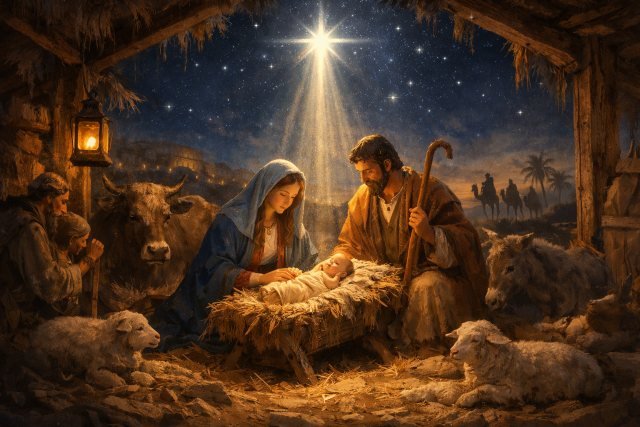
The Nativity scene — Mary, Joseph, the infant Jesus, shepherds, animals, and later the Magi — became one of the most recognizable story-images in world culture. Britannica describes the crèche as a three-dimensional representation of the Nativity and notes that St. Francis of Assisi is credited with popularizing it.
Tradition strongly ties the “first” staged Nativity scene to Greccio in 1223, associated with Francis of Assisi, a story widely repeated in Christian sources and modern retellings.
Why this matters to the meaning of “Nativität”
Because the Nativity tradition did something bigger than tell a story. It:
- normalized the idea that humble beginnings can be sacred,
- made family and care central symbols,
- and created a shared seasonal language of light, hope, and renewal.
That’s a direct line into why Nativität still feels powerful: it’s not just “birth.” It’s birth as meaning.
Why Nativität still matters today: identity, belonging, and the search for origin
Here’s the modern twist: in 2020, Christians were estimated at 2.3 billion globally (still the largest religious group), while the world also saw major growth in religious “nones” and shifting belief landscapes.
That combination — huge tradition and huge change — creates a perfect environment for “origin words” like Nativität to trend in relevance. People look for grounding when the world feels in motion.
Today, Nativität shows up (explicitly or implicitly) in:
- genealogy and ancestry curiosity,
- cultural and spiritual rituals around birth and naming,
- astrology and identity content,
- and storytelling (your “origin story” as a person or brand).
Practical insight: If you’re creating content for modern readers, the “timeless impact” angle is strongest when you connect Nativität to what people actually struggle with:
- “I don’t know who I am.”
- “I feel disconnected from my roots.”
- “I want meaning — but I don’t want dogma.”
- “I want to start over.”
Nativität becomes a framework for those real questions.
The shadow side: when Nativität becomes destiny instead of insight
Any origin concept can be misused.
When Nativität becomes “fixed fate,” it can limit growth:
- “I’m like this because my chart says so.”
- “I can’t change because my beginning defines me.”
A healthier, more modern framing is:
Your beginning influences you, but it doesn’t imprison you.
That balance — honoring origins without being ruled by them — is exactly why the term can feel “powerful” without becoming extreme.
A modern Nativität practice: making beginnings meaningful (in 10 minutes)
If your readers want something they can do today — no matter their beliefs — this is a simple, grounded practice:
- Write down three “beginnings” that shaped you (birthplace, a family tradition, a major move, a loss, a mentor).
- For each one, answer: What did this beginning teach me to believe about life?
- Circle one belief you’ve outgrown. Rewrite it as a new beginning statement.
This turns Nativität from a concept into an action: you become an author of your next chapter.
Sustainability and the “timeless impact” question: can we keep the meaning without the waste?
Modern seasonal culture — especially around Christmas — can drift into consumption. That matters because environmental impact is now part of the conversation about tradition.
For example, the UK government’s environment blog has cited estimates that additional waste from Christmas can exceed 3 million tonnes in the UK, along with examples of avoidable food and packaging waste.
If your article wants real-world relevance, this is an authentic “timeless impact” angle:
How do we keep the heart of Nativität (humility, care, renewal) while reducing the harm of overconsumption?
Actionable tip for readers: Suggest “meaning-first rituals” such as storytelling, volunteering, repairing, reusing, or gifting experiences — practices that align with the symbolism of humble beginnings rather than status display.
FAQs
What is Nativität in simple terms?
Nativität means “birth,” and in modern German it most commonly refers to the positions of the stars at the moment a person is born (a natal horoscope).
Is Nativität the same as the Nativity of Jesus?
Not exactly. Nativität in German is mainly an astrological term today, while Nativity in English commonly refers to the birth of Jesus or Nativity scenes. They share the same Latin root tied to “birth.”
Where does the word Nativität come from?
Duden traces Nativität back to Latin nativitas, meaning “birth.”
Why do people care so much about “birth” meanings?
Because origin stories help people make sense of identity, belonging, and purpose — especially during periods of change. That’s why both natal astrology and religious Nativity traditions have remained culturally influential for centuries.
Who popularized the Nativity scene tradition?
St. Francis of Assisi is widely credited with popularizing the Nativity scene tradition, with the famous Greccio scene dated to 1223.
Conclusion: Why Nativität remains powerful
Nativität endures because it names something we never stop needing: a way to understand beginnings. Whether you approach it through astrology (the sky at birth), through culture (Nativity imagery and tradition), or through personal reflection (your origin story), the core message is the same — where you begin matters, and it can guide you without limiting you.
In a world that changes fast, Nativität is a reminder that meaning doesn’t require perfection. Sometimes the most transformative impact comes from humble starts, honest reflection, and the courage to “be born” into a new chapter — again and again.