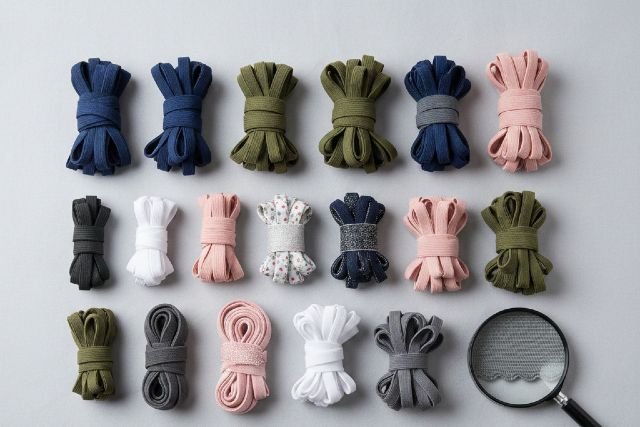
Fold over elastic is one of those small sewing supplies that can make a handmade project look professionally finished — or slightly “off” — depending on how you choose it. If you’ve ever had a neckline that gapes, leg openings that dig in, or a headband that stretches out after one wear, the elastic choice was probably part of the problem. The good news is that once you understand width, stretch, and finish, picking fold over elastic becomes predictable instead of guesswork.
- What is fold over elastic?
- Why width matters when choosing fold over elastic
- Common fold over elastic widths and when to use them
- Stretch and recovery: what matters most
- How to think about stretch percentage in a practical way
- Choosing fold over elastic for lingerie
- Choosing fold over elastic for activewear and swimwear
- Finish options: matte, shiny, plush, and printed
- Fold over elastic for baby items and sensitive skin
- Matching fold over elastic to your fabric
- Why edges wave, twist, or feel uncomfortable, and how to prevent it
- Featured snippet definition: fold over elastic
- FAQ about fold over elastic
- Conclusion
In this guide, you’ll learn how to match fold over elastic (often called FOE) to the job, including lingerie edges that need softness, activewear seams that need recovery, baby items that need safety-tested trims, and craft projects where appearance matters as much as function. Along the way, you’ll get practical rules, a simple way to think about stretch percentage, and real-world scenarios to help you choose quickly.
What is fold over elastic?
Fold over elastic is a flat elastic trim with a crease down the center that helps it fold evenly over a fabric edge. When stitched in place, it finishes raw edges cleanly while adding gentle tension. That’s why it’s used for underwear legs, bra and camisole edges, dancewear, swimwear, knit necklines, baby bibs, diaper covers, and even headbands.
Unlike standard braided or woven elastic that usually sits inside a casing, fold over elastic is meant to be visible. That means your choice affects both function and style.
Why width matters when choosing fold over elastic
Width is usually the first decision you’ll make, and it’s the one most likely to cause comfort problems if it’s wrong. Wider fold over elastic spreads tension over more surface area, which often feels softer and looks smoother. Narrower FOE is subtle and flexible around tight curves, but it concentrates tension into a smaller area, which can feel tighter if you overstretch it.
For delicate finishes and small curves, narrower widths are typically easier to manage. For straighter edges and areas where you want a gentler feel, slightly wider fold over elastic often performs better because it distributes tension more evenly.
Common fold over elastic widths and when to use them
A narrow fold over elastic works well on tiny curves, lightweight garments, and projects where you want the trim to be discreet. This includes baby items and small openings where bulk would be noticeable.
A mid-width fold over elastic is the most versatile choice for lingerie and many knit garments. It’s wide enough to feel comfortable on skin contact areas like leg openings and armholes, while still flexible enough to behave on curves.
A wider fold over elastic is best when the elastic is meant to be a design feature or when you want extra coverage and stability. Wider FOE can look sporty and modern, but around tight curves it may require more careful handling to prevent twisting or rippling.
Stretch and recovery: what matters most
Stretch is not the whole story. Recovery, which is the ability to return to the original length after stretching, is what keeps edges from sagging or gaping after wear. Two elastics can stretch the same amount, but one can rebound crisply while the other stays slightly “relaxed” after a few uses.
If the garment is activewear, swimwear, or something that moves a lot and gets washed frequently, prioritize strong recovery. If the garment is comfort-focused, like lounge underwear or baby accessories, prioritize softness and skin feel, while still ensuring the elastic rebounds well enough to keep shape.
How to think about stretch percentage in a practical way
Stretch percentage simply describes how much longer the elastic becomes when stretched. If an elastic doubles in length, it has very high stretch. If it barely extends, it has low stretch.
You don’t need specialized equipment. The useful part is comparing elastics. When you compare two fold over elastics and one stretches easily but doesn’t snap back as well, that one is more likely to produce edges that look fine at first and then lose shape over time.
Choosing fold over elastic for lingerie
Lingerie edges sit against sensitive skin and often run through high-movement zones. Comfort comes first, but you still need enough tension and recovery to keep edges flat.
Softness is essential, especially for leg openings and underarm areas. Moderate stretch with reliable recovery helps the elastic move with the body without distorting the garment. Finish also matters because fold over elastic is visible; matte finishes look modern and minimal, while shiny or satin finishes give a classic lingerie look.
If underwear leg openings dig in, it usually means the elastic is too firm for the width you chose, or you applied too much stretch while sewing. A slightly wider fold over elastic can feel gentler because it spreads tension. If you prefer a narrow look, reduce how much you stretch it during application and choose a softer FOE with better comfort against skin.
Choosing fold over elastic for activewear and swimwear
Activewear and swimwear demand elastic that can handle repeated stretch cycles, sweat, and frequent laundering. This is where recovery becomes the deciding factor, because weak recovery shows up as wavy necklines, gaping armholes, and stretched-out edges.
Many elastics rely on elastane or spandex for stretch. In industry reporting, apparel is cited as the dominant application for spandex in 2024, which aligns with why elastane-based trims are so common in garments that need reliable stretch and rebound.
For sensitive skin, be careful with very shiny finishes. Some can feel slightly firmer or less breathable. If the wearer is sensitive, test a small piece against the skin during movement rather than relying on how it feels when handled briefly at the cutting table.
Finish options: matte, shiny, plush, and printed
Matte fold over elastic blends into everyday garments and often feels softer and less “plasticky,” making it a strong choice for basics and kidswear. Shiny or satin fold over elastic is popular for lingerie, dancewear, and accessories because it catches light and looks polished.
Some fold over elastic styles are designed with comfort in mind, including softer interior surfaces meant for prolonged skin contact. These can be helpful for bralettes, underwear, and baby items.
Printed fold over elastic adds personality for crafts and kids projects. With printed FOE, the quality matters because the surface must flex repeatedly without cracking or feeling rough where it touches the body.
Fold over elastic for baby items and sensitive skin
Fold over elastic is popular for baby projects because it encloses a raw edge and can create a soft, rounded finish. If you sew for babies or sell items, safety and material screening may matter to your customers.
OEKO-TEX® STANDARD 100 is a widely recognized certification that tests textiles for harmful substances and certifies items that meet its criteria. This isn’t the only standard in the world, and certification doesn’t automatically mean a product is perfect for every child, but it can provide extra peace of mind when you’re choosing trims for sensitive use cases.
Matching fold over elastic to your fabric
Fold over elastic is easiest on stretch fabrics because the fabric and elastic can move together. Lightweight jersey and modal knits usually pair best with softer FOE and gentler tension, because strong elastic can create ripples. Rib knits can stretch dramatically, so choose a fold over elastic that can stretch and recover without getting overstressed during sewing.
For swim knits and high-compression fabrics, prioritize strong recovery. These fabrics rebound aggressively, and a weak elastic will gradually lose the fight, leading to edges that look wavy or relaxed.
Why edges wave, twist, or feel uncomfortable, and how to prevent it
Wavy edges usually happen when the fold over elastic is stretched more than needed, or when stitching compresses it unevenly. Matching the elastic’s recovery to the garment’s needs helps, but application matters too. If the elastic is significantly stronger than the fabric, the fabric will look rippled even when the elastic itself is behaving properly.
Twisting or flipping can happen when the fold over elastic is too wide for a tight curve or is being forced around a shape without enough easing. In tight curves, a narrower FOE is often easier to control, and a softer finish reduces the tendency to fight the curve.
If elastic feels scratchy, it’s typically a finish or quality issue. For garments worn close to the skin, choose a softer finish and test it against skin before committing to a whole project.
Featured snippet definition: fold over elastic
Fold over elastic is a flat elastic trim with a center crease that folds over a fabric edge and is stitched in place to finish the edge neatly while adding stretch and gentle tension.
FAQ about fold over elastic
What width fold over elastic is best for underwear?
A mid-width fold over elastic is usually the most comfortable and versatile choice for underwear because it balances curve handling with a gentle feel on skin. Narrower FOE can work well on tight curves, but it may feel tighter if you apply too much stretch.
Can I use fold over elastic on woven fabric?
You can, but fold over elastic performs best on stretchy fabrics. On woven edges, FOE may pucker unless the fabric edge is stabilized or the project is designed to flex where the elastic sits.
Why does fold over elastic wave after sewing?
Waves usually mean the elastic was stretched too much compared to the fabric, or the stitching compressed the elastic unevenly. Using less stretch during application and choosing a softer FOE or a narrower width on curves often helps.
Is fold over elastic good for baby items?
Yes, because it encloses the edge and can create a soft finish. For baby and sensitive-skin projects, many makers prefer trims that meet recognized textile screening standards like OEKO-TEX® STANDARD 100.
Matte vs shiny fold over elastic: which is better?
Matte fold over elastic is often chosen for everyday garments and a subtle look, while shiny FOE is popular for lingerie and dancewear aesthetics. The better choice depends on comfort needs, skin sensitivity, and the style you want.
Conclusion
Fold over elastic looks simple, but choosing it well comes down to three decisions: width, stretch and recovery, and finish. When the width suits the curve and comfort needs, edges lie flat and feel good. When the recovery matches the garment’s demands, your neckline, armholes, and leg openings keep their shape after wear and washing. When the finish suits the project, the trim looks intentional, whether you want a subtle matte edge or a glossy lingerie-inspired shine.