A heat lamp is one of those simple tools that solves very different problems depending on where you use it. In a bathroom, it’s a quick way to warm you up after a shower. In a restaurant kitchen, it helps keep food at safe serving temperatures. For reptiles, chicks, or other animals, a heat lamp can literally be life-support. But because heat lamps are powerful and often misunderstood, using one incorrectly can create discomfort, dry out a room, or even become a safety hazard.
- What Is a Heat Lamp?
- How Does a Heat Lamp Work?
- Heat Lamp vs. Space Heater: What’s the Real Difference?
- Types of Heat Lamps
- When Do You Really Need a Heat Lamp?
- How to Choose the Right Heat Lamp
- Heat Lamp Safety: The Rules You Should Never Ignore
- Heat Lamp Energy Use: Are Heat Lamps Expensive to Run?
- Common Heat Lamp Mistakes
- Featured Snippet FAQs About Heat Lamps
- Conclusion: Do You Need a Heat Lamp?
This complete guide explains what a heat lamp is, how it works, what types exist, and when it’s actually the right solution versus when you should choose something else. You’ll also get real-world tips on placement, wattage, safety, and energy use, backed by reputable sources.
What Is a Heat Lamp?
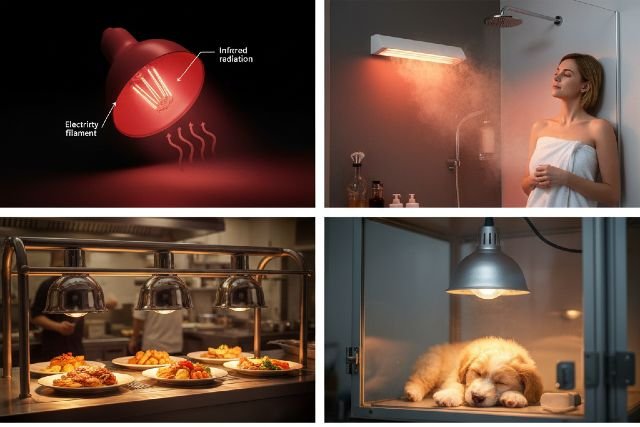
A heat lamp is a heating device designed to deliver warmth primarily through radiant heat, usually in the infrared portion of the electromagnetic spectrum. Many people think it “heats the air,” but most heat lamps work differently: they radiate energy outward, and objects (your skin, a countertop, food, an animal enclosure surface) absorb that energy and warm up directly. This is why a heat lamp can feel intense even if the room itself hasn’t warmed much.
Most common heat lamps are either specialized incandescent bulbs (often with a red filter) or quartz/halogen infrared lamps. The design focuses heat in a targeted direction, making it ideal for localized warming rather than heating a whole room.
How Does a Heat Lamp Work?
A heat lamp works by converting electrical energy into radiant energy. That radiant energy is largely infrared, meaning it’s invisible but experienced as warmth when it hits an object or body. Unlike convection heaters that warm the air and rely on airflow, a heat lamp can heat a surface directly through radiation.
This explains a common experience: you can stand under a heat lamp and feel warm immediately, but step away and the warmth disappears quickly. That’s because the heat is directional and strongest along the path of the infrared emission.
Why Heat Lamps Feel “Instant”
Radiant heating doesn’t require air to circulate. Infrared waves travel straight and heat the target almost instantly, which is why heat lamps are often used for quick comfort warming in bathrooms or outdoor patios.
Heat Lamp vs. Space Heater: What’s the Real Difference?
A heat lamp and a space heater both convert electricity into heat, but they deliver warmth in very different ways.
A space heater typically warms the air using convection. It’s better for raising the temperature of an entire room, especially if the space is enclosed and insulated.
A heat lamp delivers directional radiant heat. It’s better for warming you, your food, or a specific surface without necessarily raising the room temperature much. This difference is the reason heat lamps feel more effective in drafty areas, while convection heaters often struggle in open or breezy spaces.
Types of Heat Lamps
There are several heat lamp styles, and choosing the right one depends on your use case. The most common categories are infrared incandescent bulbs, quartz infrared lamps, ceramic heat emitters, and integrated bathroom ceiling units.
Infrared Incandescent Heat Lamp Bulbs
These are the classic red or clear heat lamp bulbs, often 125W to 250W. They use a filament like an incandescent bulb, producing visible light and infrared heat. Many are coated or tinted to reduce glare and emphasize longer-wave infrared output.
These work well in bathrooms, animal brooder lamps, and basic spot heating.
Quartz or Halogen Heat Lamps
Quartz infrared lamps are often used when fast heat response matters. They can reach high temperatures quickly and are common in outdoor heaters and some commercial settings. Many quartz lamps emit strong near- to mid-infrared radiation.
They can feel much hotter than standard incandescent heat bulbs, which makes them effective but also requires careful placement.
Ceramic Heat Emitters (Often for Reptiles)
Ceramic emitters produce infrared heat without emitting visible light. This makes them useful for reptile enclosures at night because they provide warmth without disrupting day-night cycles. While they’re often discussed alongside heat lamps, they function differently from glowing bulbs and require proper ceramic fixtures rated for high heat.
When Do You Really Need a Heat Lamp?
The best way to decide is to focus on what problem you’re solving. A heat lamp is ideal when you need focused, immediate warmth on a small area, rather than consistent heating across an entire room.
Heat Lamps in Bathrooms
Bathroom heat lamps are popular because bathrooms lose heat fast and often feel cold after showering. A ceiling heat lamp delivers direct radiant warmth to your body, making the space feel comfortable quickly without waiting for the whole room to heat.
If you only need warmth for a few minutes, a heat lamp can be more practical than running central heating longer than necessary.
Heat Lamps for Reptiles and Pets
Many reptiles and amphibians rely on external heat sources to regulate their body temperature. A heat lamp provides a basking zone, allowing the animal to move between warm and cooler areas and thermoregulate naturally. This is essential for digestion, immune function, and overall health in cold-blooded pets.
The key here is control: reptiles need a temperature gradient and safe distance so they don’t overheat.
Heat Lamps for Baby Chicks and Animal Brooding
For poultry and other young animals, temperature stability is critical. Heat lamps are commonly used in brooders to maintain warmth during early development. The challenge is safety: heat lamps have been associated with fire risk when improperly installed, so secure mounting and proper fixtures are non-negotiable.
Heat Lamps for Food Warming and Commercial Kitchens
In foodservice, heat lamps are often used to keep cooked food hot during plating or service. Public health guidance emphasizes keeping hot food out of the “danger zone,” and many food safety resources reference 135°F (57°C) as a key threshold for hot holding to reduce bacterial growth risk.
Commercial buying guides also highlight this threshold as the reason heat lamps and strip warmers exist in the first place.
A heat lamp is not meant to cook food. Its purpose is holding and maintaining temperature short-term before serving.
Heat Lamps for Outdoor Patios
Heat lamps are widely used in outdoor seating areas because radiant heat works even when the air is moving. Since infrared warms people and objects directly, you can feel the warmth in open air much more effectively than with a convection heater.
How to Choose the Right Heat Lamp
Even though you asked for no bullet points, it’s still important to structure this section clearly so readers can make a decision fast.
Start With Your Use Case
Ask yourself what you’re warming: a person, a room, food, or an animal enclosure. That answer determines the best lamp type, wattage, and fixture style.
Consider Wattage and Coverage
Higher wattage generally means more heat output, but it also means greater risk of overheating and higher electricity usage. Many classic heat lamp bulbs run around 250W, which can deliver intense warmth for short periods.
For small bathrooms or localized warmth, high wattage can be effective, but placement distance matters.
Choose the Right Fixture
A heat lamp is only as safe as the fixture holding it. Fixtures must be rated for the lamp’s wattage and temperature. Cheap plastic fixtures are not appropriate for high-heat bulbs, especially in animal brooders or garages.
If you’re installing a bathroom ceiling heat lamp, consider models that combine ventilation fan and heat to reduce humidity while adding comfort.
Heat Lamp Safety: The Rules You Should Never Ignore
A heat lamp is essentially a controlled high-temperature source. Used properly, it’s safe and effective. Used casually, it can become a burn or fire hazard.
Heat Stress and Overheating Concerns
Whether in a workplace setting or a home, prolonged exposure to high heat can lead to heat stress. NIOSH and CDC resources emphasize that heat exposure can cause serious health effects and recommend prevention strategies like controlling environmental heat and monitoring exposure.
This becomes relevant if you’re using heat lamps in workshops, kitchens, or commercial environments where multiple heat sources add up.
Avoid Close Contact Burns
Infrared heat can cause burns if you are too close or exposed too long. Because radiant heat warms surfaces and skin directly, you may not notice discomfort immediately until the heat buildup becomes too intense.
Keep Combustible Materials Away
Never place a heat lamp near curtains, paper, bedding, or wood shavings. This is especially important in chick brooders, where bedding is dry and flammable.
Use Proper Mounting
A heat lamp should be securely mounted with stable hardware. Hanging a heat lamp from an unstable hook or using a flimsy clamp is one of the most common causes of accidents.
Heat Lamp Energy Use: Are Heat Lamps Expensive to Run?
This is one of the most searched questions, and the answer depends on usage time.
A 250W heat lamp uses 0.25 kWh per hour. If electricity costs $0.15 per kWh, that’s about $0.04 per hour. Used for 30 minutes in a bathroom, the cost is negligible. Used for 24 hours a day in an animal brooder, it adds up quickly.
Even though both infrared and convection electric heaters convert nearly all electricity into heat, infrared can feel more efficient because it delivers warmth directly to the person or object rather than heating all the air first.
Common Heat Lamp Mistakes
Many people buy a heat lamp and assume it’s interchangeable with other heaters. That misunderstanding causes poor results or safety risks.
One common mistake is using a heat lamp to heat an entire room. Heat lamps are directional and won’t effectively raise a room’s temperature unless the room is very small and well insulated.
Another mistake is using the wrong bulb in the wrong fixture. A standard light fixture that isn’t rated for heat lamp wattage may fail over time due to heat stress.
In animal setups, a major mistake is failing to measure temperatures at the basking point. You should always verify surface temperatures with a thermometer, not guess based on how warm it feels to you.
Featured Snippet FAQs About Heat Lamps
What is a heat lamp used for?
A heat lamp is used for targeted, localized warming. Common uses include bathroom comfort heat, reptile basking areas, brooder warmth for chicks, food holding in kitchens, and outdoor patio heating.
How does a heat lamp work?
A heat lamp works by producing infrared radiant energy that warms objects and people directly. It does not rely on heating air first, which is why it feels instant and directional.
Is a heat lamp the same as an infrared heater?
A heat lamp is a type of infrared heater. Both use infrared radiation to deliver radiant heat, but heat lamps are usually designed for shorter-range, focused heating rather than whole-room heating.
Are heat lamps safe to leave on overnight?
It depends on the setup and purpose. Ceramic emitters designed for reptile enclosures may be used overnight with proper fixtures and thermostats. A standard heat lamp bulb in a general household fixture should not be left unattended unless the manufacturer explicitly states it’s designed for continuous use.
Can a heat lamp start a fire?
Yes, if improperly installed or placed too close to combustibles. Heat lamps run hot, and secure mounting plus safe clearance is essential.
Conclusion: Do You Need a Heat Lamp?
A heat lamp is one of the most practical tools for instant, localized warmth, but it works best when you treat it as a focused heat source rather than a whole-room solution. If you want quick comfort after a shower, a heat lamp can be a smart upgrade. If you’re keeping reptiles or brooding chicks, a heat lamp may be essential — provided you use the right fixture, distance, and temperature control. And in foodservice, heat lamps play a real role in maintaining safe hot-holding temperatures when used correctly.
When you choose the right type, install it safely, and use it for the right purpose, a heat lamp delivers exactly what it promises: fast warmth where you need it most.